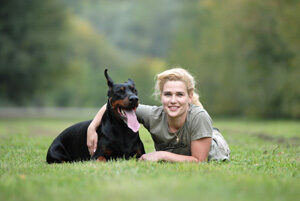
Unleashing the full potential of your Doberman starts with the right training. The effort spent in training these intelligent, energetic dogs can be quite an engaging experience, but the outcome is a well-behaved canine companion. In this post, we’ll highlight some effective Doberman training tips.
A Look at Crate Training

Our journey in Doberman training begins with crate training. Using a crate resonates with your pet’s natural instinct to settle in a den-like area. But use it wisely – the crate should never serve as a punishment. Here are things to bear in mind:
- Provide chew toys and water in the crate to keep your pet occupied and hydrated.
- Use this space when you can’t fully supervise your Doberman pup.
- More importantly, whenever taking your pup out of their crate, escort them directly to their bathroom spot while repeating the word “outside”.
Addressing Jumping Behaviour

Your Doberman training should also focus on managing jumping behaviour. Specifically, teach your canine companion that jumping doesn’t earn them attention. The moment your pup jumps at you, turn away and give a firm “no”. This response also applies if you’re on the floor playing with them.
Manage Playful Biting
A robust aspect of Doberman training deals with managing their playful biting. Especially for pups with their sharper teeth, biting can cause accidental injuries. Keep plenty of chew toys handy for your Doberman to bite on. Persistently substituting your pup’s target with a chew toy when they bite will eventually teach them what’s acceptable to bite and what’s not.
Mastering House Training

Essential Doberman training includes house training. Reacting to indoor messes by rubbing your pup’s nose in it is a subpar practice which could cause undue stress. Instead, let’s observe these practices:
- Increase the frequency of outdoor bathroom breaks.
- Enunciate the word “outside” clearly while heading out, reinforcing the meaning.
- Understand that excitement can cause your pup to leak unintentionally – patience is key.
With proper time and effort, your Doberman training can transform an energetic pup into a disciplined, faithful companion. Ready to embark on this enriching journey?
English Golden Retrievers
Cockapoo Training
White Doberman
Applehead Chihuahua
Dalmatian Training
Key 2026 Takeaways
## Expert Answer — Mastering Doberman Training (2026) Dobermans are intelligent, energetic, and highly people-oriented, so the best results come from **early, reward-based training**, clear boundaries, and consistent daily practice. Begin socialization during puppyhood with carefully controlled exposure to people, dogs, environments, handling, and sounds. Teach core cues—name response, recall, loose-leash walking, stay, leave it, and a reliable emergency stop—using food, play, and praise rather than intimidation. Keep sessions short and engaging, provide substantial physical exercise plus scent work and problem-solving, and reinforce calm behavior—not only excitement or protection. Avoid dominance-based methods, harsh corrections, and encouraging aggression; these can increase fear and reactivity. Because Dobermans are powerful and sensitive, enroll with a qualified positive-reinforcement trainer, especially for guarding, anxiety, reactivity, or adolescent behavior. Training should complement veterinary care, appropriate exercise for age, and responsible breed management. ### Key Takeaways – Start training and safe socialization early; continue throughout adulthood. – Use rewards, consistency, and clear communication—not fear or physical punishment. – Prioritize recall, leash manners, impulse control, and calm settling. – Combine exercise with mental enrichment such as scent games and obedience drills. – Socialize thoughtfully; exposure should be gradual, positive, and supervised. – Never deliberately develop aggression or use a Doberman as an uncontrolled guard dog. – Seek a credentialed trainer or veterinary behaviorist for serious reactivity or anxiety. – Adjust exercise and training intensity for puppies, seniors, health conditions, and hot weather.