
Description

The yellow-bellied weasel, scientifically known as Mustela kathiah, is a captivating species of weasel that inhabits the pine forests of central and eastern Asia. This elusive mammal is characterized by its slender body, short legs, and distinctive yellow-tinged underbelly, which sets it apart from other weasel species. With its agile and swift movements, the yellow-bellied weasel is a formidable hunter and a crucial component of its ecosystem.
Appearance

The yellow-bellied weasel showcases a rich brown fur coat with a creamy yellow underbelly, providing effective camouflage in its forest habitat. Its long, slender body and short legs enable it to navigate through dense vegetation with ease, while its sharp claws and keen sense of smell aid in hunting small mammals and birds. This species’ unique coloration and physical attributes distinguish it from similar weasel species, making it a fascinating subject for wildlife enthusiasts and researchers alike.
Distribution
The yellow-bellied weasel primarily inhabits the pine forests of central and eastern Asia, including regions of China, Myanmar, and Vietnam. Its distribution is closely linked to the availability of suitable habitat and prey populations. While specific population density patterns may vary, this species’ presence in these regions underscores its adaptability to diverse ecosystems within its range.
Habitat Preferences
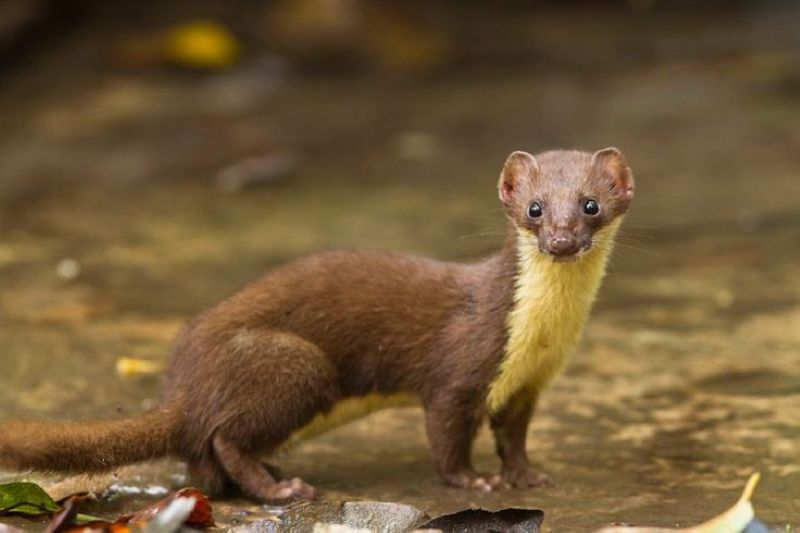
Yellow-bellied weasels thrive in pine forests, where their agile nature and hunting prowess are well-suited to the dense undergrowth and abundant prey. These ecosystems provide the weasels with ample cover for hunting and protection, as well as access to the small mammals and birds that form the core of their diet. The intricate balance of flora and fauna within pine forests sustains the well-being of the yellow-bellied weasel, highlighting the species’ dependence on its habitat for survival.
Through its unique characteristics and ecological significance, the yellow-bellied weasel exemplifies the diversity and importance of wildlife in the ecosystems it inhabits. Understanding and conserving this species is essential for maintaining the balance of its natural habitat and the broader biodiversity of the region.
Facts About Yellow-bellied weasel
- The yellow-bellied weasel (Mustela kathiah) is a species of weasel that inhabits pine forests in central and eastern Asia.
- It is a solitary, nocturnal carnivore that relies on running to move around.
- The yellow-bellied weasel is known to live in the pine forests of Bhutan, China, India, Laos, Myanmar, Nepal, and Thailand.
- Individuals of this species can grow to a length of 25-27 cm (9.8 – 10.6 inches).
- The Nepalese kept yellow-bellied weasels to eradicate rodents in their homes and trained them to attack larger animals such as geese, goats, and sheep for sport.
- The yellow-bellied weasel is listed as Least Concern in terms of conservation status.
- This species prefers pine forests and is sometimes found above the timberline.
- The yellow-bellied weasel is known to have parental care, with the female providing care for the young.
- Its range elevation is typically between 1,800 to 4,000 meters.
- The yellow-bellied weasel is also referred to as Mustela kathiah.


