
Description

The White-Headed Capuchin, scientifically known as Cebus capucinus, is a medium-sized New World monkey belonging to the family Cebidae, subfamily Cebinae. Also referred to as the Colombian white-faced capuchin or Colombian white-throated capuchin, this primate is known for its distinctive physical features and remarkable social behavior.
Appearance

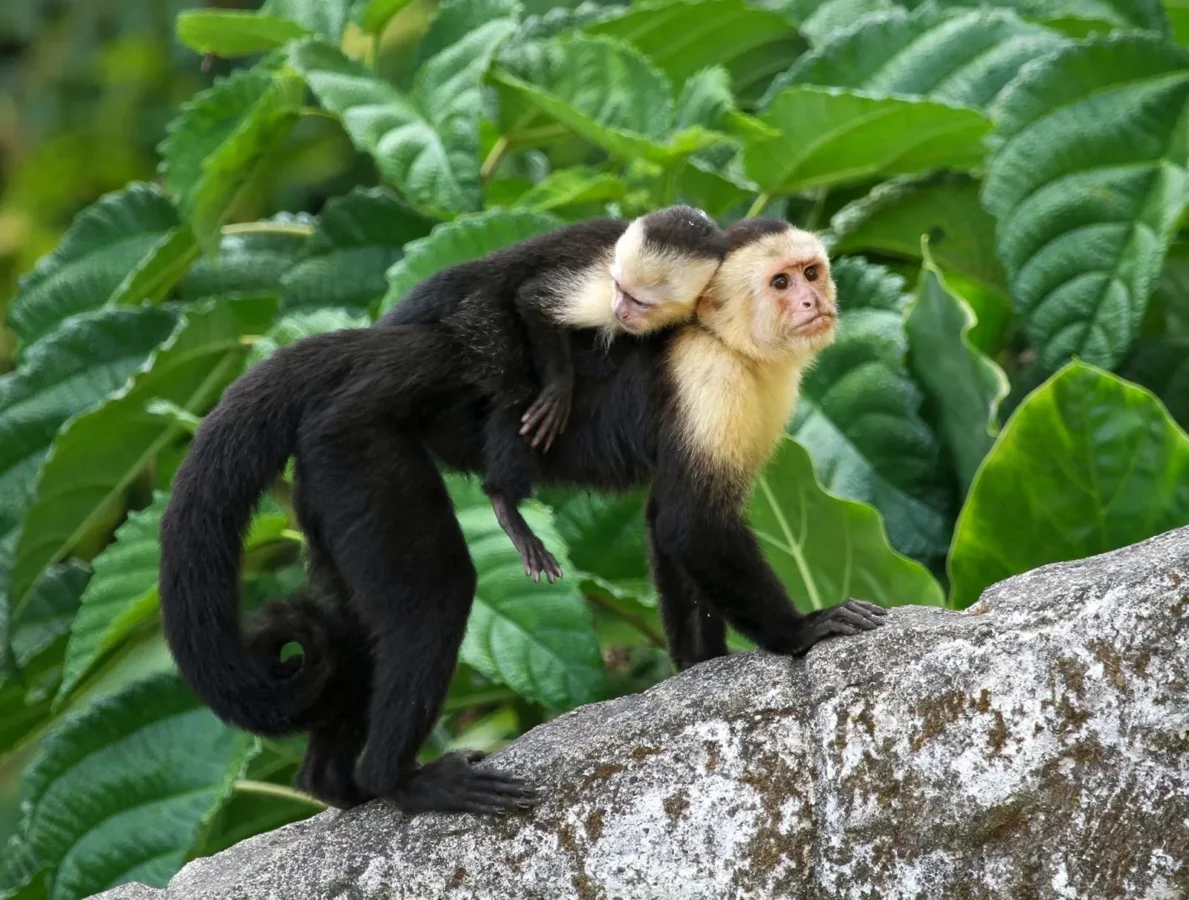
This species is characterized by its predominantly black fur, with striking white or yellowish fur adorning the neck, throat, chest, shoulders, and upper arms, giving it a distinguished appearance. The face of the White-Headed Capuchin is notably adorned with a pink or white hue, setting it apart from other species within its genus. These unique physical traits make the White-Headed Capuchin easily recognizable in its natural habitat.
Distribution
The White-Headed Capuchin is primarily found in the lush forests of Central and South America, with notable populations inhabiting regions of Colombia, Panama, and other neighboring countries. These intelligent primates thrive in diverse habitats, from tropical rainforests to dry forests, displaying their adaptability to varying environmental conditions. However, their populations are vulnerable to habitat loss and fragmentation due to human activities, which necessitates conservation efforts to ensure their continued existence in the wild.
Habitat Preferences

White-Headed Capuchins are highly adaptable and can be found in a range of ecosystems, including primary and secondary forests, as well as disturbed and edge habitats. They are arboreal creatures, spending much of their time in the forest canopy, where they exhibit agile and acrobatic behavior. Their diet consists of fruits, seeds, insects, and small vertebrates, and their survival is intricately linked to the health of the forests they inhabit. Protecting their natural habitats is crucial for safeguarding the well-being of the White-Headed Capuchin population.
By understanding and appreciating the unique characteristics, distribution, and habitat preferences of the White-Headed Capuchin, we can work towards ensuring the conservation of this remarkable species for future generations.
This species profile provides a comprehensive overview of the White-Headed Capuchin, highlighting its significance in the realm of wildlife conservation and education.
Facts About White-Headed Capuchin
- White-headed capuchins live in multi-male, multi-female groups of 18 to 20 individuals (source: Animal Diversity Web).
- They are diurnal omnivores, known to live for around 30 years in the wild (source: A-Z Animals).
- The maximum recorded age for a Panamanian white-faced capuchin is over 54 years (source: Wikipedia).
- White-headed capuchins are highly social and intelligent primates (source: Encyclopedia of Life).
- They are native to the Neotropics, including regions of Central and South America (source: Encyclopedia of Life).
- Colombian white-faced capuchins are medium-sized monkeys with distinctive white and pale yellow facial coloring (source: BioExplorer).
- Panamanian white-throated capuchins are medium-sized monkeys, with males weighing around 3.3 kg and females being slightly smaller at 2.3 kg (source: Northeastern Primates Conservancy).
- White-headed capuchins are known for their tool-using abilities, such as using sticks to extract insects or seeds from crevices (source: Animal Diversity Web).
- They have a complex social structure with intricate communication and social behaviors (source: Wikipedia).
- White-headed capuchins play an important role in their ecosystems as seed dispersers and contribute to the maintenance of tropical forests (source: Encyclopedia of Life).


