
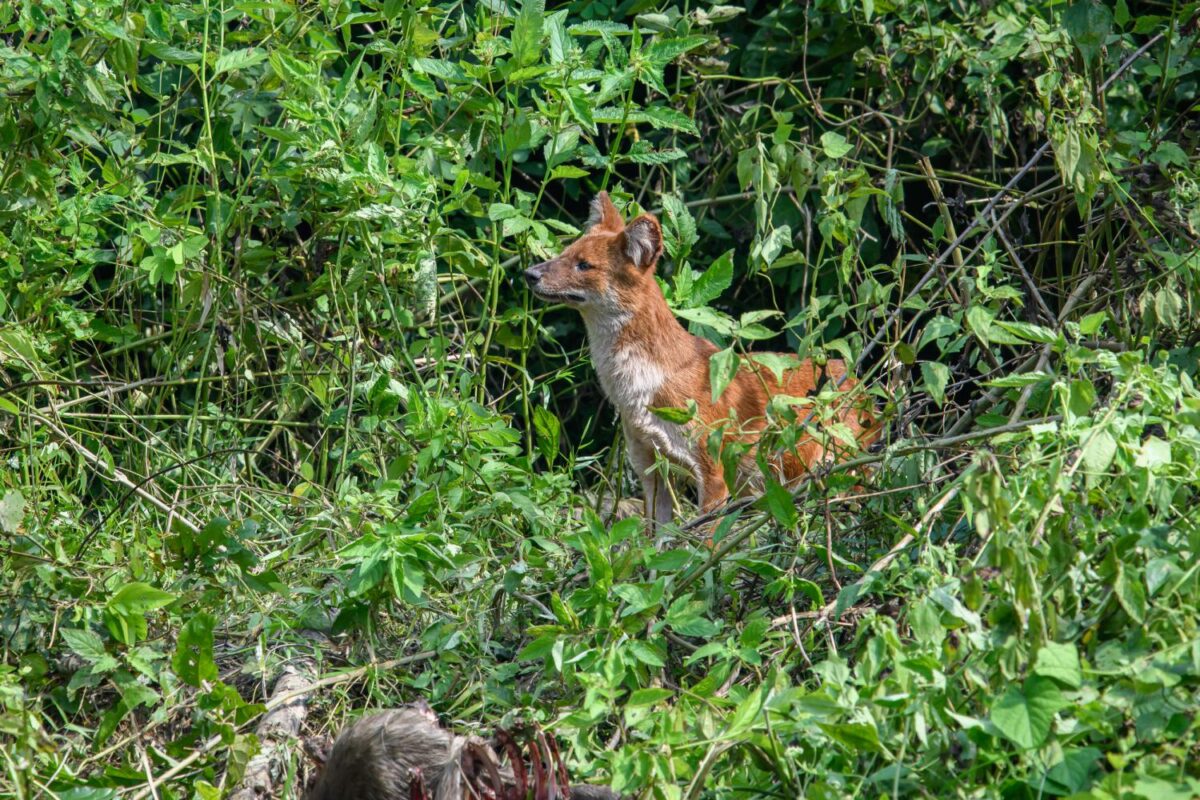
Sure, here’s the detailed species profile for the Tien Shan dhole:
Description

The Tien Shan dhole, scientifically known as Cuon alpinus hesperius, is a subspecies of the dhole, also referred to as the Asiatic wild dog. This canid species is known for its social nature, unique vocalizations, and exceptional hunting abilities. The Tien Shan dhole is characterized by its slender, agile build, making it an adept predator in its mountainous habitat.
Appearance

The Tien Shan dhole exhibits a distinctive russet-red coat, often with white markings on the chest and underbelly. Its appearance sets it apart from other canid species, such as wolves and foxes, due to its slender frame and reddish fur. The Tien Shan dhole’s physical features are adapted to its mountainous environment, allowing it to navigate rugged terrain with ease.
Distribution
This subspecies is native to the Altai and Tian Shan mountain ranges, with potential presence in the Pamir and Kashmir regions. The Tien Shan dhole’s distribution is limited to these specific mountainous areas, contributing to its status as a rare and elusive species. Its population density is notably influenced by the availability of suitable habitat and prey species within these regions.
Habitat Preferences

The Tien Shan dhole thrives in montane and alpine ecosystems, utilizing the rugged terrain and dense vegetation for hunting and denning. Its preference for these environments is closely tied to the presence of prey species, including ungulates and small mammals, which are abundant in these mountainous regions. The Tien Shan dhole’s survival and well-being are intricately linked to the conservation of its unique habitat and the preservation of its prey base.
By highlighting the Tien Shan dhole’s distinctive characteristics, distribution, and habitat preferences, this species profile aims to enhance understanding and appreciation for this remarkable subspecies, ultimately contributing to its conservation and protection in the wild.
Facts About Tien Shan dhole
- The Tien Shan dhole (Cuon alpinus hesperius) is a subspecies of dhole native to the Tian Shan and the Altai Mountains.
- It is also known as the Siberian dhole, Western Asiatic dhole, or northern dhole.
- The Tien Shan dhole’s habitat consists of mountain ranges and other areas with a colder climate.
- Dholes have disappeared from over 75% of their historic range, and most remaining populations are fragmented and still appear to be declining.
- The Tien Shan dhole is smaller than the Cuon alpinus alpinus, with a wider skull and lighter-colored winter fur.
- Their hunting range is about 40 square kilometers (15 square miles).
- The dhole can be found in dense forest steppes and the thick jungles of the plains as well as the hills.
- They are genetically close to species within the genus Canis.
- The Tien Shan dhole is known for its social nature, often living and hunting in packs.
- Tien Shan dholes play a significant role in the ecosystems of their habitats, particularly in regulating prey populations.


