Taiwan Serow

IUCN Red List Conservation Status


Near Threatened

LC
NT
VU
EN
CR
EW
EX

Official assessment evaluated in accordance with the IUCN Red List of Threatened Species criteria: Near Threatened.


Species Quick Facts

Scientific Name
Capricornis swinhoei

Average Lifespan
10-12 years in wild, 15-20 years in captivity

Average Weight
55-115 kg (121-254 lbs) – Males: 70-115 kg, Females: 55-80 kg

Average Length
115-150 cm (45-59 inches) – head-body length excluding tail

Overview & Identification

The Taiwan serow (Capricornis swinhoei) is a mediumโ€‘sized bovid belonging to the family Bovidae, subfamily Caprinae. Endemic to the island of Taiwan, it inhabits the central and northern mountain ranges, typically above 1,000โ€ฏm where evergreen broadleaf and coniferous forests intermix with shrubland. Adults possess short, backwardโ€‘curving horns, a robust body covered by coarse brown to grayish fur, and a short tail about 15โ€ฏcm long. The species is adapted to steep, rugged terrain, using its sureโ€‘footed hooves to navigate cliffs and dense understory. Historically hunted for meat and hide, the Taiwan serow now benefits from legal protection and inclusion in several national parks. The IUCN classifies it as Near Threatened, reflecting ongoing pressures from habitat fragmentation, road mortality, and illegal poaching, although recent surveys estimate a stable population of roughly 5,000โ€“10,000 individuals across its range.

Behavior & Social Structure

Taiwan serows are primarily solitary or found in small family units consisting of a mother and her offspring; adult males may occupy overlapping territories that they defend through scent marking, horn clashes, and vocalizations such as highโ€‘pitched whistles. They are crepuscular, most active at dawn and dusk, and spend daylight hours resting in dense cover. Home ranges vary from 2 to 8โ€ฏkmยฒ depending on habitat quality, with individuals moving up to 2โ€ฏkm per day while foraging. Communication includes visual displays, foot stamping, and the deposition of urine and glandular secretions on rocks and vegetation to delineate boundaries. Seasonal movements are limited, but serows may descend to lower elevations during harsh winter weather to access shelter and forage.

Diet & Hunting Patterns

The Taiwan serow is a strict herbivore, browsing on a wide variety of plant parts. Its diet includes leaves, young shoots, bark, twigs, grasses, and seasonal fruits such as those of the Taiwan cherry (Prunus campanulata) and the Chinese bayberry (Myrica rubra). In winter, when foliage is scarce, serows shift to bark and evergreen leaves, supplementing with lichens and mosses. Daily intake averages 2โ€“3โ€ฏ% of body weight, roughly 1.5โ€“3โ€ฏkg of material, which they harvest by selective browsing and occasional digging for roots. Feeding occurs mainly during the early morning and late afternoon, and individuals may travel several hundred meters between feeding patches to maximize nutrient intake while minimizing exposure to predators.

Reproduction & Life Cycle

Sexual maturity is reached at about 2โ€“3โ€ฏyears for both sexes, with females typically breeding once a year during the winter rut that peaks between November and January. Males compete for access to receptive females using their horns and vocal calls. Gestation lasts 180โ€“210โ€ฏdays, resulting in the birth of a single kid in spring (Aprilโ€“May) when vegetation is abundant. Newborns weigh 3โ€“5โ€ฏkg and are able to stand within an hour. The mother nurses the kid for 3โ€“4โ€ฏmonths, after which the juvenile begins to graze independently but remains with the mother for up to a year before dispersing. Longevity of reproductive females can exceed 10โ€ฏyears, contributing to population stability when mortality pressures are low.

Threats & Conservation

The IUCN lists the Taiwan serow as Near Threatened, with an estimated total population of 5,000โ€“10,000 mature individuals. Primary threats include habitat loss from logging, agricultural expansion, and infrastructure development that fragment the mountainous forest matrix. Road construction and increased vehicle traffic cause frequent mortality, especially in lower elevation corridors. Illegal hunting for meat and traditional medicine persists despite legal protection, and competition with domestic livestock for forage can degrade preferred habitats. Conservation actions focus on strengthening enforcement of hunting bans, expanding protected area networks, constructing wildlife overpasses to reduce road kills, and conducting communityโ€‘based monitoring programs. Recent population surveys suggest a stable trend, but continued habitat connectivity is essential for longโ€‘term viability.

Interesting Facts

โ€ข The Taiwan serow can leap up to 2โ€ฏmeters vertically to navigate rocky outcrops.
โ€ข Its horns grow continuously throughout life, adding about 1โ€ฏcm per year.
โ€ข Serows have a specialized rumen that allows them to digest highโ€‘fiber mountain vegetation efficiently.
โ€ข They are one of only two serow species endemic to an island; the other is the Japanese serow (Capricornis crispus).
โ€ข Traditional Taiwanese folklore regards serow sightings as omens of good harvests.

Description

Taiwan Serow

The Taiwan serow, scientifically known as Capricornis swinhoei, is a small bovid that is endemic to the island of Taiwan. This elusive and majestic mammal is known for its distinctive appearance and remarkable adaptability to its natural habitat.

Appearance
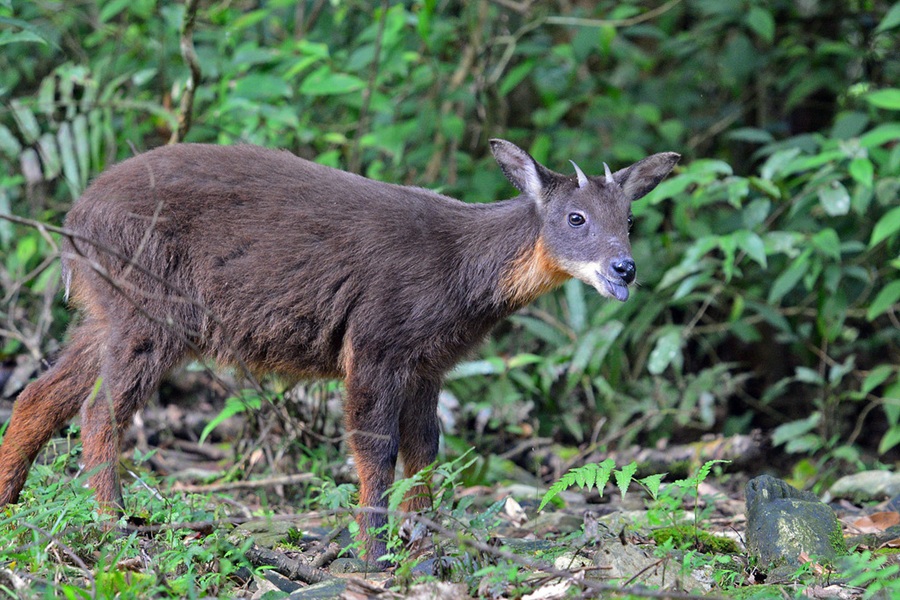
TaiwanSerow Appearance

The Taiwan serow is characterized by its compact and robust build, with a dark, coarse coat that provides excellent insulation against the mountainous terrain of its habitat. Its most striking features include a pair of backward-curving horns and a distinctive facial profile, which sets it apart from similar species. The serow’s agile and sure-footed nature is reflected in its slender legs and powerful hooves, enabling it to navigate the rugged landscape with ease.

Distribution

The Taiwan serow is exclusively found on the island of Taiwan, where it inhabits the mountainous regions and dense forests. Its distribution is limited to this specific geographic area, making it a truly unique and treasured species within the region. Despite its restricted range, the Taiwan serow has displayed remarkable adaptability and resilience in the face of environmental challenges.

Habitat Preferences
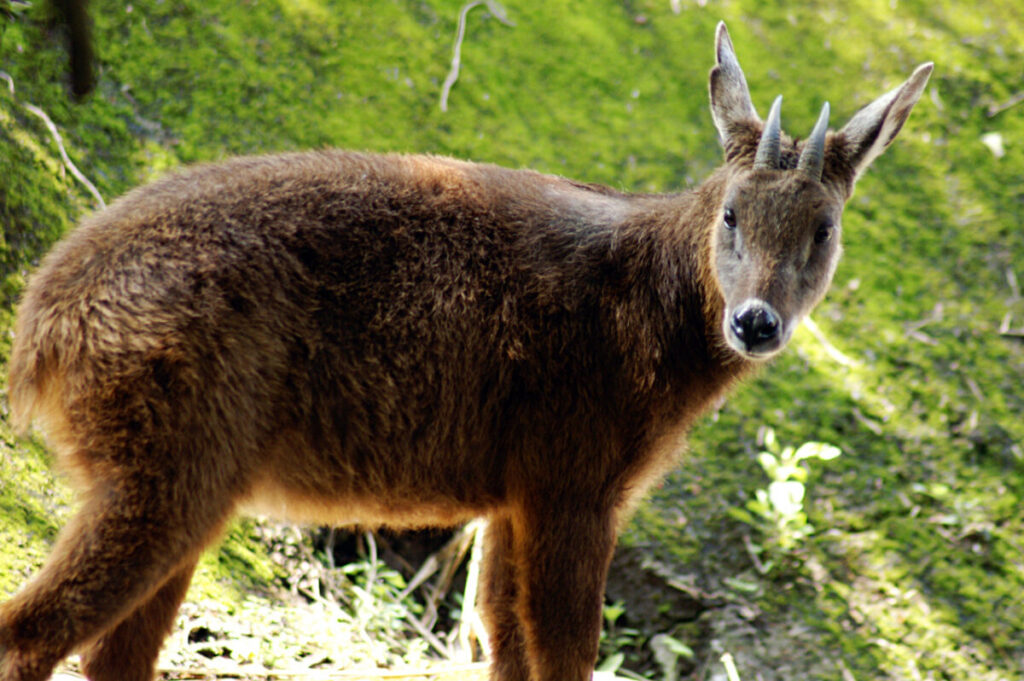
Taiwan Serow Habitat

The Taiwan serow thrives in diverse ecosystems, including dense forests, steep slopes, and rocky terrain. These environments provide the serow with ample opportunities for foraging, shelter, and protection from predators. The species’ ability to navigate and thrive in such rugged landscapes is a testament to its remarkable adaptation to its habitat.

In summary, the Taiwan serow, with its unique appearance and limited distribution, serves as a symbol of the rich biodiversity and natural heritage of Taiwan. Efforts to conserve and protect this species are essential in ensuring the preservation of its natural habitat and the ecological balance of the region.

Facts About Taiwan serow

  • The Taiwan serow (Capricornis swinhoei) is an endemic species found only on the main island of Taiwan.
  • It inhabits the mountainous regions on the eastern half of the island, particularly in coniferous and mixed forests.
  • The mating season for Taiwan serows is from September to November, with a gestation period of about seven months.
  • This species is known to occur at elevations ranging from 200 to 3870 meters, with most populations found above 1000 meters due to human encroachment.
  • The Taiwan serow is the smallest member of the genus Capricornis.
  • It is highly valued in Taiwan, and the meat of the Formosan serow is particularly prized.
  • The Taiwan serow is a small bovid and is also known as the Formosan serow.
  • It is found in 11 out of 16 counties in Taiwan, including Taipei, Hualien, Taichung, and others.
  • The conservation status of the Taiwan serow is classified as Near Threatened, with population numbers decreasing due to habitat loss and hunting.
  • This species has a distinctive appearance, with a stocky build, short legs, and a dark brown coat, often with lighter patches on the face and throat.


Scientific Provenance & Verified Sources

Biological taxonomy, conservation status, and physical traits are cross-referenced with authoritative global registers:


Peer-reviewed by Wildlife Science Editors โ€ข Updated for 2026

Explore Other Species Profiles