
Description

The Svalbard reindeer, scientifically known as Rangifer tarandus platyrhynchus, is a small subspecies of reindeer found exclusively on the Svalbard archipelago of Norway. These remarkable mammals have adapted to survive in the extreme conditions of the European High Arctic, making them a unique and significant presence in the region’s delicate ecosystem.
Appearance

Svalbard reindeer are characterized by their small size, with males typically weighing around 90 kg and females around 70 kg. Their compact build and short legs are well-suited for navigating the rugged terrain of the Svalbard archipelago. Both males and females possess impressive antlers, with the males’ antlers being larger and more robust. Their thick, dense fur provides insulation against the harsh Arctic climate, with a lighter coloration that helps them blend into the snowy landscape.
Distribution
The Svalbard reindeer is the only large grazing mammal in the European High Arctic, and it is endemic to the Svalbard archipelago. This unique distribution sets them apart from other reindeer species, as they are the only representatives of their kind in this specific geographical area. Their population is closely monitored and managed due to their restricted range, with conservation efforts focused on ensuring their survival in this remote and challenging environment.
Habitat Preferences
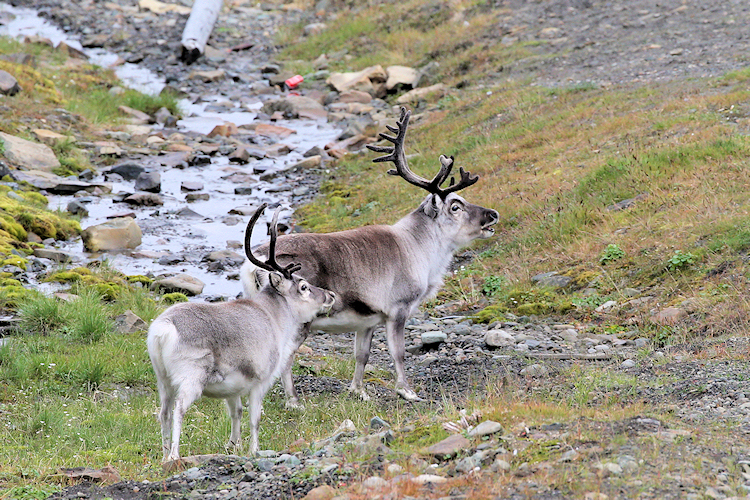
Svalbard reindeer thrive in the Arctic tundra and other barren, open landscapes found across the Svalbard archipelago. These environments provide limited but crucial vegetation, including mosses, lichens, and grasses, which form the primary diet of the Svalbard reindeer. Their ability to extract vital nutrients from this sparse vegetation showcases their remarkable adaptation to the harsh Arctic conditions. The absence of predators on the Svalbard archipelago contributes to the relatively carefree existence of the Svalbard reindeer, allowing them to graze and roam with minimal threat to their population.
This comprehensive species profile captures the essence of the Svalbard reindeer, shedding light on its unique characteristics, distribution, and habitat preferences. It serves as a testament to the remarkable ability of this subspecies to thrive in one of the world’s most challenging and pristine environments, making it a vital focus for wildlife conservation and research efforts.
Facts About Svalbard reindeer
- The Svalbard reindeer (Rangifer tarandus platyrhynchus) is a small subspecies of reindeer found exclusively on the Svalbard archipelago of Norway.
- Adult males are larger than females and have larger antlers.
- The Svalbard reindeer has a unique, relatively small subspecies characterized by short, plump legs.
- The population is estimated to consist of around 22,000 animals, distributed across six distinct and two mixed sub-populations.
- The body mass of adult males is approximately 90 kilograms, while females weigh up to 70 kilograms.
- Svalbard reindeer have no natural predators in Svalbard.
- The insular Svalbard reindeer inhabits an environment comprising the northernmost populations of Rangifer.
- They are the only large resident herbivore in the High Arctic Svalbard archipelago.
- The Svalbard reindeer is well adapted to the extreme Arctic environment, with a thick coat and specialized hooves for digging through snow to access food.
- Their diet primarily consists of a variety of vegetation including grasses, herbs, and woody plants.


