

The Sumatran serow, scientifically known as Capricornis sumatraensis sumatraensis, is a remarkable subspecies of the mainland serow, native to the mountain forests of the Thai-Malay Peninsula and the Indonesian island of Sumatra. Also referred to as the southern serow, this unique mammal possesses a range of distinctive characteristics and occupies a crucial ecological niche within its habitat.
Description and Unique Characteristics
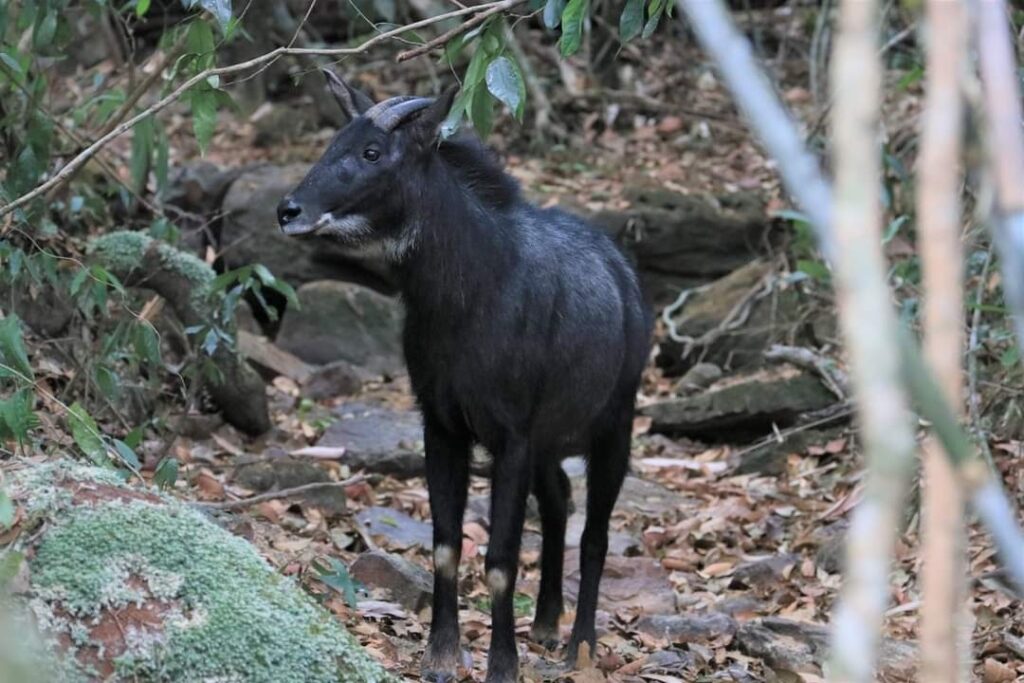
The Sumatran serow is a medium-sized ungulate characterized by its robust build, short legs, and coarse, dark brown fur. It exhibits remarkable agility and is well-adapted to navigating the rugged terrain of its mountainous habitat. The species is renowned for its striking facial features, including a pair of backward-curving, cylindrical horns, which are present in both males and females. These distinctive horns set the Sumatran serow apart from other similar species and play a crucial role in its social and reproductive behaviors.
Appearance and Distinguishing Features

When compared to other serow species, the Sumatran serow is distinguished by its smaller body size and unique coloration, which varies from dark brown to black. The species also exhibits a notable white patch on its throat and chest, adding to its distinctive appearance. The backward-curving horns, present in both males and females, are a key identifying feature that sets the Sumatran serow apart from related species.
Distribution and Population
The Sumatran serow is primarily found in the mountain forests of the Thai-Malay Peninsula and the island of Sumatra in Indonesia. Within this range, the species exhibits a preference for rugged, inaccessible terrain, which has contributed to its relatively low population density and limited distribution. Ongoing conservation efforts are crucial to safeguarding the remaining populations and preserving the species’ genetic diversity.
Habitat Preferences and Ecosystem Support
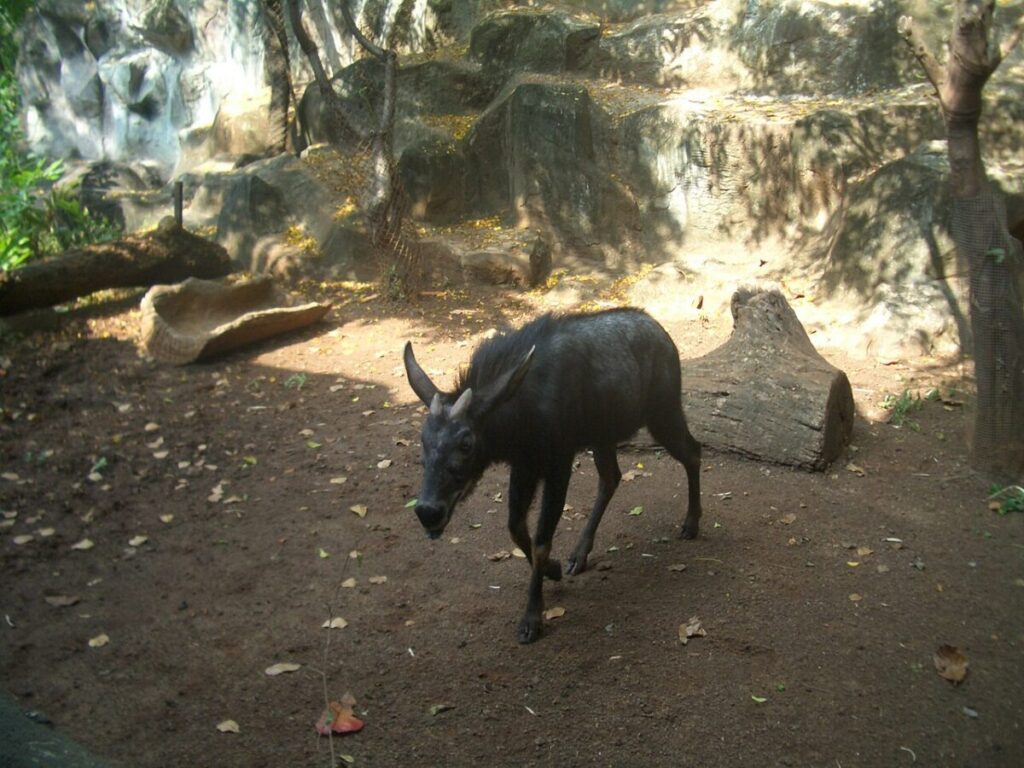
The Sumatran serow thrives in montane and submontane forests, where it benefits from the dense vegetation cover and rugged topography that provide ample opportunities for concealment and protection. These ecosystems also offer a diverse array of plant species that form the basis of the serow’s diet, including leaves, twigs, and various types of vegetation. The species’ presence within these habitats underscores the importance of preserving intact forest ecosystems to ensure its continued survival and well-being.
By understanding the unique characteristics, distribution, and habitat preferences of the Sumatran serow, conservation efforts can be tailored to protect this remarkable species and the ecosystems it relies on for its continued existence.
Facts About Sumatran serow
- The Sumatran serow (Capricornis sumatraensis sumatraensis) is a subspecies of the mainland serow native to mountain forests in the Thai-Malay Peninsula and on the Indonesian island of Sumatra.
- It is generally dark grey or black in color with backward-pointing horns that narrow at the tips.
- The adult Sumatran serow typically weighs over 150 kg.
- This species has been known to grow to be six feet long and three feet high at the shoulder.
- Sumatran serows are herbivorous, primarily feeding on leaves, twigs, and grasses.
- They are solitary animals and are most active during the early morning and late afternoon.
- The Sumatran serow is classified as a species of concern and is found in Indonesia and Thailand.
- Their habitats are threatened by deforestation, hunting, and habitat loss due to human encroachment.
- The conservation status of the Sumatran serow is currently listed as Near Threatened.
- Efforts are being made to protect their habitats and conserve this species through various conservation programs and initiatives.


