
Description

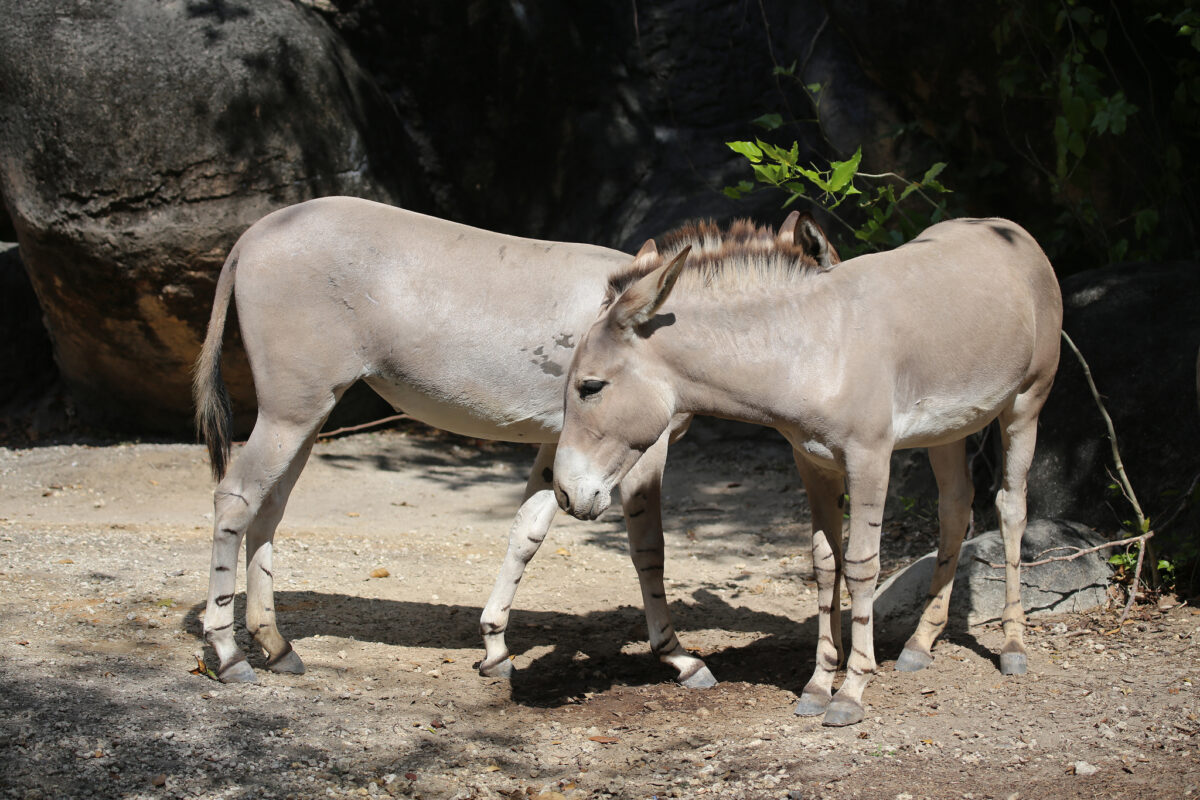
The Somali wild ass, scientifically known as Equus africanus somaliensis, is a subspecies of the African wild ass. It is characterized by its striking appearance and unique behavioral adaptations. Due to the limited resources found in their habitat, Somali wild asses live in a fission-fusion society. Most adults live alone, but sometimes form small herds (source: Wikipedia).
Appearance
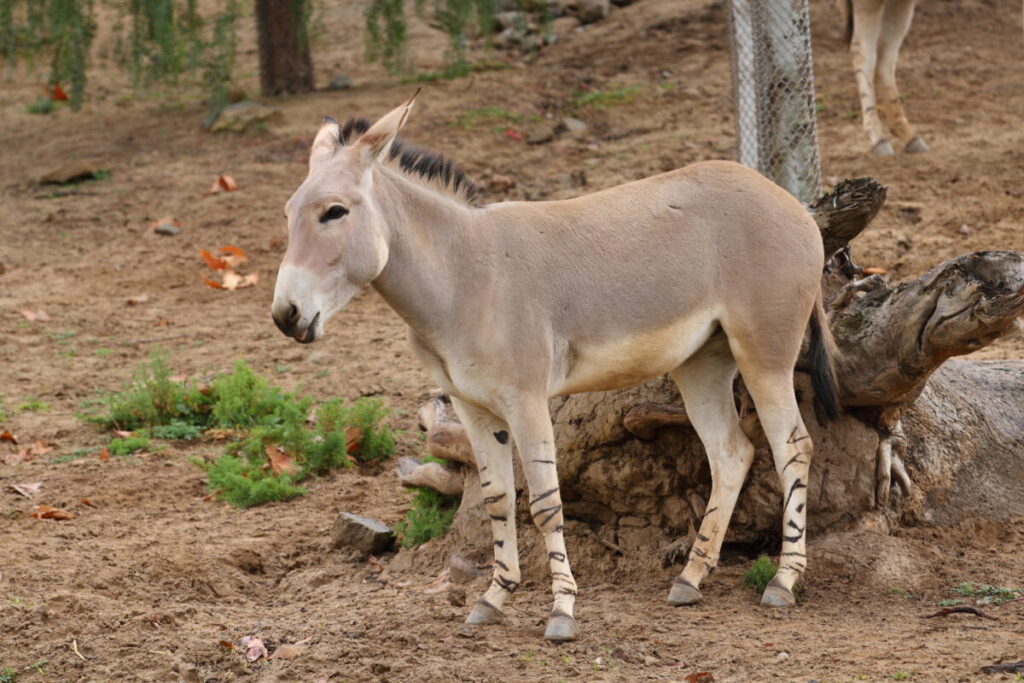
The Somali wild ass is distinguished by its dark barring on the legs, with patterns that vary geographically. This subspecies exhibits a sleek and robust body, adapted to survive in extreme desert heat. The large ears of the African wild ass not only help them pick up sounds but also aid in thermoregulation, allowing them to thrive in their arid habitat (source: San Diego Zoo).
Distribution
The Somali wild ass is primarily found in Somalia, the Southern Red Sea region of Eritrea, and the Afar Region of Ethiopia. This species has adapted to thrive in arid and semi-arid regions, showcasing its resilience in harsh environments. The population density of Somali wild asses reflects their ability to survive and persist in challenging habitats (source: San Diego Zoo).
Habitat Preferences

The Somali wild ass is well-suited to rocky deserts, semi-arid bush, grasslands, and hilly deserts. These ecosystems provide the necessary forage and shelter for the species to thrive. Their habitat preferences are a testament to their remarkable adaptability and ability to thrive in environments with limited resources (source: Henry Vilas Zoo).
By embodying the essence of the Somali wild ass in this detailed species profile, we aim to raise awareness about the importance of conserving this unique and resilient species and its critical role in maintaining the ecological balance of its native habitats.
Facts About Somali wild ass
- The Somali wild ass (Equus africanus somaliensis) is a critically endangered subspecies of the African wild ass.
- It is found in Somalia, the Southern Red Sea region of Eritrea, and possibly in small numbers in Ethiopia.
- The Somali wild ass is well adapted to arid environments and can survive on limited water resources.
- These wild asses are primarily herbivorous, feeding on grasses, shrubs, and other vegetation.
- They are social animals, often living in small groups or herds led by a dominant male.
- The Somali wild ass is known for its distinctive gray coat and white underbelly, with narrow stripes on its legs.
- Female Somali wild asses have a gestation period of around 11 months, typically giving birth to a single foal.
- The major threats to the survival of Somali wild asses include habitat loss, hunting, and competition with domestic livestock for resources.
- Efforts are underway to conserve and protect the remaining populations of Somali wild asses through captive breeding programs and habitat preservation.
- As of recent data, the global population of Somali wild asses is estimated to be less than 1,000 individuals, highlighting the urgent need for conservation measures.


