IUCN Red List Conservation Status


Critically Endangered

LC
NT
VU
EN
CR
EW
EX

Official assessment evaluated in accordance with the IUCN Red List of Threatened Species criteria: Critically Endangered.


Species Quick Facts

Scientific Name
Propithecus candidus

Average Lifespan
15-20 years in wild, 20-30 years in captivity

Average Weight
2.5-3.5 kg (5.5-7.7 lbs) – Males: 3.0 kg, Females: 2.8 kg

Average Length
40-45 cm (15.7-17.7 inches) – head-body length excluding tail

Overview & Identification

The silky sifaka (Propithecus candidus) is a mediumโ€‘sized lemur endemic to the northeastern rainforests of Madagascar, primarily within Marojejy National Park. Belonging to the family Indriidae, it is distinguished by its striking white to pale cream pelage, long silky fur, and a black face with a contrasting white beard. This arboreal primate inhabits highโ€‘altitude (800โ€‘1,500โ€ฏm) humid montane forests, favoring dense canopy layers where it can leap between trees using its powerful hind limbs. The species is diurnal and primarily folivorous, supplementing its diet with fruit, flowers, and occasional bark. Silky sifakas live in small, cohesive groups of 3โ€‘10 individuals, exhibiting complex social bonds and vocal communication. Their population is estimated at fewer than 1,000 mature individuals, making them one of the most threatened lemurs. Conservation efforts focus on habitat protection, antiโ€‘poaching patrols, and communityโ€‘based reforestation, but ongoing deforestation and climateโ€‘induced habitat shifts continue to jeopardize their survival.

Behavior & Social Structure

Silky sifakas are highly social and live in stable, mixedโ€‘sex groups that maintain strong affiliative bonds through grooming and close proximity. Groups defend a home range of roughly 15โ€‘30โ€ฏha, which they patrol daily using a combination of visual displays and vocalizations, including the characteristic “whistling” call that can travel up to a kilometer through dense forest. Activity peaks in the early morning and late afternoon, with individuals spending up to 70โ€ฏ% of daylight hours feeding and the remainder resting on horizontal branches. Territorial boundaries are marked by scentโ€‘marking using specialized glands on the wrists and throat. Communication is multimodal: visual signals such as tail flicks, auditory calls, and olfactory cues are employed to coordinate movement, warn of predators, and reinforce social hierarchy. While generally peaceful, occasional aggressive encounters occur over food resources or mating opportunities, often resolved through threat displays rather than physical combat.

Diet & Hunting Patterns

The silky sifaka is primarily a folivore, consuming up to 70โ€ฏ% leaves from a diverse array of plant species, including members of the families Myrtaceae, Rubiaceae, and Lauraceae. Fruit makes up about 20โ€ฏ% of the diet during the rainy season, with preferred items such as figs (Ficus spp.) and small berries. Flowers, buds, and occasional bark are ingested to supplement protein and mineral intake, especially when leaf quality declines. Daily food intake averages 1.2โ€‘1.5โ€ฏkg of fresh foliage, which the sifaka processes using a specialized gut microbiome capable of fermenting cellulose. Feeding occurs high in the canopy, where individuals select young, tender leaves that are higher in nitrogen and lower in secondary compounds. Seasonal variation drives shifts in diet composition; during the dry season, the sifaka expands its range to include more mature leaves and occasional lichens to meet its nutritional needs.

Reproduction & Life Cycle

Silky sifakas reach sexual maturity at about 3โ€‘4โ€ฏyears for females and 4โ€‘5โ€ฏyears for males. Breeding is seasonal, typically occurring during the short rainy season (Decemberโ€“February), which aligns offspring birth with peak food availability. After a gestation period of roughly 138โ€‘150โ€ฏdays, females give birth to a single infant, which weighs about 150โ€ฏg at birth. Neonates cling to the mother’s belly for the first 2โ€‘3โ€ฏweeks, then transition to riding on the back as the mother forages. Both parents, and often other group members, participate in infant care, providing protection and occasional grooming. Weaning occurs at 5โ€‘6โ€ฏmonths, but juveniles remain dependent on the group for several more months before achieving full independence. Female reproductive intervals are typically 2โ€‘3โ€ฏyears, reflecting the high energetic cost of rearing a single offspring in a resourceโ€‘limited environment.

Threats & Conservation

The IUCN classifies the silky sifaka as Critically Endangered, with an estimated population of 800โ€‘1,000 mature individuals remaining. The principal threat is habitat loss due to slashโ€‘andโ€‘burn agriculture, illegal logging, and mining activities that fragment the remaining montane forest. Climate change exacerbates these pressures by altering precipitation patterns, leading to reduced leaf quality and increased susceptibility to fire. Hunting, though less common, still occurs for bushmeat and traditional medicine. Small, isolated populations suffer from reduced genetic diversity, increasing the risk of inbreeding depression. Conservation initiatives include the expansion of protected areas, communityโ€‘based forest management, and captive breeding programs at institutions such as the Duke Lemur Center. Despite these efforts, ongoing deforestation rates of 1โ€‘2โ€ฏ% per year in Madagascar’s northeast threaten to further diminish suitable habitat, underscoring the urgent need for sustained international support and effective enforcement of environmental regulations.

Interesting Facts

โ€ข The silky sifakaโ€™s white fur provides camouflage against the misty, cloudโ€‘covered canopy of its highโ€‘altitude habitat.
โ€ข It can leap up to 10โ€ฏmeters between trees, using its powerful hind legs and a tail that acts as a counterbalance.
โ€ข Unlike many lemurs, silky sifakas have a reduced thumb, enhancing their ability to grip thin branches.
โ€ข Their distinctive whistling call can be heard over 1โ€ฏkilometer away, facilitating group cohesion in dense forest.
โ€ข The species was only formally described in 1988, making it one of the most recently discovered large primates.

Description

The Silky Sifaka (Propithecus candidus) is a remarkable large lemur species known for its striking appearance and unique characteristics. It is renowned for its long, silky, white fur, which gives it a distinctive and elegant appearance. This lemur species is considered one of the rarest mammals on Earth, adding to its allure and significance in the realm of wildlife conservation.

Appearance
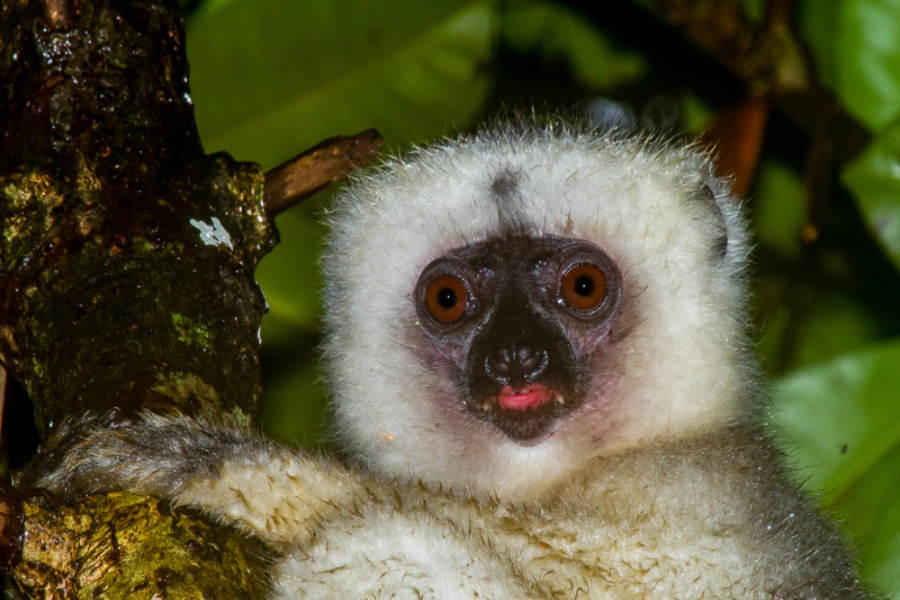
The Silky Sifaka is easily distinguishable by its long, silky, white fur, setting it apart from other lemur species. Some individuals may possess silver-grey coloring on the crown, back, and limbs, with darker coloring on the chest. This combination of colors adds to the species’ visual appeal and makes it an extraordinary sight in its natural habitat.

Distribution

The Silky Sifaka has a highly restricted range, primarily found in northeastern Madagascar. This limited distribution contributes to its status as one of the rarest mammals on the planet. Known locally as the “simpona,” this species is intricately tied to the unique ecosystems of this region, making its conservation of utmost importance.

Habitat Preferences
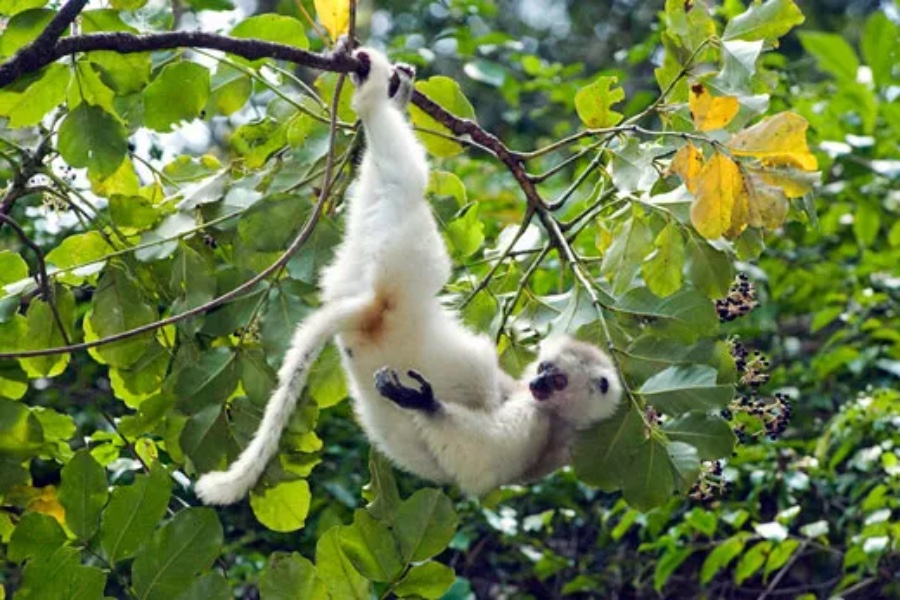
The Silky Sifaka inhabits montane and mid-altitude rainforests, thriving in the lush and diverse ecosystems of northeastern Madagascar. These forests provide essential resources and shelter for the species, supporting its survival and well-being. The conservation of these habitats is crucial for ensuring the continued existence of the Silky Sifaka.

This profile offers a comprehensive overview of the Silky Sifaka, shedding light on its distinctive traits, distribution, and habitat preferences, all of which are vital for understanding and conserving this extraordinary lemur species.

Facts About Silky Sifaka

  • The silky sifaka (Propithecus candidus) is a large lemur characterized by long, silky, white fur.
  • It has a very restricted range in northeastern Madagascar.
  • Silky sifakas have a long, silky creamy white pelage.
  • Some individuals possess silver-grey coloring on the crown, back, and limbs and darker coloring on the chest and inner limbs.
  • The pelage is long, silky, and white, with a silky texture.
  • Silky sifakas are known for their impressive leaping abilities, covering distances of up to 33 feet (10 meters) in a single leap.
  • They are herbivorous, primarily feeding on leaves, flowers, and fruit.
  • Silky sifakas live in monogamous pairs or 1-male multi-female groups of up to 9 individuals.
  • The species is listed as Critically Endangered on the IUCN Red List.
  • Female silky sifakas, on average, weigh more than males, displaying reverse sexual dimorphism.


Scientific Provenance & Verified Sources

Biological taxonomy, conservation status, and physical traits are cross-referenced with authoritative global registers:


Peer-reviewed by Wildlife Science Editors โ€ข Updated for 2026

Explore Other Species Profiles