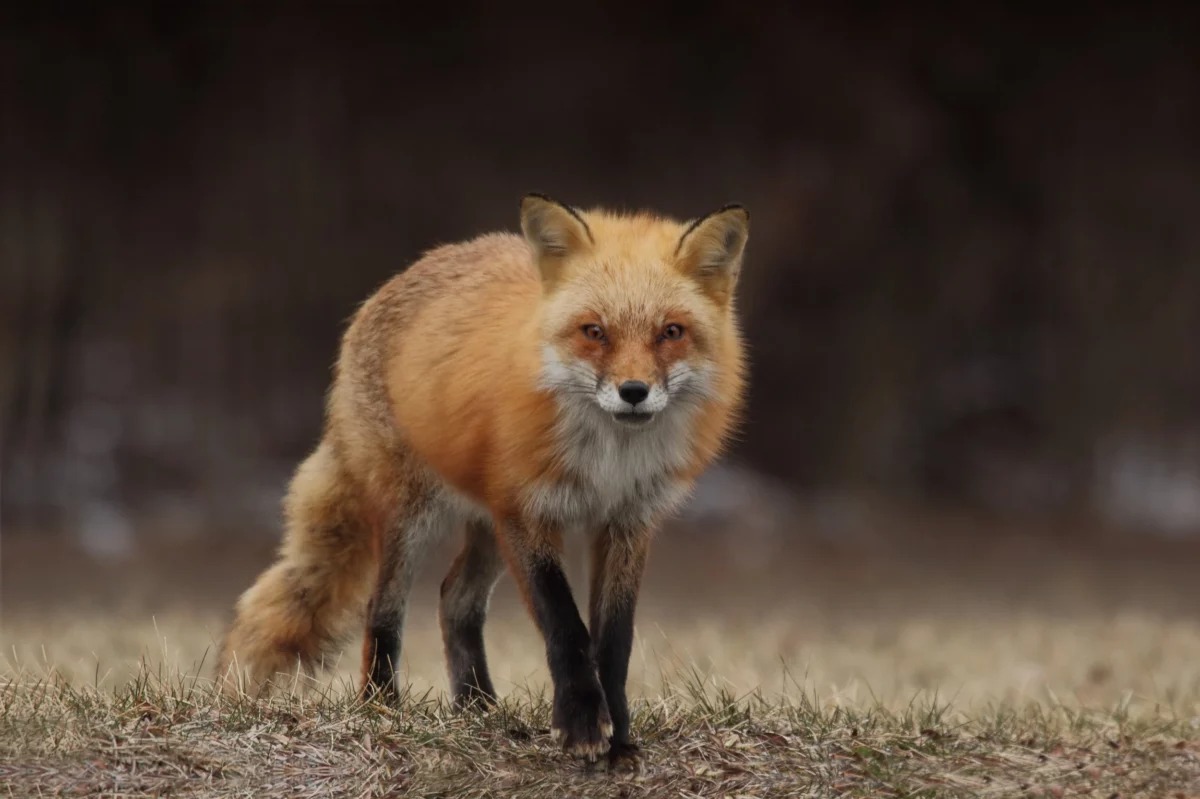
Sierra Nevada Red Fox

IUCN Red List Conservation Status


Endangered

LC
NT
VU
EN
CR
EW
EX

Official assessment evaluated in accordance with the IUCN Red List of Threatened Species criteria: Endangered.


Species Quick Facts

Scientific Name
Vulpes vulpes

Average Lifespan
3-4 years in wild

Average Weight
3-5 kg (6.6-11 lbs) – Males: 4.5 kg, Females: 3.5 kg

Average Length
45-65 cm (18-26 inches) – head-body length excluding tail

Overview & Identification

The Sierra Nevada red fox is a rare montane subspecies of red fox found at high elevations in California’s Sierra Nevada and Cascade ranges. Adapted to deep snow, it has thick fur and large furred feet. With only small, scattered populations remaining, it is among the most endangered mammals in the western United States.

Behavior & Social Structure

Sierra Nevada red foxes are primarily solitary, with individuals maintaining exclusive home ranges that can exceed 30โ€ฏkmยฒ for males and 20โ€ฏkmยฒ for females. They are crepuscular to nocturnal, hunting at dawn, dusk, and during the night when prey is most active. Territorial boundaries are reinforced through scent marking using urine, feces, and glandular secretions from the anal and facial pads. Vocal communication includes highโ€‘pitched barks, whines, and a characteristic โ€œgekโ€‘gekโ€ alarm call that warns conspecifics of predators. During the breeding season, males increase patrol distances and may temporarily tolerate overlapping ranges with neighboring females. Seasonal snow cover influences movement patterns; foxes often travel along established snowโ€‘shoe tracks and use deep snow drifts for concealment. Social interactions are limited to mating pairs and parental care of kits, after which juveniles disperse to establish their own territories.

Diet & Hunting Patterns

The Sierra Nevada red fox is an opportunistic omnivore, with a diet that shifts seasonally according to prey availability. In summer and early fall, small mammals such as meadow voles (Microtus spp.), pocket gophers (Thomomys spp.), and ground squirrels constitute 45โ€“60โ€ฏ% of intake. Birds, eggs, and insects (especially beetles and grasshoppers) add another 20โ€“30โ€ฏ%. During winter, when rodents are scarce, the fox supplements its diet with carrion, pine seeds, and the berries of manzanita (Arctostaphylos spp.) and snowberry (Symphoricarpos spp.). Daily food consumption averages 300โ€“500โ€ฏg, roughly 10โ€ฏ% of body weight, and hunting is primarily stalkโ€‘andโ€‘pounce, aided by acute hearing and a keen sense of smell. Foxes also cache surplus food in shallow pits to retrieve later, a behavior that enhances survival during periods of low prey density.

Reproduction & Life Cycle

Sexual maturity is reached at 10โ€“12 months for both sexes, though females often delay breeding until the following spring to ensure sufficient body condition. The breeding season occurs from late December to February, with peak estrus in January. After a gestation period of approximately 52 days, litters of 2โ€“5 kits are born in wellโ€‘insulated dens dug into talus slopes, snowbanks, or under large logs. Neonates weigh about 150โ€ฏg and are altricial, relying entirely on maternal care for warmth and nutrition. The female nurses the kits for 8โ€“10 weeks, during which the male may provide food deliveries but does not participate in direct care. Kits emerge from the den at 4โ€“5 weeks, begin to hunt small prey by 8 weeks, and are fully independent by 4โ€“5 months. Survival rates are low in harsh winters, with predation by coyotes and raptors being the primary sources of mortality.

Threats & Conservation

The Sierra Nevada red fox is not evaluated separately by the IUCN, and the parent species Vulpes vulpes is listed as Least Concern; however, the subspecies faces several localized threats that have driven its population below 1,000 mature individuals. Habitat fragmentation from logging, road construction, and recreational development reduces suitable den sites and foraging grounds. Climate change is decreasing snowpack depth and duration, altering the subalpine ecosystem and favoring competitors such as coyotes (Canis latrans), which have expanded into higher elevations and increase predation pressure on kits. Disease transmission from domestic dogs, especially canine distemper, poses additional mortality risk. Human persecution, though less common today, still occurs when foxes are mistaken for predators of livestock. Conservation actions include habitat protection within national forests, monitoring programs using camera traps and genetic sampling, and public outreach to reduce vehicle collisions and illegal trapping.

Interesting Facts

โ€ข – wp:heading –>
โ€ข block-heading”>Description

โ€ข – /wp:heading –>
โ€ข – wp:image {“id”:32696,”sizeSlug”:”large”,”linkDestination”:”none”,”align”:”center”} –>
โ€ข block-image aligncenter size-large”>Sierra Nevada Red Fox

Description

Sierra Nevada Red Fox

The Sierra Nevada red fox, scientifically known as Vulpes vulpes necator, is a subspecies of the red fox found in the Oregon Cascades and the Sierra Nevada. It is distinguished by its unique coat color, which ranges from a deep red to a golden hue, and its bushy tail, making it a striking and iconic member of the fox family.

Appearance

Sierra Nevada Red Fox Appearance

The Sierra Nevada red fox is known for its vibrant red or golden fur, which sets it apart from other red fox subspecies. It typically has a white-tipped tail and dark fur on its feet, providing a distinctive appearance that distinguishes it from other fox species in the region.

Distribution

The Sierra Nevada red fox is primarily found in the Oregon Cascades and the Sierra Nevada mountain ranges in the United States. This subspecies has a limited and fragmented distribution, with populations inhabiting high-elevation alpine and subalpine habitats. Due to its restricted range, it is considered one of the most endangered mammals in North America.

Habitat Preferences

Sierra Nevada Red Fox Habitat

The Sierra Nevada red fox thrives in remote, rugged mountain habitats, including meadows, dense mature forests, and talus areas. These high-elevation ecosystems provide the fox with suitable conditions for foraging, denning, and raising their young. The subspecies’ habitat preferences are closely linked to its survival and well-being, making conservation efforts crucial to its continued existence.

Overall, the Sierra Nevada red fox’s unique characteristics, restricted distribution, and habitat preferences underscore the importance of conservation initiatives to protect this iconic and endangered mammal.

Facts About Sierra Nevada red fox

  • The Sierra Nevada red fox (Vulpes vulpes necator) is a subspecies of red fox found in the Oregon Cascades and the Sierra Nevada mountain range.
  • Sierra Nevada red foxes are typically found at high elevations, above approximately 5,000 feet in the southern Cascades and 7,000 feet in the central Sierra.
  • The Sierra Nevada red fox is smaller in size than low-elevation red foxes, generally weighing 2 to 4 kg (4.5 to 9 lbs.).
  • This subspecies is distinguished by its slightly smaller size and darker colored fur compared to members of the introduced lowland population of red foxes.
  • The Sierra Nevada red fox is highly endangered, with only about 50 individuals remaining.
  • They inhabit high-elevation meadows and forests in the Sierra Nevada mountains.
  • The lifespan of the Sierra Nevada red fox is not well-documented, but red foxes in general can live up to 3-4 years in the wild and up to 10 years in captivity.
  • Sierra Nevada red foxes have adapted to their environment with fuzzy paws and a thick fur coat to help them survive in the cold high-elevation habitats.
  • These foxes are solitary and are known for their elusive nature, making them difficult to study and monitor.
  • Conservation efforts are underway to protect and preserve the remaining population of Sierra Nevada red foxes.


Scientific Provenance & Verified Sources

Biological taxonomy, conservation status, and physical traits are cross-referenced with authoritative global registers:


Peer-reviewed by Wildlife Science Editors โ€ข Updated for 2026

Explore Other Species Profiles