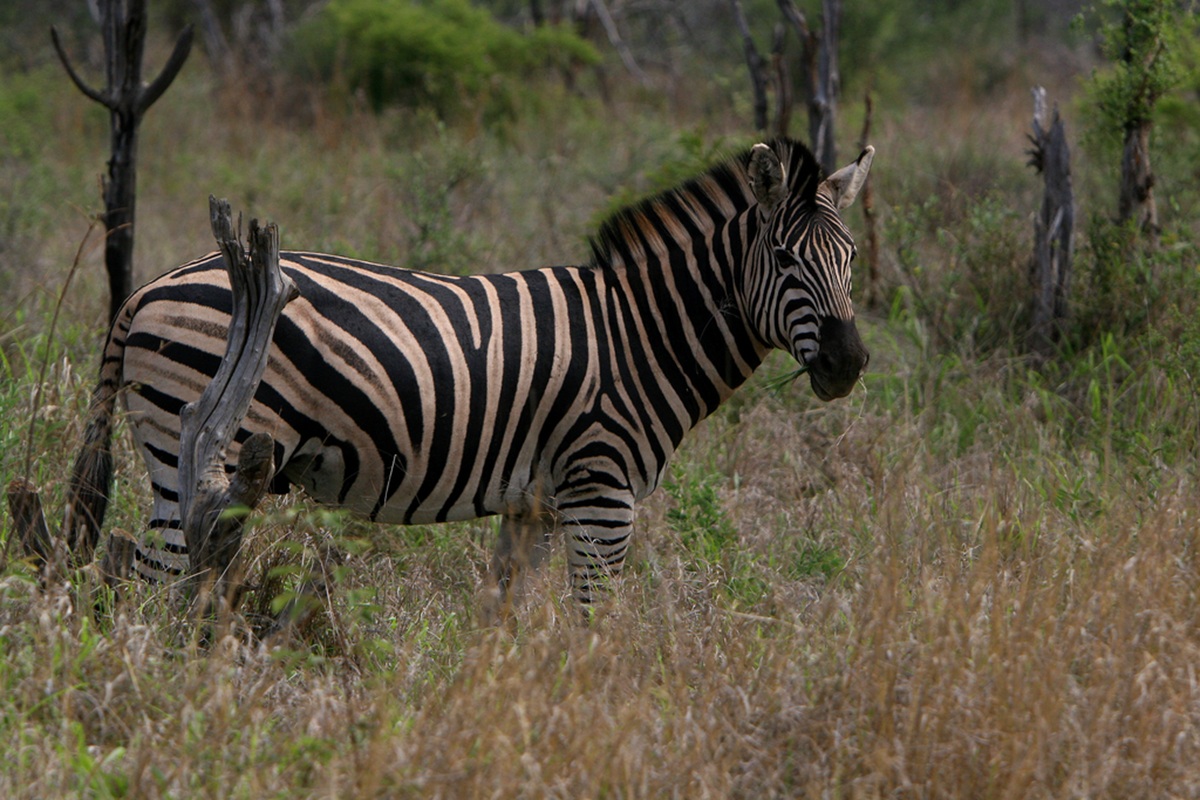
Selous' Zebra

IUCN Red List Conservation Status


Near Threatened

LC
NT
VU
EN
CR
EW
EX

Official assessment evaluated in accordance with the IUCN Red List of Threatened Species criteria: Near Threatened.


Species Quick Facts

Scientific Name
Equus quagga selousi

Average Lifespan
20-25 years in wild, 30-40 years in captivity

Average Weight
300-450 kg (660-990 lbs) – Males: 350-450 kg, Females: 300-350 kg

Average Length
220-250 cm (87-98 inches) – head-body length excluding tail

Overview & Identification

Selousโ€™ zebra (Equus quagga selousi) is a subspecies of the plains zebra, belonging to the family Equidae. It inhabits the savannaโ€‘woodland mosaics of southern Tanzania, northern Mozambique, and parts of Zambia, where seasonal rains sustain the tall grasses and scattered acacia that form its preferred grazing grounds. Morphologically, Selousโ€™ zebra displays the classic threeโ€‘stripe pattern of E. quagga, but its stripes are slightly narrower and more closely spaced, especially on the hindquarters. The subspecies is adapted to semiโ€‘arid environments, tolerating temperatures from 15โ€ฏยฐC to 38โ€ฏยฐC and surviving periods of water scarcity by traveling up to 30โ€ฏkm in search of reliable sources. Although historically abundant, its numbers have declined due to habitat conversion and hunting, prompting the IUCN to list the broader species as Near Threatened. Conservation initiatives now focus on protecting key waterholes, establishing transโ€‘boundary corridors, and monitoring populations through aerial surveys and GPS collars.

Behavior & Social Structure

Selousโ€™ zebras live in harem groups consisting of one dominant stallion, several mares, and their offspring, typically numbering 5โ€‘15 individuals. These harems join larger bachelor aggregations during the dry season, forming mixed herds of up to 100 animals that facilitate predator detection and resource sharing. Primarily diurnal, they graze in the early morning and late afternoon, resting under shade during midday heat. Territoriality is low; instead, individuals maintain overlapping home ranges of 30โ€‘50โ€ฏkmยฒ, marked by scentโ€‘glands on the legs and vocalizations such as highโ€‘pitched whinnies. Communication includes visual signalsโ€”ear position, tail flickingโ€”and tactile grooming, which reinforces social bonds. When threatened by lions or hyenas, the herd adopts a โ€œmobbingโ€ strategy, with stallions positioning themselves at the periphery to deter predators while the group moves in a coordinated, staggered formation.

Diet & Hunting Patterns

Selousโ€™ zebra is a strict herbivore, feeding almost exclusively on C4 grasses, but it also browses on forbs, sedges, and occasional woody shoots during the dry season. Daily intake averages 10โ€‘12โ€ฏkg of dry matter, equivalent to 25โ€‘30โ€ฏ% of body weight, and is obtained through continuous grazing for 6โ€‘8 hours per day. The species employs a selective grazing strategy, preferring young, nutrientโ€‘rich shoots that contain higher protein (12โ€‘14โ€ฏ% crude protein) and lower fiber. During periods of scarcity, zebras shift to a more mixed diet, incorporating bark and leaves from Acacia species, which provide essential minerals such as calcium and phosphorus. Water requirements are modest; individuals can survive up to five days without free water, obtaining moisture from succulent grasses. Seasonal migrations of up to 30โ€ฏkm allow herds to track the greenest pastures and reliable water sources across the landscape.

Reproduction & Life Cycle

Females reach sexual maturity at 3โ€‘4 years, while males typically become reproductively active at 5โ€‘6 years after establishing dominance within a harem. Breeding occurs yearโ€‘round but peaks during the short rains (Novemberโ€‘December) when forage is abundant. Gestation lasts 12โ€‘13 months, after which a single foal is born, weighing 30โ€‘35โ€ฏkg. Newborns can stand within 30 minutes and join the herdโ€™s protective circle within an hour. The dam nurses for 6โ€‘9 months, though foals begin grazing within a week. Juveniles remain with their natal harem for 2โ€‘3 years before dispersing, either joining bachelor groups or establishing new harems. Calf mortality averages 15โ€ฏ% in the wild, primarily due to predation and droughtโ€‘related malnutrition.

Threats & Conservation

The IUCN classifies the plains zebra as Near Threatened, and the Selousโ€™ subspecies faces heightened risk due to habitat loss, poaching, and competition with livestock. Agricultural expansion has reduced suitable savanna habitat by an estimated 22โ€ฏ% over the past three decades, fragmenting populations and limiting access to water. Illegal hunting for meat and skins persists, especially in remote border regions, contributing to a 12โ€ฏ% decline in estimated numbers between 2000 and 2020. Climate change exacerbates drought frequency, lowering grass productivity and increasing mortality during dry spells. Conservation actions include the establishment of protected corridors linking national parks in Tanzania and Mozambique, antiโ€‘poaching patrols, and communityโ€‘based livestock management programs that reduce competition for grazing. Current population estimates suggest fewer than 5,000 mature individuals remain, underscoring the urgency of coordinated transโ€‘national efforts.

Interesting Facts

โ€ข Selousโ€™ zebra was named after the British explorer and naturalist Frederick Selous, who first described the subspecies in the early 20th century.
โ€ข Their stripes are thought to provide a thermoregulatory benefit by creating air currents along the skin, helping to dissipate heat in the hot savanna.
โ€ข Unlike some zebra subspecies, Selousโ€™ zebras can tolerate higher concentrations of tannins in certain Acacia leaves, allowing them to exploit marginal forage during droughts.
โ€ข GPSโ€‘collared individuals have recorded seasonal migrations of up to 45โ€ฏkm, the longest recorded for any plains zebra subspecies.
โ€ข The subspecies exhibits a unique โ€œheadโ€‘upโ€ grazing posture, where individuals tilt their heads upward to bite taller grass blades, a behavior rarely seen in other zebras.

Description

Selous' Zebra

Selous’ zebra, scientifically known as Equus quagga selousi, is a subspecies of the plains zebra (Equus quagga). This striking mammal is characterized by its black and white striped coat, which is unique to each individual. The species is known for its social nature, often found in small family groups or large herds, and its remarkable agility and speed.

Appearance

Selous' Zebra Appearance

The distinguishing feature of Selous’ zebra is its bold and vivid striping pattern, which sets it apart from other zebra subspecies. The stripes are typically broader and bolder than those of other zebra species, and they extend across the animal’s body in a mesmerizing display of natural beauty. The species also exhibits a slender build and a graceful gait, making it a captivating sight in its natural habitat.

Distribution

Selous’ zebra is primarily distributed across southeastern Africa, with its main stronghold in Mozambique. The species is also known to inhabit neighboring regions in southeastern Africa, where suitable habitats are available. While the population density may vary within its range, efforts are being made to monitor and conserve the species in its natural environment.

Habitat Preferences

Selous' Zebra (Equus quagga selousi) Habitat

Selous’ zebra thrives in a variety of habitats, including grasslands, savannas, and open woodlands. These ecosystems provide the zebra with ample grazing opportunities and the necessary cover for protection from predators. The species’ ability to adapt to diverse habitats contributes to its resilience and survival in the wild.

By encompassing these key aspects, this species profile offers a comprehensive insight into the captivating world of Selous’ zebra, shedding light on its unique characteristics, distribution, and habitat preferences.

Facts About Selous’ zebra

  • Selous’ zebra (Equus quagga selousi) is a subspecies of the plains zebra found mostly in Mozambique.
  • It is named after the British explorer and conservationist Frederick Selous.
  • The population of Selous’ zebra is estimated to be around 15,000 to 25,000 mature individuals.
  • They are considered to be common and widespread, but their population has declined in many range states.
  • Selous’ zebra is known for its striking black and white stripes, which are unique to each individual.
  • These zebras are preyed upon by lions, spotted hyenas, Nile crocodiles, cheetahs, and African wild dogs.
  • They are highly social animals, often found in large herds for protection against predators.
  • Selous’ zebras are herbivores, primarily feeding on grasses and occasionally on shrubs and herbs.
  • This subspecies faces threats from habitat loss, hunting, and competition with livestock for grazing areas.
  • Efforts are underway to conserve and protect the Selous’ zebra population in its natural habitat.


Scientific Provenance & Verified Sources

Biological taxonomy, conservation status, and physical traits are cross-referenced with authoritative global registers:


Peer-reviewed by Wildlife Science Editors โ€ข Updated for 2026

Explore Other Species Profiles