
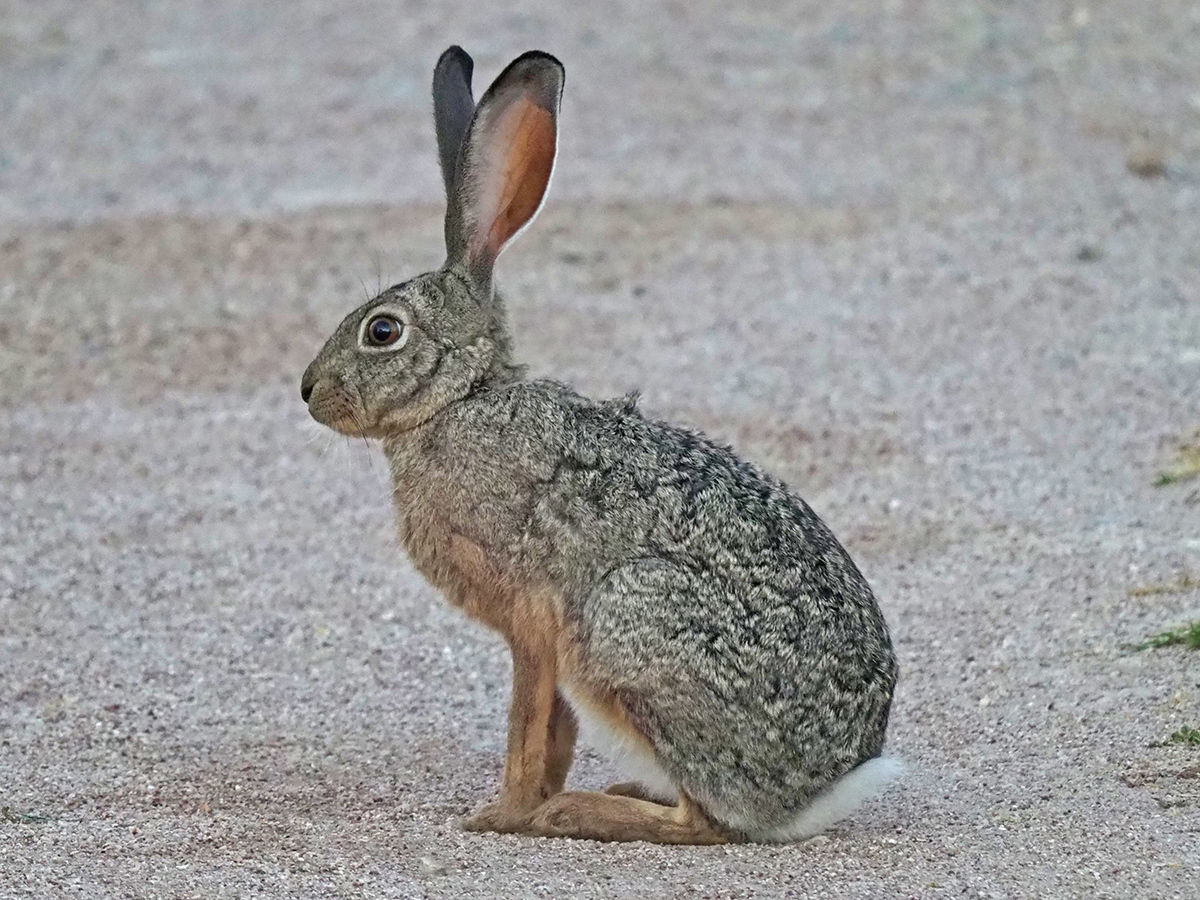
Description

The scrub hare, scientifically known as Lepus saxatilis, is a fascinating mammal belonging to the Leporidae family. It is one of two species of hares found in southern Namibia, Mozambique, South Africa, Eswatini, and Lesotho. The species is characterized by its slender, agile body, long ears, and powerful hind legs, which are adapted for swift movement and evasive action. The scrub hare’s fur is typically a mottled gray-brown color, providing effective camouflage in its natural habitat.
Appearance

The scrub hare’s appearance is distinguished by its relatively large size compared to other hare species, with adults reaching lengths of up to 50 centimeters and weighing around 2 to 4 kilograms. Its long, black-tipped ears and distinctive facial features set it apart from similar species. The hare’s keen senses and remarkable agility make it well-suited for survival in its diverse habitats.
Distribution
The scrub hare is primarily found in the savanna woodland, scrub areas, and open grasslands of southern Namibia, Mozambique, South Africa, Eswatini, and Lesotho. Its distribution is closely linked to the availability of suitable habitats, and its population density may vary based on factors such as vegetation cover and human impact. While the species is currently listed as least concern, there are concerns about declining populations due to habitat loss and other environmental pressures.
Habitat Preferences

The scrub hare thrives in a variety of ecosystems, including woodland, scrub cover with grass, savannah, and open grassland. These habitats provide the hare with ample cover for concealment, as well as a diverse range of vegetation for foraging. The species is well-adapted to these environments, utilizing its speed and agility to evade predators and locate food sources. However, the habitat preferences of the scrub hare make it vulnerable to human-induced habitat destruction and fragmentation, posing significant challenges for its long-term survival.
As a conservation scientist, it is imperative to monitor the population trends of the scrub hare and work towards preserving the integrity of its natural habitats to ensure the continued existence of this remarkable species.
Facts About Scrub Hare
- The scrub hare (Lepus saxatilis) is found at elevations of 1220 to 1830 meters above sea level.
- It primarily inhabits the savanna woodland and scrub areas of Africa.
- The species is one of two species of hares found in southern Namibia, Mozambique, South Africa, Eswatini, and Lesotho.
- The scrub hare avoids open grasslands where cover is limited and prefers savannah woodland.
- Conservation status: Least concern.
- The average length of the scrub hare ranges from 52 cm to 60 cm.
- The weight of male scrub hares can reach up to 2kg, while females can also reach up to 2kg.
- The fur of the scrub hare is soft, with a dorsal and head coloration of dark buffy brown, grizzled with black.
- Flanks of the scrub hare are pale, and it has long and broad ears.
- Genetic differentiation among populations of the South African scrub hare Lepus saxatilis has been examined using hypervariable mitochondrial DNA.


