IUCN Red List Conservation Status


Least Concern

LC
NT
VU
EN
CR
EW
EX

Official assessment evaluated in accordance with the IUCN Red List of Threatened Species criteria: Least Concern.


Species Quick Facts

Scientific Name
Chaetophractus vellerosus

Average Lifespan
6-10 years in wild, 10-12 years in captivity

Average Weight
2.5-4.5 kg (5.5-9.9 lbs) – Males: 3.5 kg, Females: 2.8 kg

Average Length
30-45 cm (12-18 inches) – head-body length excluding tail

Overview & Identification

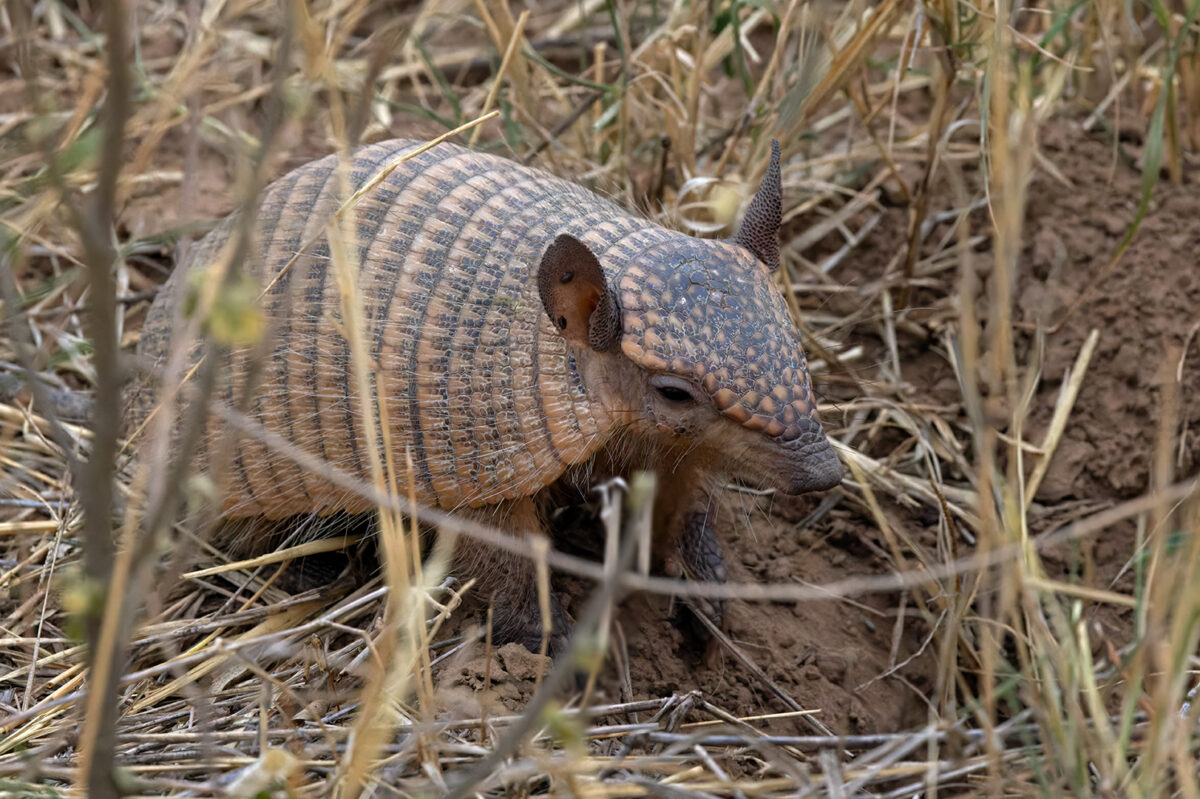
The Screaming Hairy Armadillo (Chaetophractus vellerosus) belongs to the order Cingulata and the family Chlamyphoridae, subfamily Euphractinae. It inhabits the open grasslands, savannas, and scrubby edges of southern Brazil, northern Argentina, Paraguay, Uruguay, and Bolivia. Unlike the smoother armored relatives, this species is covered with a dense coat of coarse hair that gives it a distinctive shaggy appearance. When threatened, it emits a highโ€‘pitched scream that can be heard up to 200โ€ฏm, a behavior that inspired its common name. The animal is primarily nocturnal, digging extensive burrows up to 2โ€ฏm long where it rests during the day. Its carapace consists of flexible bands that allow it to roll into a tight ball for protection. The IUCN currently lists the Screaming Hairy Armadillo as Least Concern due to its wide distribution and presumed large population, although localized pressures are increasing. Conservation measures focus on habitat preservation and monitoring of road mortality.

Behavior & Social Structure

Screaming Hairy Armadillos are solitary for most of the year, establishing individual home ranges that may overlap at resource hotspots. They are predominantly nocturnal, emerging at dusk to forage and returning to burrows before sunrise. Territorial boundaries are marked with scent glands located near the cloaca, and individuals use a series of low growls, hisses, and the characteristic scream to warn intruders. Home ranges average 0.5โ€“1.5โ€ฏkmยฒ for males and 0.3โ€“1.0โ€ฏkmยฒ for females, with occasional seasonal shifts driven by rainfall and prey abundance. Burrowing behavior is central to their ecology; they excavate complex tunnel systems that provide shelter from predators, extreme temperatures, and flooding. While generally shy, they can display defensive aggression when cornered, curling into a ball and using their armored tail as a shield.

Diet & Hunting Patterns

The Screaming Hairy Armadillo is an opportunistic omnivore with a strong insectivorous bias. Its diet consists of 60โ€“70โ€ฏ% arthropods, including ants, beetles, termites, and larvae, which it extracts from soil using its powerful foreclaws. The remaining portion includes small vertebrates (lizards, amphibians), fruits, seeds, and tuberous roots, especially during the dry season when insects are scarce. Individuals can consume up to 300โ€ฏg of food per night, averaging 5โ€“7โ€ฏ% of their body weight. Foraging occurs primarily on the ground surface and within shallow leaf litter, where the armadillo uses its keen sense of smell to locate prey. It employs a digging strategy that creates temporary pits, allowing it to flush out hidden insects. Seasonal dietary shifts are documented: in the wet season, fruit and seed intake rises to 25โ€ฏ% of the diet, while in the dry season, reliance on subterranean insects increases dramatically.

Reproduction & Life Cycle

Sexual maturity is reached at about 10โ€“12โ€ฏmonths for both sexes, though females often delay breeding until they have secured a suitable burrow. The breeding season peaks during the Southern Hemisphere spring (Septemberโ€“November), coinciding with increased insect activity. After a gestation period of 60โ€“70โ€ฏdays, females give birth to one or two precocial young, which are born with soft, hairโ€‘covered carapaces that harden within a few weeks. The mother provides exclusive care, nursing the pups for approximately 8โ€“10โ€ฏweeks while they remain in the natal burrow. Juveniles begin to forage independently at around three months but may stay near the motherโ€™s territory until they establish their own burrows at one year of age. Litter size and reproductive output are modest, reflecting the speciesโ€™ relatively low predation pressure and stable habitat conditions.

Threats & Conservation

The IUCN classifies Chaetophractus vellerosus as Least Concern, citing its broad distribution and adaptability. Nevertheless, the species faces several localized threats. Agricultural expansion in the Pampas and Chaco regions leads to habitat fragmentation and loss of native grasslands, reducing available burrowing sites. Road mortality is a growing problem, with an estimated 5โ€ฏ% of local populations killed annually on highways crossing their range. Although not a primary target, the armadillo is occasionally hunted for its meat and pelts, especially in rural communities. Pesticide use in intensive farming diminishes insect prey abundance, indirectly affecting nutritional intake. Population surveys suggest a stable overall trend, but some subpopulations in heavily cultivated areas have declined by up to 30โ€ฏ% over the past two decades. Conservation actions include protecting grassland corridors, implementing wildlife crossing structures, and promoting sustainable farming practices that preserve soil invertebrate communities.

Interesting Facts

โ€ข Emits a loud, highโ€‘pitched scream when threatened, audible up to 200โ€ฏm
โ€ข Covered in a dense coat of hair, unlike most smoothโ€‘scaled armadillos
โ€ข Can roll into a tight ball, using flexible armor bands for protection
โ€ข Has a wellโ€‘developed cloacal scent gland used for territorial marking
โ€ข Plays a key role in soil aeration through its extensive burrowing activity

Description

The screaming hairy armadillo, also known as the small screaming armadillo, crying armadillo, or the small hairy armadillo, is a species of armadillo characterized by its unique vocalizations and remarkable adaptability. This small mammal is renowned for its distinctive defensive behavior of emitting loud, high-pitched vocalizations when threatened, hence earning its colloquial name. The species is equipped with a protective armor made of bony plates covered by a layer of tough, leathery skin, providing it with a formidable defense against predators. Its ability to burrow into the ground with astonishing speed further enhances its survival capabilities.

Appearance

The screaming hairy armadillo is distinguished by its dense, coarse, and notably long hair, which sets it apart from other armadillo species. The hair covers its entire body, including the underside, and serves as insulation in the harsh environments it inhabits. Its small size and unique vocalization behavior make it a fascinating and distinct member of the armadillo family.

Distribution

This species of armadillo is primarily found in the central and southern parts of South America, with its range extending across countries such as Argentina, Bolivia, Paraguay, and Uruguay. The distribution of the screaming hairy armadillo is closely tied to specific habitat types, and its population density may exhibit notable patterns in response to environmental factors.

Habitat Preferences

The screaming hairy armadillo thrives in a variety of habitats, including desert, grassland, scrubland, and savanna ecosystems. Its ability to adapt to diverse environments is a testament to its resilience and survival strategies. The species is well-suited to sandy terrain, where it can easily burrow and seek refuge from predators, as well as regulate its body temperature in extreme weather conditions.

This comprehensive profile captures the essence of the screaming hairy armadillo, shedding light on its unique characteristics, distribution, and habitat preferences, thereby contributing to the broader understanding of this fascinating species.

Facts About Screaming Hairy Armadillo

  • The screaming hairy armadillo is a burrowing armadillo found in arid areas from low to high altitudes.
  • They are surprisingly rapid and can move quite quickly despite their size and thick armor.
  • Screaming hairy armadillos typically weigh less than 2 pounds and reach lengths of 12 to 22 inches, including the tail.
  • They are primarily found in parts of the Gran Chaco and Pampas areas of Argentina, Bolivia, and Paraguay.
  • The hairy armadillo lives in sloping burrows in desert sand dunes and is fossorial and nocturnal to avoid summer heat and desiccation.
  • Their diet mainly consists of beetle adults and larvae.
  • Reproduction: One or two offspring per litter, and they breed between the end of winter and the beginning of spring.
  • Screaming hairy armadillos are solitary, except for juvenile littermates and during the mating season.
  • Their home ranges vary between 0.23 and 5.3 hectares.
  • The screaming hairy armadillo is native to the Neotropics and has an isolated population in eastern Argentina.


Scientific Provenance & Verified Sources

Biological taxonomy, conservation status, and physical traits are cross-referenced with authoritative global registers:


Peer-reviewed by Wildlife Science Editors โ€ข Updated for 2026

Explore Other Species Profiles