Ryukyu Flying Fox

IUCN Red List Conservation Status


Vulnerable

LC
NT
VU
EN
CR
EW
EX

Official assessment evaluated in accordance with the IUCN Red List of Threatened Species criteria: Vulnerable.


Species Quick Facts

Scientific Name
Pteropus dasymallus

Average Lifespan
8-12 years in wild, 15-20 years in captivity

Average Weight
0.5-0.9 kg (1.1-2.0 lbs) – Males: 0.7 kg, Females: 0.6 kg

Average Length
30-40 cm (12-16 inches) – head-body length excluding tail

Overview & Identification

The Ryukyu flying fox (Pteropus dasymallus) is a large megabat belonging to the family Pteropodidae. Endemic to the Ryukyu Islands of Japan and parts of Taiwan, it occupies subtropical evergreen forests, mangroves, and cultivated orchards across islands such as Okinawa, Amami, and Iriomote. Adults possess a wingspan of 1.0โ€‘1.5 m, a robust head-body length of 30โ€‘40 cm, and a distinctive darkโ€‘brown to black pelage with a lighter ventral side. Unlike many microbats, this species relies on keen vision and acute olfaction rather than echolocation to locate ripe fruit and nectar. The Ryukyu flying fox plays a pivotal role in seed dispersal and pollination, especially for figs, mangoes, and native forest trees, thereby sustaining island ecosystems. Classified as Vulnerable by the IUCN, its populations are fragmented, with estimates of fewer than 10,000 mature individuals. Conservation actions focus on habitat protection, mitigation of hunting pressure, and community outreach to highlight its ecological importance.

Behavior & Social Structure

Ryukyu flying foxes are highly social, forming colonies that range from a few dozen to several hundred individuals roosting in large trees or cliff ledges. They are primarily nocturnal, leaving their roosts at dusk to forage over extensive foraging ranges of up to 30 km. Within colonies, individuals maintain a loose hierarchy based on age and reproductive status, with dominant males defending temporary territories during the breeding season. Communication relies on a repertoire of lowโ€‘frequency vocalizations, wingโ€‘flapping displays, and scent marking using glandular secretions. Seasonal migrations are limited, but bats may shift roost sites in response to food availability or disturbance. Their flight is agile, enabling rapid maneuvering through forest canopies while feeding on fruit and nectar.

Diet & Hunting Patterns

The Ryukyu flying fox is primarily frugivorous, consuming a wide array of native and cultivated fruits such as figs (Ficus spp.), mangoes (Mangifera indica), lychees (Litchi chinensis), and bananas (Musa spp.). Nectar and pollen from flowering trees like the banyan (Ficus microcarpa) and the hibiscus (Hibiscus spp.) supplement its diet, especially during periods of fruit scarcity. An adult may ingest 150โ€‘250 g of fruit per night, equivalent to roughly 30โ€‘40% of its body weight, and can travel up to 20 km in a single foraging bout. Feeding is facilitated by a long, extensible tongue and a broad, clawed thumb that helps manipulate fruit. The species also plays a crucial role in seed dispersal; seeds pass through the digestive tract rapidly, often within 30โ€‘45 minutes, and are deposited with a nutrientโ€‘rich fecal package that enhances germination success.

Reproduction & Life Cycle

Sexual maturity is reached at 2โ€‘3 years for both sexes, although females may first breed at 18 months under optimal conditions. The breeding season peaks between March and May, coinciding with peak fruiting of key plant species. Females give birth to a single pup after a gestation period of 5โ€‘6 months, typically in Novemberโ€‘December. Pups are altricial, weighing about 30โ€‘40 g at birth, and cling to the motherโ€™s ventral fur for the first 4โ€‘6 weeks while she forages nightly. Maternal care includes frequent nursing and thermoregulation, with weaning occurring at 3โ€‘4 months. Juveniles attain flight capability by 6 months and gradually integrate into the colonyโ€™s foraging activities. Longevity and low reproductive output make the species vulnerable to population declines.

Threats & Conservation

The IUCN classifies the Ryukyu flying fox as Vulnerable, with an estimated 5,000โ€‘9,000 mature individuals remaining. Primary threats include habitat loss from urban expansion, agricultural conversion, and logging, which fragment roosting and foraging sites. Illegal hunting for meat and traditional medicine persists in some islands, despite legal protections. Climateโ€‘induced changes, such as increased frequency of typhoons, can devastate fruiting trees, reducing food availability during critical breeding periods. Invasive species, notably the small Indian mongoose (Herpestes auropunctatus), predate on pups and disturb roosts. Conservation measures involve establishing protected areas, enforcing antiโ€‘poaching laws, and communityโ€‘based education programs that promote the batโ€™s ecological value. Population monitoring indicates a slow decline of 10โ€‘15% over the past decade, underscoring the urgency of coordinated action.

Interesting Facts

โ€ข Ryukyu flying foxes can travel up to 30 km in a single night to locate fruiting trees.
โ€ข They are among the few bat species that rely on vision and smell rather than echolocation.
โ€ข Their seed dispersal enhances regeneration of over 50 native plant species across the Ryukyu archipelago.
โ€ข A single colony can contain up to 500 individuals, making it one of the largest bat aggregations in Japan.
โ€ข They have a lifespan of up to 20 years in captivity, far exceeding most other bat species.

Description

Ryukyu Flying Fox

The Ryukyu flying fox, also known as the Ryukyu fruit bat, is a remarkable species of megabat belonging to the family Pteropodidae. These bats are characterized by their large size, with a wingspan reaching up to 1.5 meters, making them one of the largest bat species in the world. Their striking appearance includes a fox-like face, which sets them apart from other bat species. Ryukyu flying foxes are herbivores, primarily feeding on a variety of fruits, flowers, leaves, and bark, contributing to their significance in the ecosystem as seed dispersers.

Appearance
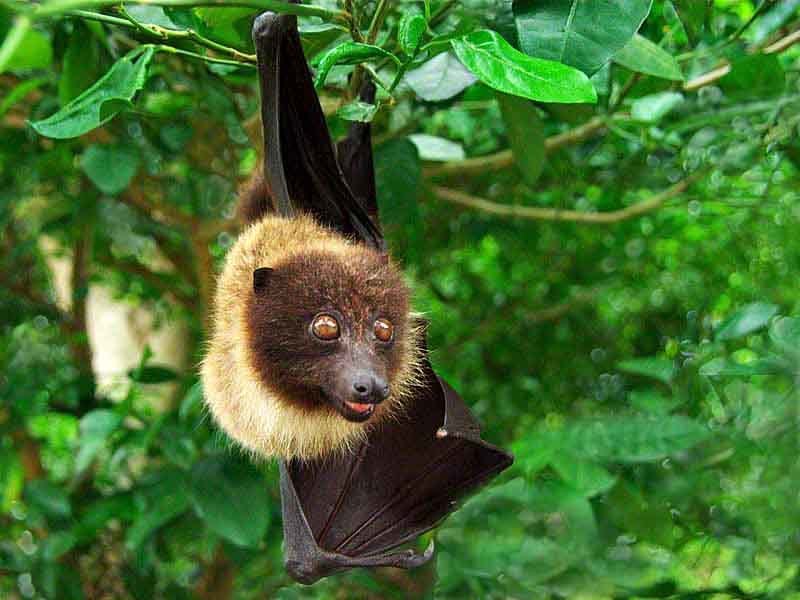
Ryukyu Flying Fox Appearance

The Ryukyu flying fox exhibits distinct physical characteristics that distinguish it from other bat species. With its large size and wingspan, it stands out as an impressive aerial mammal. Its fox-like facial features and striking fur coloration further contribute to its unique appearance. These bats are phenotypically and behaviorally distinct from most microbats, underscoring their importance in the megabat category.

Distribution

This species is found in the subtropical regions of Japan, Taiwan, and the Batanes and Babuyan Islands of the Philippines. The distribution of the Ryukyu flying fox highlights its adaptability to diverse environments within the subtropical zone. However, it is important to note that the population density of these bats may be subject to variations influenced by factors such as habitat availability and human impact.

Habitat Preferences

Ryukyu Flying Fox Habitat

Ryukyu flying foxes thrive in subtropical or tropical dry forests and swamps. These habitats provide the necessary roosting sites and food sources essential for their survival. Forested areas offer suitable shelter for daytime roosting, while the presence of diverse plant species supports their dietary requirements. Unfortunately, habitat loss poses a significant threat to the well-being of these bats, emphasizing the crucial need for conservation efforts to safeguard their natural habitats.

As a conservation scientist deeply committed to wildlife preservation, it is imperative to recognize the ecological importance of the Ryukyu flying fox and advocate for the protection of its habitats to ensure the continued existence of this remarkable species.

By raising awareness and implementing conservation initiatives, we can contribute to the conservation of the Ryukyu flying fox and other vulnerable wildlife, preserving the biodiversity of our planet for future generations.

Facts About Ryukyu Flying Fox

  • The Ryukyu flying fox (Pteropus dasymallus) has a wingspan of 1.24โ€“1.41 meters (4-4.6 feet).
  • It weighs between 400โ€“500 grams (0.88โ€“1.10 pounds).
  • The species is slightly smaller than the Indian flying fox.
  • Ryukyu flying foxes use forests for daytime roosting.
  • They are crepuscular omnivores.
  • These bats rely on flight to move around.
  • The species is found in Japan, Taiwan, and the Ryukyu Islands.
  • Ryukyu flying foxes have a lifespan of up to 372 months.
  • They consume the fruits of a variety of plant species, with figs being a favorite.
  • The maximum recorded length of the Ryukyu flying fox is up to 8.7 inches.


Scientific Provenance & Verified Sources

Biological taxonomy, conservation status, and physical traits are cross-referenced with authoritative global registers:


Peer-reviewed by Wildlife Science Editors โ€ข Updated for 2026

Explore Other Species Profiles