

Description

The Roosevelt elk, scientifically known as Cervus canadensis roosevelti, is a magnificent mammal and the largest of the four surviving subspecies of elk in North America by body mass. Also commonly referred to as the Olympic elk and Roosevelt’s wapiti, this majestic creature is known for its impressive size and striking appearance. The Roosevelt elk is a symbol of strength and resilience, embodying the spirit of the wild.
Appearance
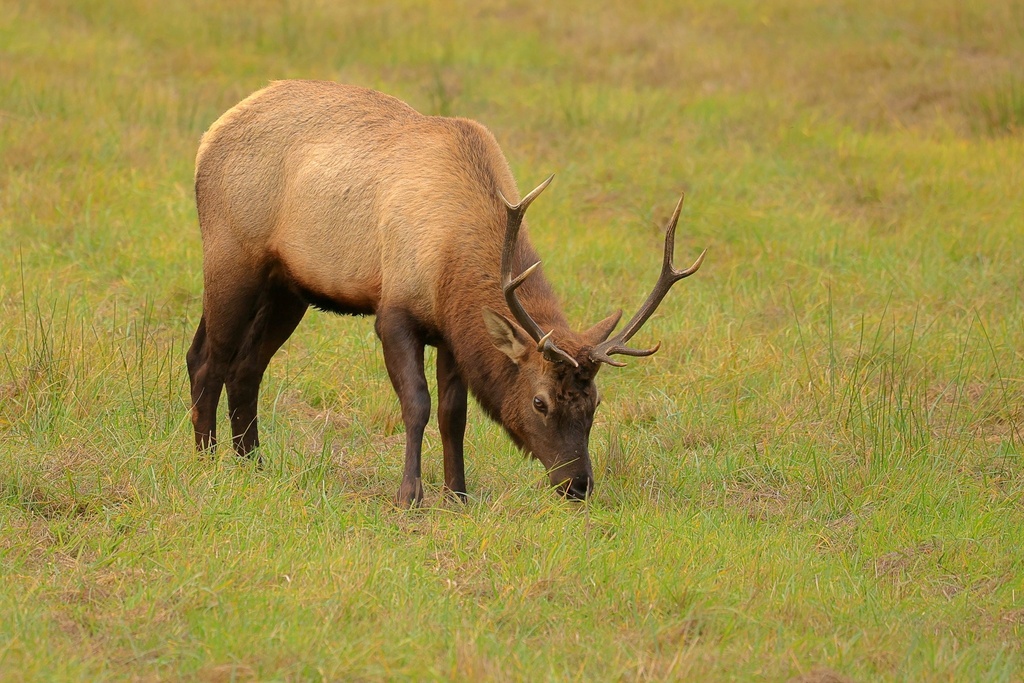
The Roosevelt elk is distinguished by its large body size and impressive antlers. Adult males, known as bulls, can weigh up to 1,000 pounds and stand at an impressive height of 5 feet at the shoulder. Their antlers are notably larger than those of other elk subspecies, adding to their commanding presence. The females, known as cows, are slightly smaller in size but still possess a robust and formidable stature. Their rich, dark brown coat provides excellent camouflage in their natural habitat, allowing them to blend seamlessly into the dense forests and mountainous terrain.
Distribution
The geographic range of the Roosevelt elk encompasses the temperate rainforests of the Pacific Northwest, extending from northern California to southern British Columbia. This subspecies of elk also inhabits the western slopes of the Coastal and Cascade Ranges, where it finds suitable ecosystems to thrive. Notably, the Roosevelt elk has been introduced to other regions, including parts of Alaska, where it has adapted to the unique environmental conditions. While their population has faced historical challenges, conservation efforts have contributed to the preservation of this iconic species.
Habitat Preferences

The Roosevelt elk thrives in diverse ecosystems, including temperate rainforests, mountainous regions, and coastal areas. These habitats provide the elk with ample forage, including grasslands, meadows, and clearcuts interspersed with closed-canopy forests. The ability of the Roosevelt elk to adapt to varying environments reflects its resilience and flexibility as a species. Protecting these critical habitats is essential for ensuring the continued well-being and survival of the Roosevelt elk.
Facts About Roosevelt elk
- The Roosevelt elk (Cervus canadensis roosevelti) is the largest of the four surviving subspecies of elk in North America.
- Bulls of the Roosevelt elk species can weigh between 700 and 1100 lbs, while cows average between 575 and 625 lbs.
- These elk are primarily found west of the Cascade Range in the U.S. states of California, Oregon, and Washington.
- The Roosevelt elk is also known as the Olympic elk and Roosevelt’s wapiti.
- The population of Roosevelt elk in Alaska is estimated to be around 5,500 and 1,600 in the West Coast and South Coast regions, respectively.
- They are a subspecies of the North American elk (Cervus elaphus) and are known for their impressive size and antlers.
- Roosevelt elk inhabit old-growth forests, coniferous forests, and other wooded areas.
- These elk are known for their distinctive bugle, a vocalization used during the mating season.
- The diet of Roosevelt elk mainly consists of grasses, sedges, and various plants.
- The Roosevelt elk is an iconic species in the Pacific Northwest and is a symbol of the region’s diverse and abundant wildlife.


