IUCN Red List Conservation Status


Least Concern

LC
NT
VU
EN
CR
EW
EX

Official assessment evaluated in accordance with the IUCN Red List of Threatened Species criteria: Least Concern.


Species Quick Facts

Scientific Name
Cervus canadensis

Average Lifespan
About 15 years in the wild and into the 20s in captivity.

Average Weight
800-1100 kg

Average Length
Body length: males about 2.4 m (8 ft), females about 2 m (6.5 ft); shoulder height 1.3-1.5 m.

Overview & Identification

The Rocky Mountain elk (Cervus canadensis nelsoni) is a large subspecies of elk native to the mountainous western regions of North America. Bulls carry massive, sweeping antlers and bugle loudly during the autumn rut. It grazes and browses in forests and meadows, gathering in herds, and is an important game and keystone species.

Behavior & Social Structure

Rocky Mountain elk are primarily crepuscular, concentrating feeding and movement activity during the dawn and dusk hours while resting in dense timber cover through midday and much of the night. This activity pattern reduces exposure to predators and human disturbance while allowing elk to exploit cooler temperatures for foraging in open meadows and forest edges. Seasonal shifts occur, with elk becoming more nocturnal in areas of high hunting pressure and more diurnal in protected regions such as national parks, demonstrating notable behavioral plasticity in response to human activity.

Social organization is highly seasonal and sex-segregated for much of the year. Cow elk and their calves form matriarchal herds of a dozen to several hundred individuals, led by an experienced dominant female, while bulls typically live in smaller bachelor groups or alone outside the breeding season. During the autumn rut, mature bulls compete fiercely for access to females, gathering harems of up to 20 cows through a combination of vocal displays, physical dominance, and antler-based combat. Communication is diverse and includes the iconic high-pitched “bugle” call used by bulls to advertise fitness and challenge rivals, along with barks signaling alarm, mewing between cows and calves, and extensive scent marking via wallows, urine, and glandular secretions on trees.

Elk are not strictly territorial but do maintain seasonal home ranges that shift between high-elevation summer range and lower-elevation winter range, a behavior known as altitudinal migration. Home ranges vary widely from a few square kilometers to over 40 square kilometers depending on forage availability, snowpack, and human disturbance. Adaptive behaviors include forming large defensive herds to reduce individual predation risk, utilizing thermal cover in dense conifer stands during severe weather, and exhibiting vigilance behaviors such as sentinel posturing within herds.

Diet & Hunting Patterns

As generalist herbivores, Rocky Mountain elk employ a mixed feeding strategy that shifts seasonally between grazing and browsing. In spring and summer, they primarily graze on grasses, sedges, and forbs found in montane meadows and open forest clearings, taking advantage of nutrient-rich new growth to rebuild body condition after winter. As forage quality declines in autumn and winter, elk shift toward browsing on woody shrubs and tree bark, including willow, aspen, dogwood, and various conifer species, often stripping bark and consuming twigs when herbaceous vegetation is buried under snow or dormant.

Elk are ruminants with a four-chambered stomach that allows efficient fermentation and extraction of nutrients from fibrous, cellulose-rich plant material, an adaptation that supports their large body size on relatively low-quality forage. They require significant daily water intake, typically obtained from streams, springs, and snowmelt, and will adjust home range use to remain within a few kilometers of reliable water sources, especially during hot summer months. Seasonal migration between high-elevation summer range and lower-elevation winter range is driven largely by the need to track optimal forage quality and avoid deep snow that restricts access to food.

Reproduction & Life Cycle

The Rocky Mountain elk breeding season, known as the rut, occurs primarily from early September through mid-October and is characterized by a polygynous mating system in which dominant bulls defend harems of multiple cows against rival males. Bulls engage in bugling, wallowing in mud and urine, sparring with antlers, and displaying enlarged neck muscles to establish dominance hierarchies, with only the most fit males typically siring the majority of offspring in a given herd. Gestation lasts approximately 240 to 262 days (roughly 8.5 months), with births concentrated in late May through June to coincide with peak spring forage availability.

Cows typically give birth to a single calf, with twins occurring in less than 1% of pregnancies, and calves weigh approximately 15 to 16 kilograms (33 to 35 pounds) at birth. Newborn calves are precocial but remain hidden in vegetation for the first two to three weeks of life while the mother forages nearby, a predator-avoidance strategy reinforced by the calf’s spotted coat and minimal scent production. Weaning occurs gradually over the first two to three months, though calves may continue nursing intermittently into early autumn; sexual maturity is reached at approximately 16 months in females (though most first breed at 2.5 years) and around 2 years in males, though bulls rarely secure breeding opportunities until they reach 5-6 years of age and full physical maturity.

Threats & Conservation

Habitat loss and fragmentation from residential development, energy extraction, and road construction represent significant ongoing threats to Rocky Mountain elk populations, particularly as expanding human infrastructure disrupts traditional migration corridors between seasonal ranges. Climate change poses an increasing challenge by altering snowpack patterns, shifting the timing and availability of spring forage, and potentially expanding the range of chronic wasting disease (CWD), a fatal prion disease affecting cervids that has been detected in wild elk populations across multiple western states. Human-wildlife conflict also occurs regularly, including elk damage to agricultural crops, fencing, and private property, as well as collisions with vehicles along highways that intersect migration routes.

Natural predators of elk include gray wolves, mountain lions, and, to a lesser extent, black bears and grizzly bears, which primarily target calves and weakened or aged individuals; predator populations have rebounded significantly in areas such as Yellowstone National Park following wolf reintroduction in 1995, which has notably reshaped elk behavior and habitat use. Despite these pressures, Rocky Mountain elk are currently classified as Least Concern by the IUCN, reflecting robust population numbers exceeding one million individuals across North America, largely attributable to successful conservation initiatives led by organizations such as the Rocky Mountain Elk Foundation, regulated hunting programs that fund habitat restoration, and reintroduction efforts that have restored elk to portions of their historic range in the eastern United States, including Kentucky, Pennsylvania, and Tennessee.

Interesting Facts

  • Record Antler Growth: Bull elk can grow antlers up to 1.2 meters (4 feet) long weighing over 18 kg (40 lbs) per pair, making them among the fastest-growing bone tissue in the animal kingdom, growing up to 2.5 cm (1 inch) per day during peak growth.
  • The Bugle Call: The elk’s distinctive rutting call, or “bugle,” can carry over a kilometer through mountain terrain and combines low guttural tones with a high-pitched whistle produced by specialized laryngeal anatomy.
  • Massive Population Recovery: Rocky Mountain elk populations dwindled to fewer than 100,000 by the early 1900s due to unregulated hunting, but conservation efforts have restored numbers to over 1 million across North America today.
  • Ecosystem Engineers: Elk grazing and migration patterns significantly shape plant community composition and have been shown to influence riparian vegetation recovery, particularly following predator reintroductions such as wolves in Yellowstone.
  • Taxonomic Reclassification: Elk were long classified as a subspecies of the European red deer (Cervus elaphus) but genetic studies have confirmed they belong to a distinct species, Cervus canadensis, more closely related to Central Asian wapiti lineages.
  • Long-Distance Migrants: Some Rocky Mountain elk herds undertake seasonal migrations exceeding 100 km (62 miles) between summer alpine range and lower-elevation winter grounds, among the longest land mammal migrations in the contiguous United States.
  • Deciduous Antlers: Bulls shed and regrow their entire antler rack annually, an extraordinary regenerative feat that makes antlers one of the few mammalian organs capable of complete annual regrowth.

Description

The Rocky Mountain elk, scientifically known as Cervus canadensis nelsoni, is a subspecies of elk renowned for its impressive size and majestic antlers. These iconic mammals are characterized by their large, muscular bodies and distinctive reddish-brown coat, which becomes darker in the winter months. Adult males, known as bulls, can weigh up to 700 pounds and stand around five feet tall at the shoulder, while adult females, known as cows, are slightly smaller in size. One of the most striking features of the Rocky Mountain elk is their formidable antlers, which can reach impressive lengths and are adorned with multiple tines, adding to their regal appearance.

Appearance
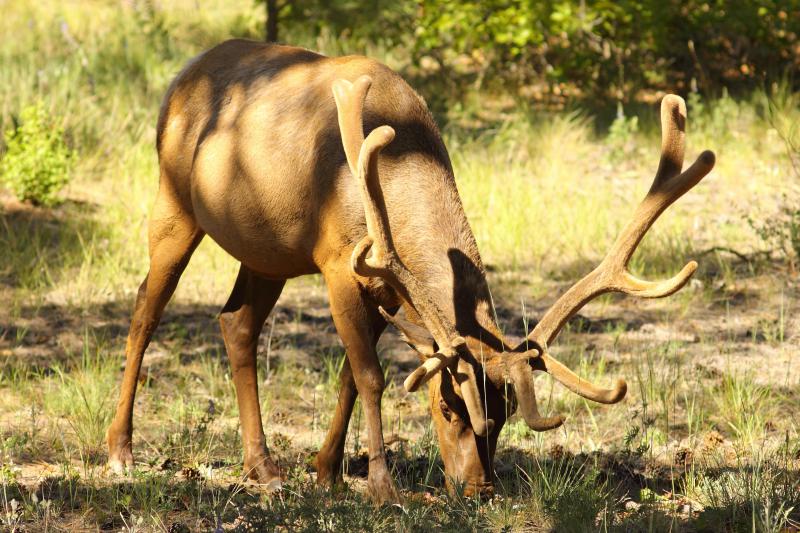
The Rocky Mountain elk boasts several distinguishing features that set it apart from other elk subspecies. Their larger body size and darker coat differentiate them from the Roosevelt elk, while their more massive antlers and lighter coat distinguish them from the Tule elk. These physical characteristics, combined with their habitat preference, contribute to their unique identity within the elk species.

Distribution

Rocky Mountain elk are primarily found in the Rocky Mountains and adjacent ranges of Western North America, spanning across the United States and Canada. They can be observed in various regions, including Montana, Wyoming, Colorado, and Alberta, among others. Their population density often reflects their preference for mountainous terrain and forested ecosystems, where they can find ample food, water, and shelter.

Habitat Preferences
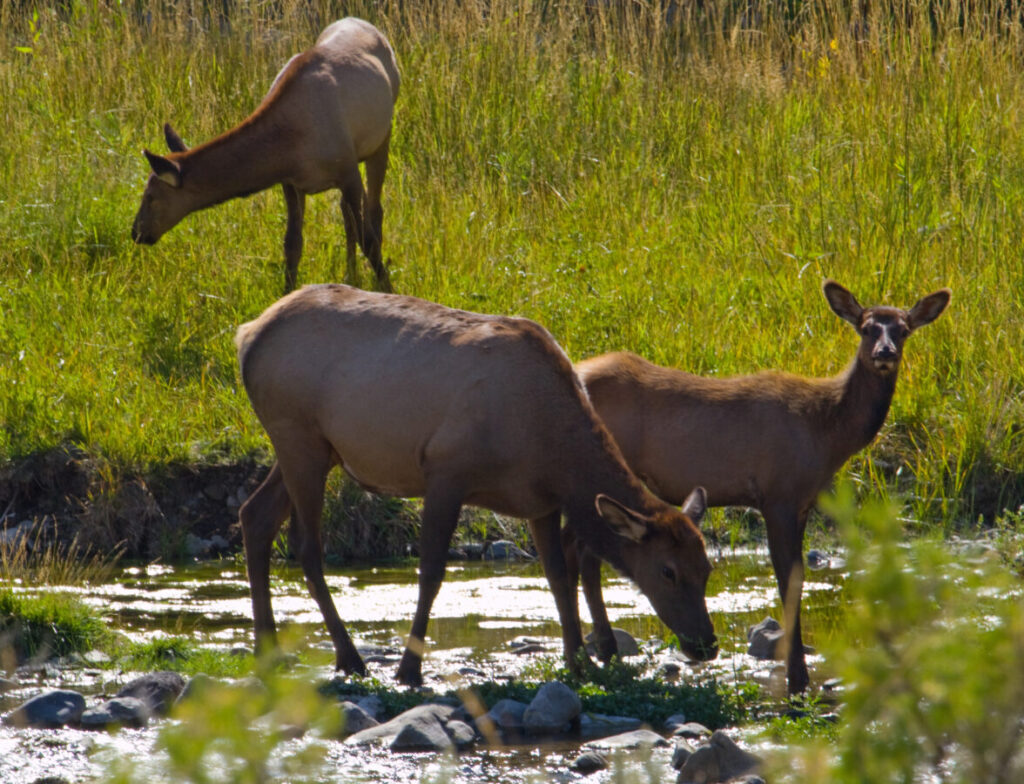
Rocky Mountain elk thrive in a diverse range of habitats, including alpine meadows, subalpine forests, and open woodlands. These ecosystems provide an abundance of nutritious forage, such as grasses, sedges, and shrubs, which are essential for their survival. During the winter months, they migrate to lower elevations, seeking out open forests and floodplain marshes where they can find sustenance. The availability of suitable habitat is crucial for sustaining healthy elk populations and ensuring their well-being.

By encompassing these key aspects, the species profile provides a comprehensive overview of the Rocky Mountain elk, shedding light on its unique characteristics, distribution, and habitat preferences.

Facts About Rocky Mountain elk

  • The Rocky Mountain elk (Cervus canadensis nelsoni) is a subspecies of elk found in the Rocky Mountains and adjacent ranges of Western North America.
  • Mature bulls can weigh between 800-1100 lbs, while adult cows typically weigh between 500-660 lbs.
  • They have a wide elevational range, from valley bottoms to alpine tundra, typically ranging from around 900m to 2000m in elevation.
  • Rocky Mountain elk are primarily found in the mountain ranges and shrubsteppe of eastern Washington, with small herds being present in other areas.
  • Diastema length can be used as an indicator of skeletal development in Rocky Mountain elk.
  • The Besa-Prophet Study Area provides some of the best elk habitat in certain regions.
  • Microsatellite analysis has been conducted on three subspecies of elk, including the Rocky Mountain elk, in California.
  • The Rocky Mountain elk has a Natureserve Global Rank of T5.
  • The species is the second largest member of the deer family (Cervidae).
  • The elk’s history, biology, terminology, range, and habitat are well-documented and studied by organizations such as the Rocky Mountain Elk Foundation and state wildlife agencies.


Scientific Provenance & Verified Sources

Biological taxonomy, conservation status, and physical traits are cross-referenced with authoritative global registers:


Peer-reviewed by Wildlife Science Editors โ€ข Updated for 2026

Explore Other Species Profiles