
Description
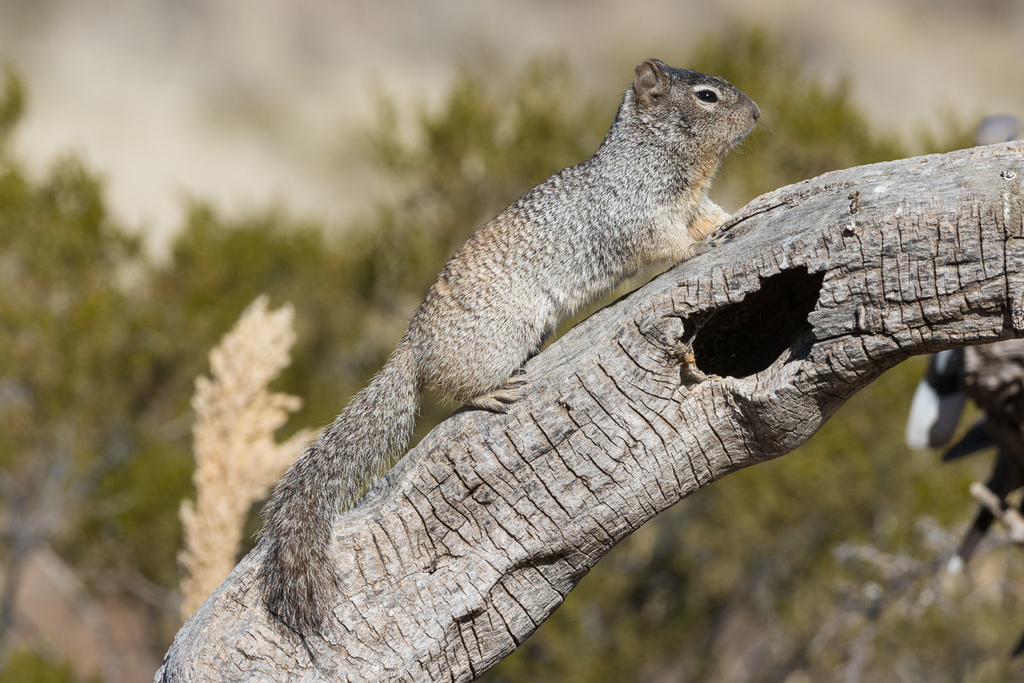
The Rock Squirrel, scientifically known as Otospermophilus variegatus, is a species of rodent in the family Sciuridae. This diurnal mammal is recognized for its distinctive appearance and behavior, making it a fascinating subject of study for wildlife enthusiasts and conservation scientists alike.
Appearance

The Rock Squirrel is characterized by its robust build, with a body length ranging from 21 to 26 centimeters and a bushy tail measuring approximately 15 to 21 centimeters. Its fur displays a striking blend of colors, featuring a mottled pattern of gray, brown, and white hues, which aids in camouflaging it within its natural rocky habitat. The species is distinguished by its large, dark eyes and prominent ears, which contribute to its keen sense of alertness and ability to detect predators.
Distribution
This species is native to Mexico and the Southwestern United States, including southern Nevada, Utah, Colorado, Arizona, New Mexico, and West Texas. The Rock Squirrel exhibits a preference for rocky terrain, canyons, and arid environments, where it can be found inhabiting cliff faces, boulder piles, and rocky outcrops. While its population density may vary across its range, the species’ distribution reflects its adaptation to arid and semiarid regions.
Habitat Preferences

The Rock Squirrel thrives in diverse ecosystems, including desert scrubland, chaparral, and rocky canyons, where it demonstrates remarkable agility in navigating rugged landscapes. Its ability to forage for food and seek refuge in rocky crevices and tree hollows showcases its adeptness at utilizing its environment for survival. The species’ reliance on rocky habitats underscores the significance of preserving these unique ecosystems for the well-being of the Rock Squirrel population.
This comprehensive profile offers a glimpse into the captivating world of the Rock Squirrel, shedding light on its distinctive traits and ecological significance within its native range.
Facts About Rock Squirrel
- The rock squirrel (Otospermophilus variegatus) is native to Mexico and the Southwestern United States.
- Rock squirrels almost always inhabit rocky locations including cliffs, canyon walls, talus slopes, boulder piles, and steep outcrops.
- They prefer rocky outcrops in pinyon-juniper and Joshua tree habitats and are occasionally observed in desert scrub habitat.
- Rock squirrels are diurnal, meaning they are active during the day.
- They are known for their distinctive, loud alarm calls that warn other members of their group of potential threats.
- These squirrels primarily feed on seeds, fruits, vegetation, and occasionally insects and small vertebrates.
- The breeding season for rock squirrels typically occurs in late winter or early spring.
- They are solitary animals, but they may form small colonies in suitable habitats.
- Rock squirrels are well adapted to arid environments and can go for extended periods without water.
- The species is known for its agility and ability to navigate through rocky terrain with ease.


