
Description

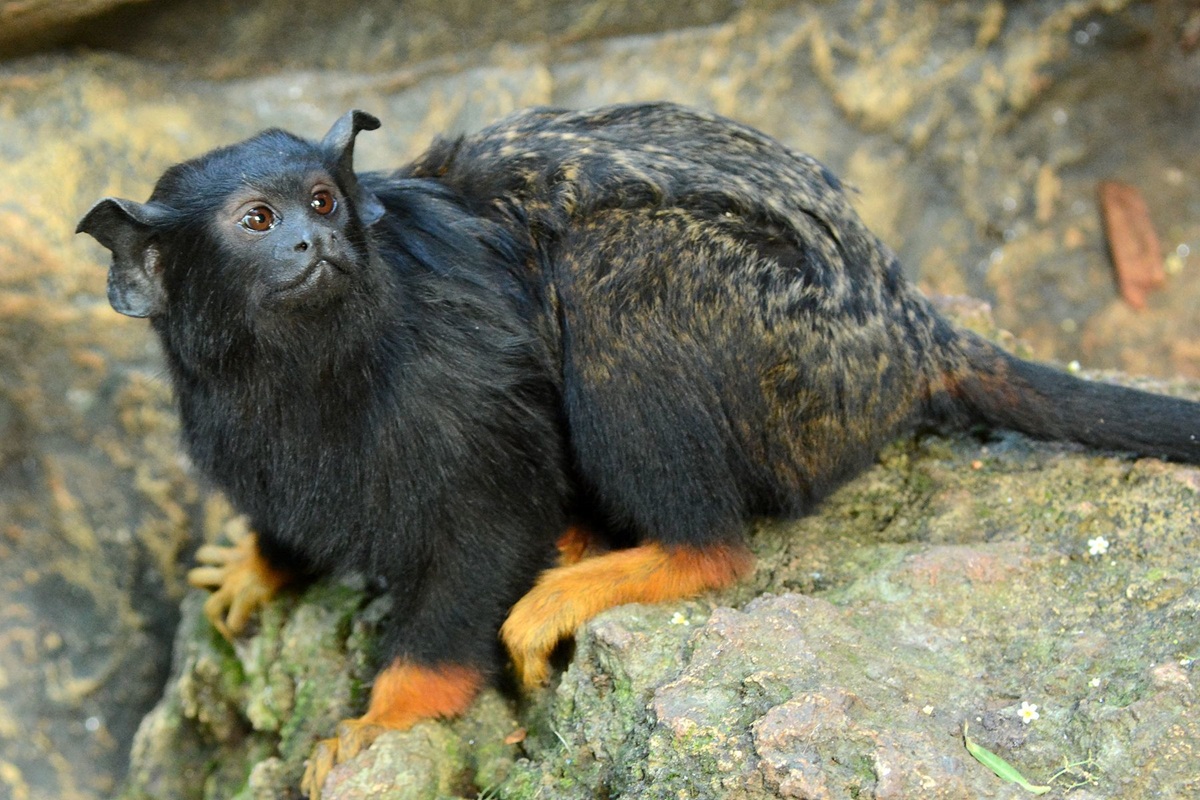
The red-handed tamarin, scientifically known as Saguinus midas, is a captivating New World monkey belonging to the family Callitrichidae. This small primate is renowned for its energetic nature and striking appearance, making it a fascinating subject for wildlife enthusiasts and conservationists alike.
Appearance
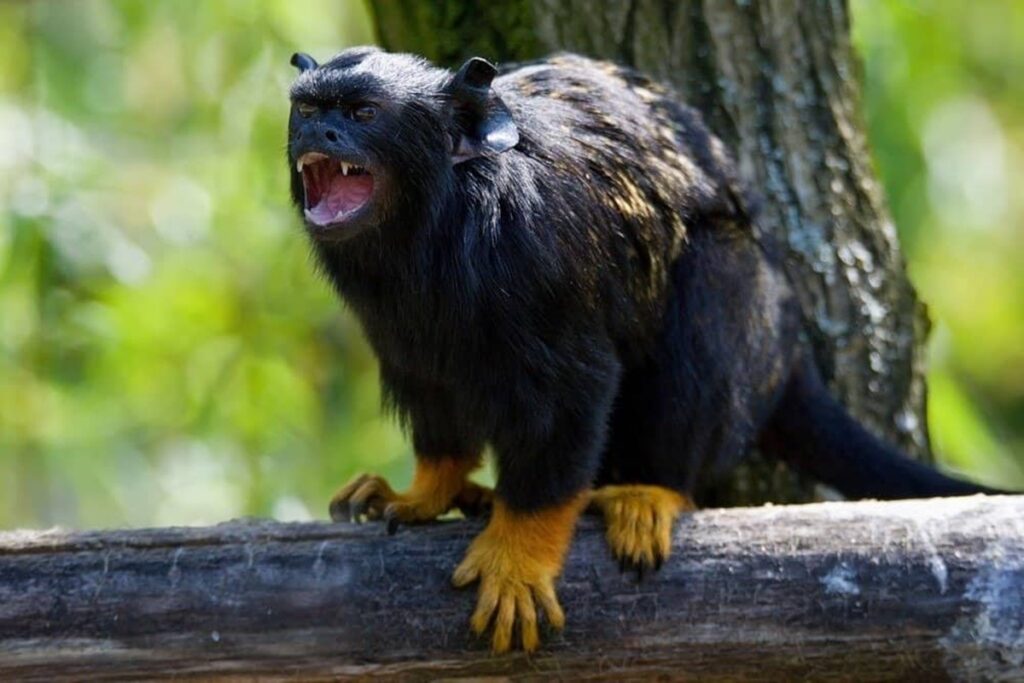
The red-handed tamarin is characterized by its vibrant coat, which features a striking reddish-orange coloration on its feet and hands, hence its colloquial name. Its body is adorned with a coat of dense fur, typically displaying a mix of black, brown, and gold hues. With a small, agile frame and a long tail, the red-handed tamarin bears a resemblance to a cross between a monkey and a squirrel, making it a truly unique and captivating species within the primate family.
Distribution
The red-handed tamarin is native to the lush forests of northern Brazil, Guyana, French Guiana, and Surinam. Within these regions, it demonstrates a remarkable adaptability, thriving in a range of habitats including lowland and savanna forests. Despite the challenges posed by habitat loss and fragmentation, the red-handed tamarin has exhibited resilience, contributing to its survival in the face of environmental changes.
Habitat Preferences
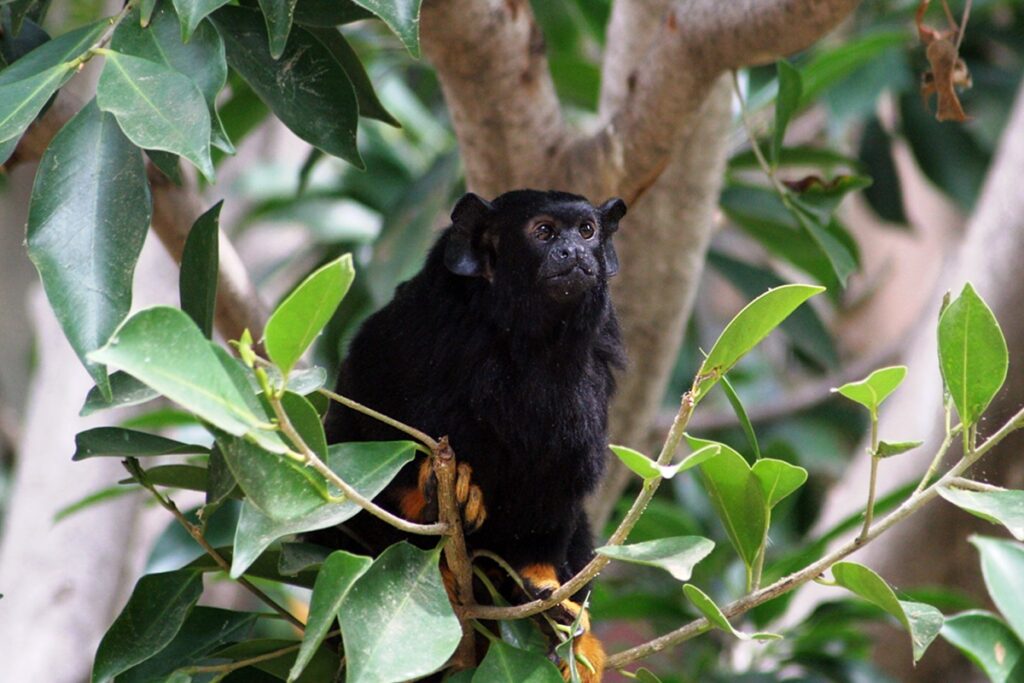
Red-handed tamarins are known to thrive in diverse ecosystems, where they benefit from the abundance of fruit, flowers, insects, frogs, spiders, lizards, and nectar. Their ability to traverse various forest types, from lowland to savanna, highlights their adaptability and resourcefulness in utilizing different ecological niches. These habitats provide the essential resources and shelter necessary for the red-handed tamarin’s survival and well-being, emphasizing the intricate relationship between the species and its environment.
Overall, the red-handed tamarin’s unique characteristics, distribution, and habitat preferences underscore its significance within the realm of wildlife conservation and serve as a testament to the remarkable diversity of the natural world.
Facts About Red-Handed Tamarin
- The Red-Handed Tamarin, also known as the Golden-Handed Tamarin, is native to the Amazon rainforest in Brazil, Guyana, French Guiana, and Suriname.
- These small primates have a body length of about 20.5–28 centimeters and weigh between 400-550 grams.
- Red-Handed Tamarins have a distinctive appearance, with black fur covering their bodies and orange-golden hair on their feet and hands.
- They are highly social animals and live in family groups of up to 15 individuals, consisting of a dominant breeding pair and their offspring.
- Red-Handed Tamarins primarily feed on fruits, insects, and small vertebrates, displaying a diverse diet in their natural habitat.
- Their communication involves a wide range of vocalizations, including chirps, whistles, and trills, which help them maintain social bonds and coordinate group activities.
- These tamarins are arboreal and spend most of their time in the trees, using their long tails for balance and agility while moving through the forest canopy.
- The species is classified as “Near Threatened” on the IUCN Red List due to habitat loss, fragmentation, and the pet trade.
- Red-Handed Tamarins play a crucial role in seed dispersal within their ecosystem, contributing to the maintenance of forest diversity and regeneration.
- Conservation efforts, including protected areas and captive breeding programs, aim to safeguard the population of Red-Handed Tamarins and their natural habitat.


