Racey's pipistrelle

IUCN Red List Conservation Status


Data Deficient

This species has no threat category on the IUCN Red List scale (status: Data Deficient), so no threat level is shown.


Species Quick Facts

Scientific Name
Pipistrellus raceyi

Average Lifespan
5-9 years in wild, 8-12 years in captivity

Average Weight
0.004-0.006 kg (0.009-0.013 lbs) – Males: 0.0045 kg, Females: 0.0055 kg

Average Length
7-9 cm (2.8-3.5 inches) – head-body length excluding tail

Overview & Identification

Pipistrellus raceyi, commonly called Racey’s pipistrelle, belongs to the family Vespertilionidae, the largest family of insectโ€‘eating bats. First described by Hill & Harrison in 1975, this species is endemic to the humid lowland forests of Central Africa, with confirmed records from Cameroon, Gabon, the Republic of Congo, and the Democratic Republic of Congo. It prefers mature primary forest but can also be found in secondary growth and forest edges near watercourses. The bat is diminutive, with a forearm length of 28โ€“32โ€ฏmm and a wingspan of roughly 190โ€ฏmm, giving it agile, maneuverable flight suited for cluttered understory habitats. Its dorsal fur is a uniform dark brown, while the ventral side is paler, providing camouflage against bark and leaf litter. As a nocturnal aerial insectivore, P. raceyi plays a crucial role in controlling forest insect populations. Although the IUCN currently lists the species as Data Deficient due to limited survey data, habitat loss from logging and agricultural expansion is suspected to be a growing threat. Ongoing research aims to clarify its distribution, population trends, and ecological requirements to inform conservation actions.

Behavior & Social Structure

Racey’s pipistrelle is strictly nocturnal, emerging at dusk to forage in the forest understory and canopy gaps. Individuals roost in small colonies of 5โ€“20, typically occupying tree cavities, under bark, or in abandoned bird nests. Roost fidelity is high; colonies often return to the same site for multiple years, though seasonal shifts occur when temperature or humidity changes. Males establish loose territories during the breeding season, using lowโ€‘frequency echolocation calls (around 45โ€ฏkHz) to patrol and to communicate with conspecifics. Social interactions include chirps and wingโ€‘flap displays that reinforce hierarchy and coordinate foraging. Foraging bouts last 30โ€“45โ€ฏminutes, during which the bat employs a hawking strategy, catching flying insects midโ€‘air. Home ranges are relatively small, averaging 2โ€“3โ€ฏkmยฒ, reflecting the abundant prey base within intact forest patches. When disturbed, individuals emit a rapid series of broadband clicks as an alarm signal, prompting colony members to disperse temporarily.

Diet & Hunting Patterns

Racey’s pipistrelle is an obligate insectivore, feeding primarily on small, softโ€‘bodied insects that dominate the forest night air. Stomachโ€‘content analyses from captured specimens have identified Diptera (especially chironomids and culicids) as the dominant prey group, comprising roughly 55โ€ฏ% of the diet by volume. Lepidoptera larvae and adults account for 20โ€ฏ%, while Coleoptera (beetles) and Hymenoptera (wasps, ants) make up the remaining 25โ€ฏ%. The bat captures prey using a hawking technique, launching from perches or during continuous flight, and relies on echolocation to detect and track insects in cluttered environments. Daily food intake averages 0.8โ€“1.2โ€ฏg, equivalent to 15โ€“20โ€ฏ% of the batโ€™s body weight, and can increase up to 30โ€ฏ% during lactation. Foraging efficiency is high; individuals can capture up to 150 insects per hour on abundant nights. Seasonal shifts in prey composition occur, with a higher proportion of aquatic insects during the rainy season when streams swell and emergent insects become plentiful.

Reproduction & Life Cycle

Pipistrellus raceyi reaches sexual maturity at 10โ€“12 months for both sexes. Breeding is seasonal, with most births occurring between November and January, coinciding with the peak of insect abundance in the rainy season. Mating is polygynous; dominant males court multiple females using a combination of ultrasonic calls and wingโ€‘flap displays. After a gestation period of approximately 50โ€“55 days, females give birth to a single pup, though twins have been recorded in less than 2โ€ฏ% of litters. Newborns are altricial, weighing about 1โ€ฏg and are furred within three days. The mother nurses the pup exclusively for the first three weeks, after which the juvenile begins to accompany the mother on short foraging trips. Weaning is complete by six weeks, and juveniles achieve flight proficiency by eight weeks. Juveniles remain in the natal colony for several months before dispersing to establish their own roosts, contributing to gene flow across forest fragments.

Threats & Conservation

The IUCN classifies Pipistrellus raceyi as Data Deficient, reflecting the paucity of systematic surveys across its range. Nevertheless, habitat loss is the principal inferred threat. Loggingโ€”both legal and illegalโ€”has fragmented the lowland rainforests of Central Africa, reducing the availability of suitable roosting sites such as tree cavities. Agricultural expansion, particularly oilโ€‘palm plantations, further degrades habitat continuity, limiting foraging corridors. Mining activities introduce noise and light pollution, which can disrupt echolocation and alter insect prey availability. Climate change may shift the phenology of insect emergence, potentially desynchronizing bat reproductive cycles with peak food resources. Current population estimates are uncertain, but localized studies suggest densities of 2โ€“5 individuals per hectare in intact forest, with declines of up to 30โ€ฏ% in heavily logged areas over the past two decades. Conservation actions recommended include protecting primary forest blocks, establishing buffer zones around known roost sites, and conducting targeted acoustic surveys to refine distribution maps and assess population trends.

Interesting Facts

โ€ข Racey’s pipistrelle was named in honor of the British zoologist J. H. Racey, a pioneer in bat acoustics.
โ€ข It uses one of the lowest frequency echolocation calls among African pipistrelles, allowing it to detect larger, slowerโ€‘flying insects.
โ€ข The species can enter torpor during cold spells, reducing its metabolic rate by up to 70โ€ฏ% to conserve energy.
โ€ข Unlike many bats, P. raceyi often roosts in the same tree cavity for several consecutive years, showing strong site fidelity.
โ€ข Acoustic recordings have revealed that males modify their call structure during the breeding season to attract females.

Description

Racey's pipistrelle

Pipistrellus raceyi, commonly known as Racey’s pipistrelle, is a species of bat belonging to the genus Pipistrellus. This small, insectivorous bat exhibits distinctive characteristics that set it apart from other species within its genus.

Appearance
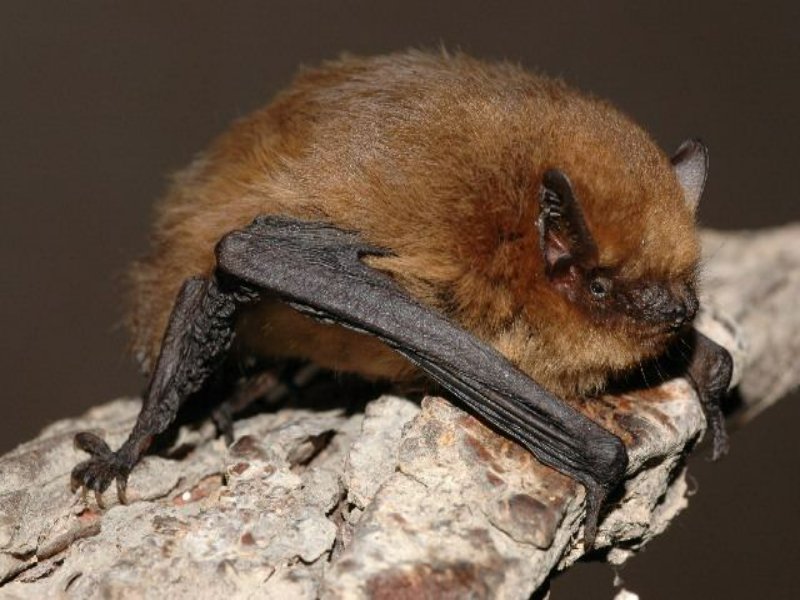
Racey's pipistrelle Appearance

Racey’s pipistrelle is characterized by its petite size and unique physical features. It is known for its reddish-brown fur, which distinguishes it from other bat species. With a wingspan of approximately 20 centimeters and a weight of around 4-6 grams, Pipistrellus raceyi is one of the smaller bat species found in Madagascar. Its echolocation calls are also distinct, aiding in its identification and differentiation from other bat species in its habitat.

Distribution

Pipistrellus raceyi is endemic to Madagascar, with recorded sightings in specific regions below 80 meters in altitude, particularly on the west of the island. The species’ distribution is limited to this unique island ecosystem, contributing to its status as a localized and regionally significant species.

Habitat Preferences

Racey's pipistrelle Habitat

Racey’s pipistrelle is adapted to a variety of habitats within Madagascar, including forested areas and agroecosystems. It has been observed that the bat finds suitable foraging habitats in Madagascar’s vanilla agroecosystems, emphasizing its ability to thrive in diverse environments. The species’ reliance on these specific habitats underscores the importance of preserving Madagascar’s unique ecosystems to ensure the survival and well-being of Pipistrellus raceyi.

As a conservation scientist, it is crucial to recognize the significance of protecting the habitats that support the existence of Pipistrellus raceyi. By understanding the species’ distribution and habitat preferences, we can develop targeted conservation efforts to safeguard its future and contribute to the preservation of Madagascar’s rich biodiversity.

Facts About Pipistrellus raceyi

  • The Pipistrellus raceyi, also known as Racey’s pipistrelle, is a bat species native to Madagascar.
  • It belongs to the genus Pipistrellus and is classified as a small to medium-sized pipistrelle.
  • The body of Pipistrellus raceyi is reddish above, with a slightly darker head and yellowish-brown underside.
  • This species has long fur and uniformly dark brownish-black ears with rounded tips and well-developed ridges.
  • Pipistrellus raceyi is nocturnal and relies on flight to move around.
  • It was first described as a new species in 2006 by Bates, Ratrimomanarivo, Harrison, and Goodman.
  • The species is known to inhabit specific regions of Madagascar, such as Kianjavato.
  • Pipistrellus raceyi is part of the Vespertilionidae family, commonly referred to as vesper bats.
  • These bats play a role in the ecosystem by contributing to insect control through their diet of insects.
  • Conservation efforts are important for protecting the habitat and population of Pipistrellus raceyi due to potential threats to its environment.


Scientific Provenance & Verified Sources

Biological taxonomy, conservation status, and physical traits are cross-referenced with authoritative global registers:


Peer-reviewed by Wildlife Science Editors โ€ข Updated for 2026

Explore Other Species Profiles