IUCN Red List Conservation Status


Endangered

LC
NT
VU
EN
CR
EW
EX

Official assessment evaluated in accordance with the IUCN Red List of Threatened Species criteria: Endangered.


Species Quick Facts

Scientific Name
Manis culionensis

Average Lifespan
10-12 years in wild, up to 20 years in captivity

Average Weight
2.5-5 kg (5.5-11 lbs) – Males: 4.5 kg, Females: 3.5 kg

Average Length
40-55 cm (16-22 inches) – head-body length excluding tail

Overview & Identification

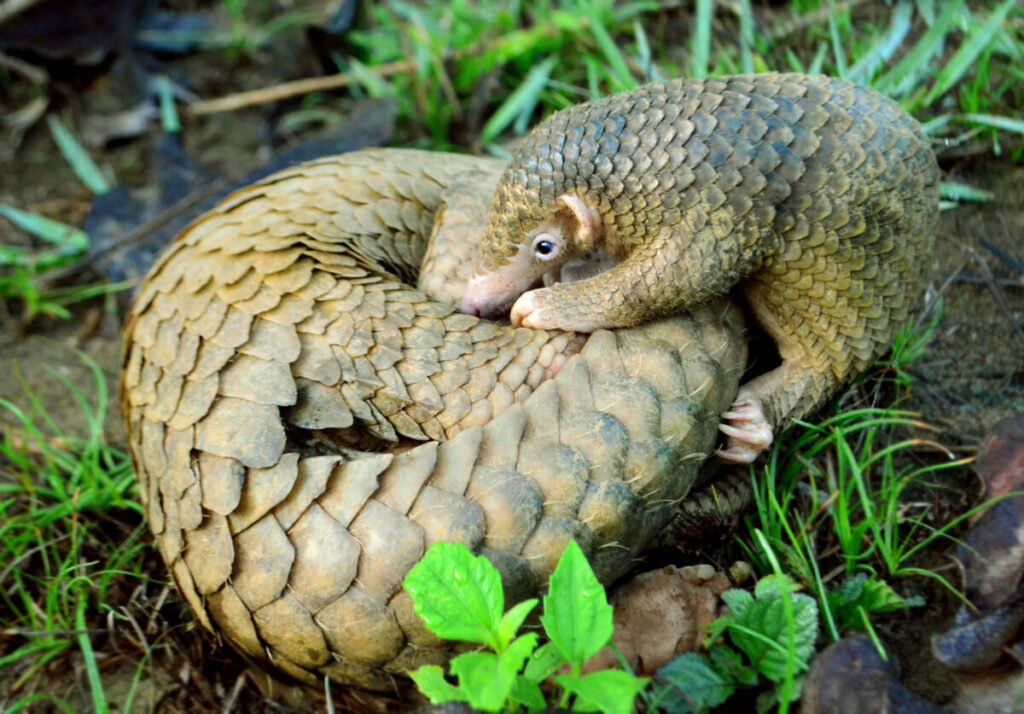
The Philippine pangolin (Manis culionensis) belongs to the order Pholidota and the family Manidae. Endemic to the Philippines, it occurs on the islands of Palawan, the Calamian archipelago, and the nearby islands of Culion and Busuanga. Its preferred habitats are lowland dipterocarp forests, limestone karst areas, and mangrove swamps, where it can find abundant colonies of ants and termites. The species is covered in overlapping keratinous scales that provide protection; when threatened it rolls into a tight ball. It has a long, prehensile tail, powerful forelimbs with sharp claws for digging, and a protrusible tongue up to 40โ€ฏcm that can be flicked rapidly to capture prey. Nocturnal and solitary, the pangolin relies on keen sense of smell to locate food. The Philippine pangolin is listed as Endangered on the IUCN Red List due to intense hunting pressure for its scales and meat, and rapid loss of forest habitat. Conservation measures include its inclusion in CITES Appendix I, protection within several national parks, and emerging communityโ€‘based antiโ€‘poaching initiatives. Despite these efforts, the species remains one of the most threatened mammals in the archipelago, with fragmented populations and an estimated total of fewer than 1,000 mature individuals.

Behavior & Social Structure

Philippine pangolins are strictly solitary, with individuals maintaining exclusive home ranges that may overlap only at feeding sites. They are primarily nocturnal, emerging at dusk to forage and retreat to burrows or hollow logs before sunrise. Territories are marked with secretions from anal scent glands and by depositing crushed termite nests, which convey individual identity to conspecifics. Communication is limited to lowโ€‘frequency hisses, grunts, and occasional tailโ€‘slaps when disturbed. Homeโ€‘range sizes vary with habitat quality, ranging from 1โ€ฏkmยฒ in dense forest to over 5โ€ฏkmยฒ in more open, degraded areas. While generally reclusive, they may be observed crossing forest trails or riverbanks, especially during the rainy season when termite activity peaks.

Diet & Hunting Patterns

The Philippine pangolin is a specialized insectivore, feeding almost exclusively on ants, termites, and the larvae of woodโ€‘boring beetles. An adult can consume up to 70โ€ฏ% of its body weight in insects each night, extracting up to 1โ€ฏkg of prey in a single foraging bout. It locates prey by scent, then uses its powerful foreclaws to break open termite mounds or ant nests. The tongue, coated with sticky saliva, can extend up to 40โ€ฏcm and flick out at speeds of 10โ€ฏcm per second, allowing the animal to capture dozens of insects per swipe. Water intake is minimal, as moisture is obtained from the prey. Seasonal fluctuations in termite activity influence foraging distance, with individuals traveling up to 2โ€ฏkm from their burrow during periods of low prey density.

Reproduction & Life Cycle

Sexual maturity is reached at about 2โ€“3โ€ฏyears for both sexes, although females may breed earlier in resourceโ€‘rich environments. Breeding is not strictly seasonal, with births reported throughout the year, but a peak occurs during the dry season (Decemberโ€“February) when prey abundance is high. After a gestation period of roughly 150โ€ฏdays, a single offspring is born. Newborn pangolins are altricial, blind and covered in soft, flexible scales that harden within weeks. The mother provides exclusive care for 2โ€“3โ€ฏmonths, nursing the young and teaching it to dig and forage. Juveniles remain with the mother until they achieve sufficient foraging proficiency, after which they disperse to establish their own territories.

Threats & Conservation

The IUCN classifies the Philippine pangolin as Endangered, with an estimated population of fewer than 1,000 mature individuals. The primary threat is illegal hunting for its scales, which are prized in traditional Asian medicine, and for its meat, considered a delicacy. Poaching pressure has intensified with the rise of transโ€‘national wildlife trafficking networks. Habitat loss compounds the risk; lowland forests are being cleared for timber, oil palm plantations, and mining, while mangroves are reclaimed for aquaculture. Fragmentation isolates populations, reducing genetic diversity. Conservation actions include strict enforcement of CITES Appendixโ€ฏI listings, establishment of protected areas such as the Palawan Biosphere Reserve, and communityโ€‘based monitoring programs. Captiveโ€‘breeding attempts are limited but aim to support future reโ€‘introduction efforts.

Interesting Facts

โ€ข The Philippine pangolin can roll into a perfect ball, covering its vulnerable underside with hard scales.
โ€ข Its tongue can be longer than its body, reaching up to 40โ€ฏcm to extract insects from narrow tunnels.
โ€ข It is the only pangolin species found exclusively in the Philippines, making it a true endemic.
โ€ข Despite being nocturnal, it has excellent night vision and a highly developed sense of smell.
โ€ข All pangolin species, including the Philippine pangolin, are listed in CITES Appendixโ€ฏI, prohibiting international commercial trade.

Description

The Philippine pangolin, scientifically known as Manis culionensis, is a unique mammal belonging to the pangolin family. This species is characterized by its distinctive overlapping scales, which provide a natural armor to protect it from predators. The Philippine pangolin is primarily nocturnal and solitary, with a semi-arboreal lifestyle, often foraging for ants and termites in both ground and tree habitats.

Appearance
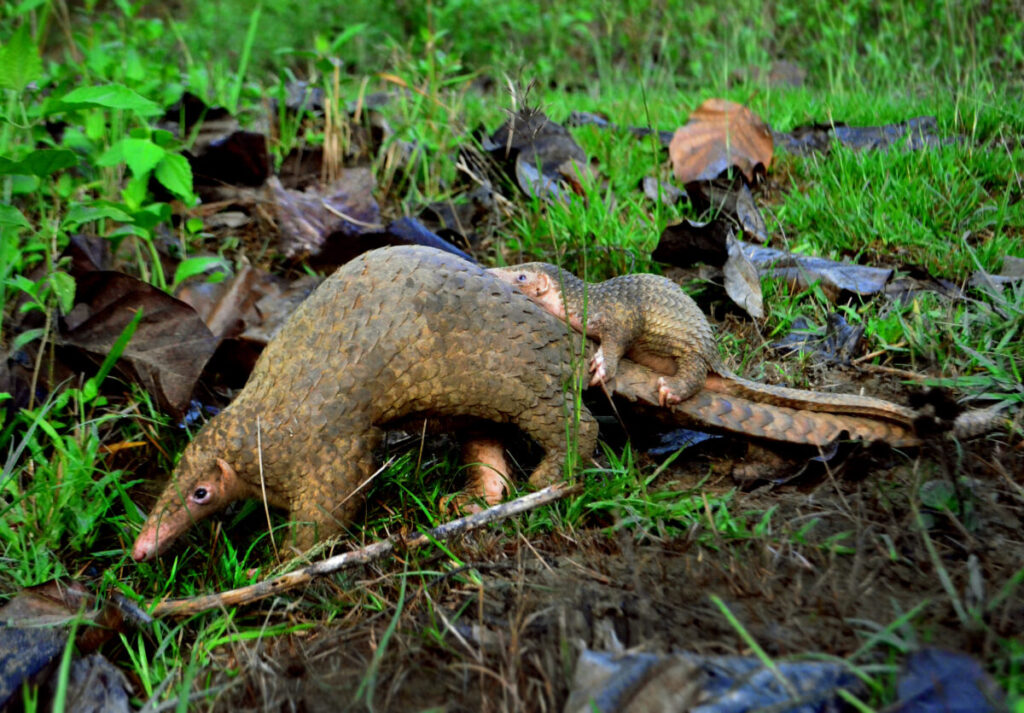
The Philippine pangolin is easily recognizable by its scales, which are formed from keratin, the same material found in human fingernails. These scales cover most of its body and serve as a form of protection from potential threats. It has a small, elongated body and a long, sticky tongue, which it uses to extract insects from crevices. The species is well-adapted for its specialized diet and mode of foraging.

Distribution

This species is endemic to the Palawan province of the Philippines, making it a critically important and unique component of the region’s biodiversity. The Philippine pangolin is restricted to this limited range, and its population density is notable within its endemic habitat. Efforts to protect and conserve this species are crucial for its survival and the preservation of the Palawan ecosystem.

Habitat Preferences
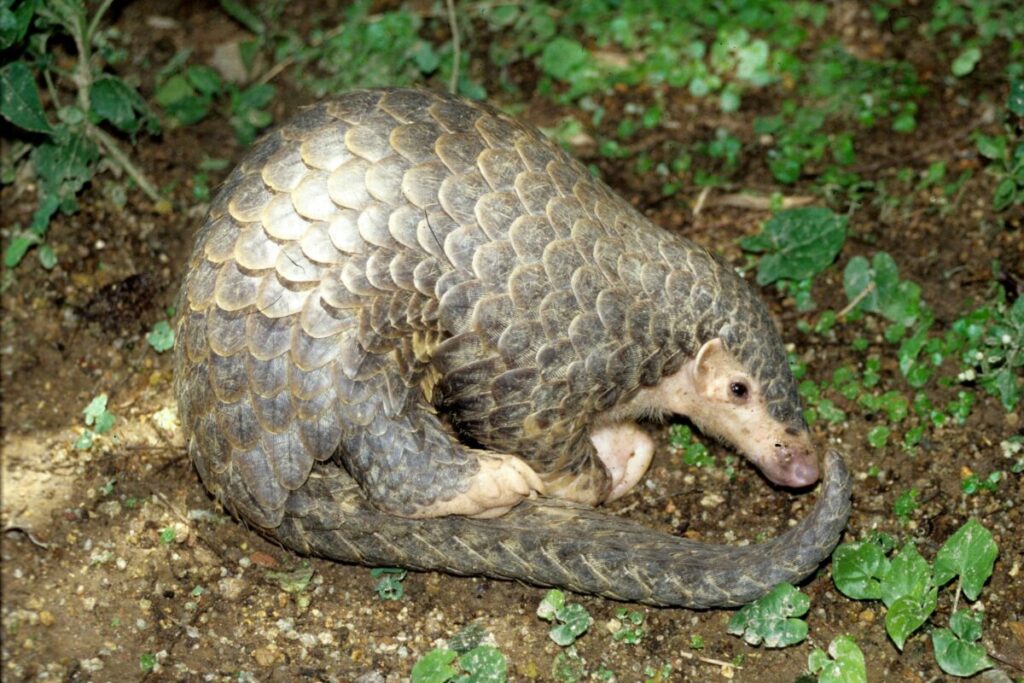
The Philippine pangolin thrives in a variety of habitats, including primary and secondary forests, as well as surrounding grasslands. These ecosystems provide the necessary resources for the species to fulfill its dietary and shelter needs. The conservation of these habitats is essential for the well-being and survival of the Philippine pangolin.

By focusing on these key aspects, we can gain a deeper understanding of the Philippine pangolin and the importance of its conservation within the unique ecosystem of the Palawan province.

Facts About Philippine Pangolin

  • The Philippine pangolin, also known as Manis culionensis, is endemic to four Philippine islands: Palawan, Busuanga, Culion, and Calauit.
  • It can be distinguished from the Sunda pangolin by its smaller scales and a shorter head and body to tail length ratio.
  • The Philippine pangolin measures roughly 30 to 90 centimeters (12 to 35 inches) in length, with an additional 26 to 88 centimeters (10 to 35 inches) for its tail.
  • This species weighs between 2 to 77 pounds (1 to 35 kilograms).
  • In the Province of Palawan, the Philippine Pangolin is classified as Critically Endangered.
  • The Philippine pangolin is a solitary, nocturnal, non-vocal, and semi-arboreal mammal.
  • Its population size is currently unknown, and it has a lifespan of around 20 years.
  • The species is trafficked for its meat and the unfounded medicinal properties of its scales.
  • The Palawan or Philippine pangolin (Manis culionensis) is one of eight species of pangolin and is endemic to the Philippines.
  • Efforts are being made to save the Philippine pangolin, with studies indicating that it is not too late to protect this species from extinction.


Scientific Provenance & Verified Sources

Biological taxonomy, conservation status, and physical traits are cross-referenced with authoritative global registers:


Peer-reviewed by Wildlife Science Editors โ€ข Updated for 2026

Explore Other Species Profiles