Philippine Naked-Backed Fruit Bat

IUCN Red List Conservation Status


Least Concern

LC
NT
VU
EN
CR
EW
EX

Official assessment evaluated in accordance with the IUCN Red List of Threatened Species criteria: Least Concern.


Species Quick Facts

Scientific Name
Dobsonia chapmani

Average Lifespan
10-15 years in wild, 15-20 years in captivity

Average Weight
0.6-0.9 kg (1.3-2.0 lbs) – Males: 0.8 kg, Females: 0.7 kg

Average Length
15-20 cm (6-8 inches) – head-body length excluding tail

Overview & Identification

The Philippine nakedโ€‘backed fruit bat (Dobsonia chapmani) is a megabat in the family Pteropodidae, order Chiroptera. Endemic to the Philippines, it inhabits the islands of Mindanao, Leyte, and surrounding archipelagos. The species prefers lowland and montane tropical evergreen forests, often roosting in large colonies within limestone caves, abandoned tunnels, and occasionally in hollow trees near coastal cliffs. Its most distinctive morphological trait is the lack of a dorsal fur covering the wingโ€‘membrane, giving the appearance of a โ€œnaked back.โ€ The forearm is robust, supporting a wingspan of 80โ€“95โ€ฏcm, and the headโ€‘body length ranges from 15 to 20โ€ฏcm. Fur coloration is generally dark brown to black on the dorsal side, with lighter grayish ventral fur. As a frugivore, D. chapmani plays a crucial role in seed dispersal for several fig (Ficus) and mango (Mangifera) species, contributing to forest regeneration. The IUCN currently lists the species as Least Concern, reflecting its relatively wide distribution and presence in several protected areas, although habitat loss and hunting pressure remain localized threats. Ongoing monitoring and habitat protection are essential to maintain stable populations.

Behavior & Social Structure

Dobsonia chapmani is a highly social species, forming colonies that can number from a few dozen to several hundred individuals. Colonies are typically maleโ€‘biased during the breeding season, with dominant males defending roosting sites and courting females through vocalizations and wingโ€‘flapping displays. The bats are nocturnal, leaving their roosts at dusk to forage over forest canopies and coastal fruiting trees. Foraging ranges extend up to 15โ€ฏkm from the roost, and individuals use a combination of echolocation clicks and acute vision to navigate dense foliage. Territoriality is limited; overlapping foraging areas are common, and individuals communicate via lowโ€‘frequency calls that convey identity and reproductive status. Roost fidelity is strong, with many bats returning to the same cave for years, although seasonal movements to alternative roosts occur in response to disturbance or food availability.

Diet & Hunting Patterns

The diet of the Philippine nakedโ€‘backed fruit bat is primarily frugivorous, with a strong preference for ripe figs (Ficus spp.), mangoes (Mangifera indica), and banana (Musa spp.). Seasonal availability drives dietary shifts; during the dry season, bats supplement their intake with nectar from flowering Cephalotaxus and occasional insects captured opportunistically. An adult consumes roughly 150โ€“250โ€ฏg of fruit per night, equivalent to 20โ€“30โ€ฏ% of its body weight, providing essential sugars, vitamins, and water. Feeding occurs in flight, with the bat using its elongated tongue and sharp incisors to bite fruit and extract pulp, while discarding seeds that are later dispersed across the landscape. The species also plays a pivotal role in pollinating nocturnally blooming plants such as Durian (Durio zibethinus), facilitating crossโ€‘pollination through pollen transfer on the fur of the muzzle and wings.

Reproduction & Life Cycle

Sexual maturity in D. chapmani is reached at 12โ€“18โ€ฏmonths for both sexes, with females typically breeding once per year. Mating occurs between May and July, coinciding with the peak fruiting period of many forest trees. After a gestation period of approximately 5.5โ€ฏmonths, females give birth to a single pup, which is altricial and weighs about 8โ€ฏ% of the motherโ€™s body mass. The newborn is attached to the motherโ€™s nipple for the first two weeks, during which the mother provides warm milk rich in lipids. Pups are weaned at 8โ€“10โ€ฏweeks and become volant shortly thereafter, yet they remain in the natal colony for several months to learn foraging routes and social cues. Females exhibit a high degree of parental investment, often forming small nursery groups where multiple mothers care for each otherโ€™s young, enhancing pup survival in the face of predation and environmental fluctuations.

Threats & Conservation

The IUCN classifies Dobsonia chapmani as Least Concern, yet localized populations face mounting pressures. Primary threats include deforestation for agriculture, logging, and mining, which fragment the lowland forest habitats essential for foraging. Cave roosts are vulnerable to disturbance from tourism, guano extraction, and illegal hunting for bushmeat, leading to colony abandonment. Climate change poses an indirect risk by altering fruiting phenology, potentially mismatching food availability with breeding cycles. Population estimates suggest a total of 10,000โ€“20,000 mature individuals, with a declining trend of roughly 10โ€ฏ% over the past decade. Conservation actions focus on protecting key roosting caves, enforcing antiโ€‘hunting regulations, and integrating communityโ€‘based forest management to preserve foraging corridors. Ongoing research and monitoring are needed to assess population dynamics and the effectiveness of protected area networks.

Interesting Facts

โ€ข The nakedโ€‘backed fruit batโ€™s wing membrane is attached directly to the spine, giving it a smooth, hairโ€‘free back unlike most bats.
โ€ข It can carry seeds up to 5โ€ฏcm in length, making it a vital seed disperser for largeโ€‘fruited tropical trees.
โ€ข Colonies often roost in limestone caves that are also habitats for endemic swiftlets, creating a unique multiโ€‘species roosting ecosystem.
โ€ข Despite being nocturnal, D. chapmani has excellent color vision, aiding in fruit selection at dusk.
โ€ข The species can travel up to 30โ€ฏkm in a single night when fruit is scarce, demonstrating remarkable endurance for a mediumโ€‘sized bat.

Description

Philippine Naked-Backed Fruit Bat

The Philippine naked-backed fruit bat, scientifically known as Dobsonia chapmani, is a remarkable megabat species endemic to the Philippines. It is characterized by its large size, with a wingspan of approximately 70 centimeters, and a unique feature that sets it apart from other bat species: its lack of fur on the lower back, giving it the appearance of being, as the colloquial name suggests, “naked-backed.” This bat species belongs to the family Pteropodidae and is a vital component of the Philippines’ rich biodiversity.

Appearance
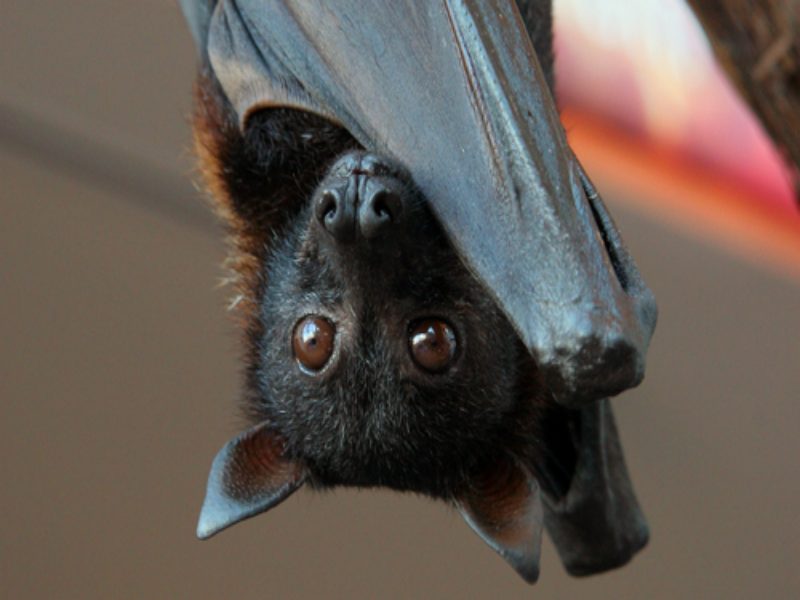
Philippine Naked-Backed Fruit Bat Appearance

The Philippine naked-backed fruit bat is easily distinguishable by its distinctive physical traits. Despite its large size, it is relatively lightweight due to its membranous wings and lack of fur on the lower back, which is a defining characteristic of this species. The absence of fur in this region reveals the bat’s naked skin, creating a striking visual feature. Its fur is typically dark brown, and its wings are broad, allowing for efficient flight and foraging capabilities.

Distribution

This species is primarily found on Negros Island in the Philippines, where it predominantly resides. Additionally, two small populations have been identified on Cebu Island, further enriching the bat’s distribution within the region. The Philippine naked-backed fruit bat’s presence in these specific areas highlights its adaptation to the unique ecosystems and habitats of these islands. While its distribution is relatively localized, the species plays a crucial ecological role within these regions.

Habitat Preferences

Dobsonia chapmani

The Philippine naked-backed fruit bat thrives in diverse habitats, including lowland and montane forests. It is known to roost in small caves or cracks in limestone, demonstrating a preference for sheltered and secluded roosting sites. These bats are also associated with karst habitats, where they forage for fruits and nectar. The varied ecosystems of Negros and Cebu Islands provide the necessary resources for the species’ survival, contributing to its overall well-being and population sustainability.

As a conservation scientist and advocate for wildlife preservation, it is imperative to recognize the significance of protecting the habitats and ecosystems that sustain the Philippine naked-backed fruit bat. By safeguarding these environments, we can ensure the continued existence of this unique and ecologically valuable species for future generations.

This comprehensive species profile offers valuable insights into the distinctive characteristics, distribution, and habitat preferences of the Philippine naked-backed fruit bat, shedding light on the importance of conserving its natural habitats and promoting awareness of its ecological significance.

Facts About Philippine naked-backed fruit bat

  • The Philippine naked-backed fruit bat (Dobsonia chapmani) breeds from April to June.
  • This species typically gives birth to an average of one offspring at a time.
  • The average gestation period for the Philippine naked-backed fruit bat is around 5 months.
  • These bats are endemic to the Philippines and are found on islands such as Negros and Cebu.
  • They measure approximately 218โ€“221 mm from nose to tail.
  • Philippine naked-backed fruit bats are nocturnal and roost in small caves or cracks in limestone.
  • They are known to forage in karst habitats.
  • The species is considered one of the most threatened bats in the world.
  • Philippine naked-backed fruit bats are gregarious and tend to roost hanging from cave ceilings or walls in groups of up to 30 individuals.
  • They are primarily found in Southeastern Asia in the Philippines and the surrounding islands.


Scientific Provenance & Verified Sources

Biological taxonomy, conservation status, and physical traits are cross-referenced with authoritative global registers:


Peer-reviewed by Wildlife Science Editors โ€ข Updated for 2026

Explore Other Species Profiles