Palawan bearded pig

IUCN Red List Conservation Status


Endangered

LC
NT
VU
EN
CR
EW
EX

Official assessment evaluated in accordance with the IUCN Red List of Threatened Species criteria: Endangered.


Species Quick Facts

Scientific Name
Sus ahoenobarbus

Average Lifespan
10-12 years in wild, 15-20 years in captivity

Average Weight
45-115 kg (99-254 lbs) – Males: 70-115 kg, Females: 45-70 kg

Average Length
120-180 cm (47-71 inches) – head-body length excluding tail

Overview & Identification

The Palawan bearded pig (Sus ahoenobarbus) is a mediumโ€‘large suid endemic to the western Philippines. Belonging to the family Suidae, it is one of three bearded pig species that inhabit the archipelago. Its distribution is restricted to the islands of Palawan, Busuanga, Calamian, and nearby smaller islands, where it occupies a mosaic of lowland dipterocarp forest, secondary growth, grassland, and mangrove fringes up to 800โ€ฏm elevation. The species is distinguished by a conspicuous beard of coarse hair extending from the snout to the neck, a dark dorsal stripe, and elongated, upwardโ€‘curving upper canines that can reach 10โ€ฏcm in males. Adults weigh between 45โ€ฏkg and 115โ€ฏkg, with males considerably larger than females, and measure 120โ€“180โ€ฏcm in headโ€‘body length. The Palawan bearded pig is primarily nocturnal, foraging on the forest floor and using its snout to root for tubers, fruits, insects, and small vertebrates. Reproductive output is low, with litters of two to six piglets after a gestation of about 115โ€ฏdays. The IUCN classifies the species as Endangered, citing an estimated population of fewer than 10,000 mature individuals. Habitat loss from logging, agricultural expansion, and mining, combined with illegal hunting for meat and trophies, has caused rapid declines. Conservation actions include protectedโ€‘area designation, communityโ€‘based antiโ€‘poaching patrols, and research on population trends.

Behavior & Social Structure

Palawan bearded pigs live in small, fluid groups that typically consist of a dominant male, several females, and their offspring. Group size rarely exceeds eight individuals, although solitary males are common outside the breeding season. The species is chiefly nocturnal, emerging at dusk to forage while seeking shelter in dense understory or thickets during daylight. Home ranges vary from 2 to 5โ€ฏkmยฒ depending on habitat quality, and individuals defend core foraging areas through scent marking, wallowing, and occasional vocalizations such as grunts and squeals. Communication is largely olfactory; males deposit urine and cheek secretions on vegetation to signal dominance. Social bonds are reinforced by mutual grooming and communal wallowing, which also serves thermoregulation and parasite control. Seasonal movements are limited, but pigs may travel longer distances during mast fruiting events to exploit abundant food resources.

Diet & Hunting Patterns

The Palawan bearded pig is an opportunistic omnivore that exploits a wide array of forest resources. Its diet is dominated by underground plant parts such as tubers, rhizomes, and roots of palms and ferns, which are uncovered by vigorous rooting with the snout. Aboveโ€‘ground foods include fallen fruits (e.g., figs, durian relatives), seeds, nuts, and young shoots. Insects, earthworms, and occasional small vertebrates like lizards or frogs supplement protein intake, especially during the dry season when plant matter is scarce. Seasonal fruiting events can cause temporary spikes in frugivory, and the species has been observed feeding on cultivated crops such as taro and sweet potatoes near human settlements. Daily intake can reach up to 5โ€ฏ% of body weight, and feeding bouts are typically brief, interspersed with wallowing and resting. The pigโ€™s robust digestive system allows fermentation of fibrous material, enabling it to extract nutrients from lowโ€‘quality vegetation.

Reproduction & Life Cycle

Females reach sexual maturity at about 2โ€ฏyears of age, while males mature slightly later at 2.5โ€“3โ€ฏyears. Breeding occurs yearโ€‘round but peaks during the rainy season (Juneโ€“October) when food is plentiful. After a gestation period of 115โ€ฏdays, sows give birth to litters of two to six piglets, with an average of three. Newborns are precocial, able to walk within hours and begin nursing immediately. The sow provides exclusive care for the first 8โ€“10โ€ฏweeks, during which piglets stay hidden in dense vegetation while the mother forages. Weaning occurs at around 10 weeks, after which juveniles gradually integrate into the natal group. Females may breed again within a year, but interโ€‘birth intervals are often extended by food scarcity or disturbance. Longevity of reproductive capacity can extend to 10โ€ฏyears in the wild.

Threats & Conservation

The IUCN Red List classifies the Palawan bearded pig as Endangered, with an estimated 5,000โ€“9,000 mature individuals remaining. The principal threat is habitat loss: commercial logging, conversion of forest to oilโ€‘palm plantations, and openโ€‘pit mining have fragmented the speciesโ€™ range and reduced available foraging ground. Illegal hunting for meat and for the prized canine tusks further depresses populations; surveys indicate that up to 30โ€ฏ% of local hunting pressure targets suids. Road development and associated vehicle collisions add mortality. Climate change may exacerbate food scarcity during prolonged dry periods. Conservation measures include the establishment of the Palawan Wildlife Rescue and Conservation Center, enforcement of hunting bans within protected areas such as the Puerto Princesa Subterranean River National Park, and community education programs. Ongoing population monitoring using camera traps and genetic sampling aims to refine abundance estimates and guide management.

Interesting Facts

โ€ข The Palawan bearded pigโ€™s โ€œbeardโ€ is a dense tuft of hair that can be up to 10โ€ฏcm long, giving the species its common name.
โ€ข It is one of the few pig species that retain a dark dorsal stripe from the head to the rump.
โ€ข Males can develop tusks up to 10โ€ฏcm, which are used in fights and for digging.
โ€ข The species plays a crucial ecological role as a seed disperser and soil aerator through its rooting behavior.
โ€ข Despite its endangered status, it is still hunted for its meat and tusks, which are sometimes used in traditional medicine.

Description

Palawan bearded pig

The Palawan bearded pig, scientifically known as Sus ahoenobarbus, is a remarkable pig species endemic to the Philippines. It is recognized as the largest wild pig species in the country, distinguished by its unique physical attributes and behavioral characteristics. This species is a forest generalist, inhabiting various forest types, including primary/old growth and secondary forests, from sea level to elevations of up to 1,500 meters.

Appearance
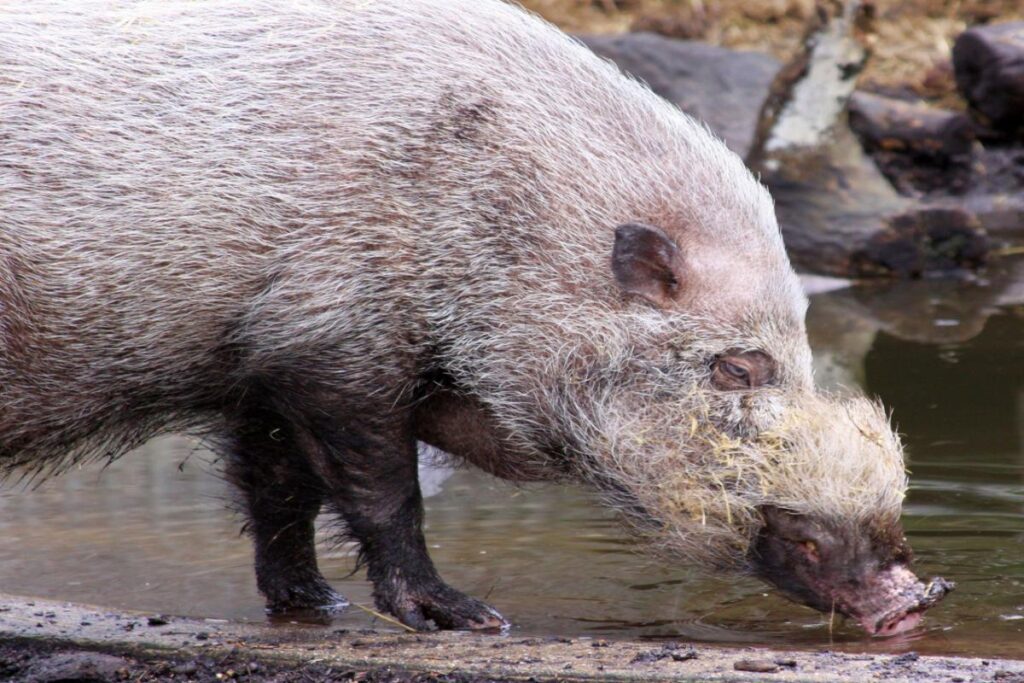
Palawan bearded pig Appearance

The Palawan bearded pig exhibits distinct features that set it apart from similar species. It is characterized by its prominent beard-like tuft of hair on its snout, which gives it a distinctive and striking appearance. This species has a robust build and is known for its impressive climbing and swimming abilities, making it well-adapted to its natural environment.

Distribution

The Palawan bearded pig is exclusively found in Southeast Asia, primarily in the Philippines. Its distribution is limited to the Palawan archipelago, where it thrives in various ecosystems, including rainforests, mangrove thickets, and secondary forests. The species’ population density shows notable patterns, with a preference for undisturbed areas, exhibiting diurnal behavior, and shifting to more nocturnal habits in regions facing high hunting pressures.

Habitat Preferences
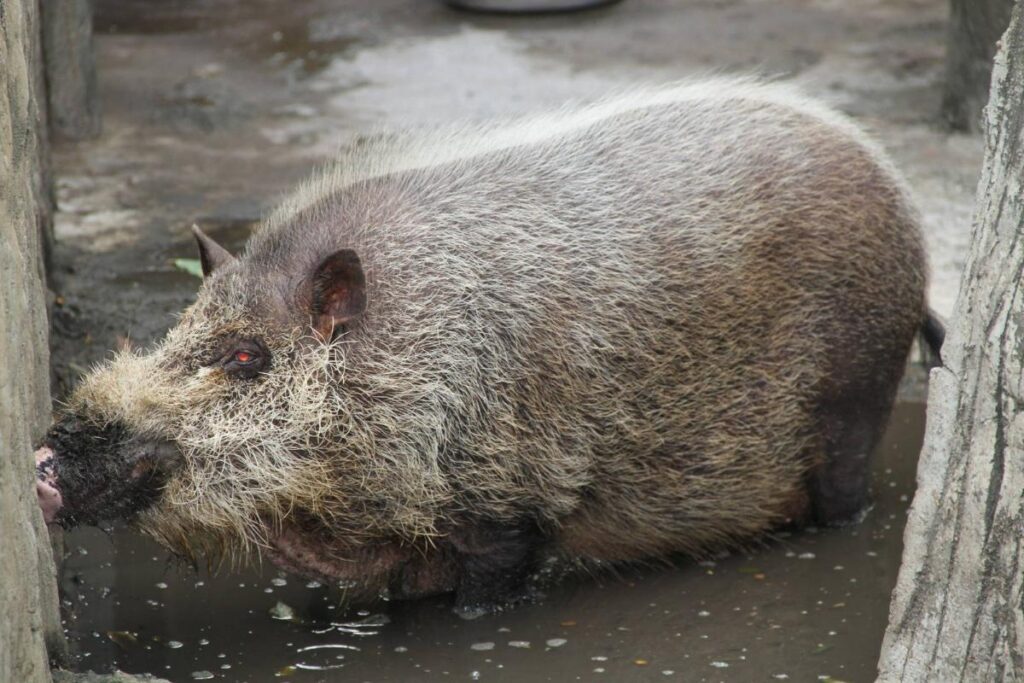
Palawan bearded pig Habitat

This species demonstrates a preference for contiguous and fragmented forests, thriving in both lowland and montane forests up to 1,500 meters above sea level. Additionally, it is known to adapt to cultivated areas. The Palawan bearded pig’s ability to inhabit diverse ecosystems underscores its resilience and adaptability to varying environmental conditions, contributing to its survival and well-being.

In summary, the Palawan bearded pig, with its distinctive appearance and adaptive nature, represents a significant component of the Philippines’ natural heritage. Understanding and conserving its unique habitat and addressing the challenges it faces are crucial for the long-term preservation of this remarkable species.

Facts About Palawan Bearded Pig

  • The Palawan bearded pig (Sus ahoenobarbus) is the largest wild pig species in the Philippines.
  • It is distinct from the closely-related bearded pig (Sus barbatus) found in other regions.
  • This species is endemic to the Philippines and is specifically found on the archipelago of islands.
  • The Palawan bearded pig was initially described as a subspecies of the bearded pig but was later classified as a separate species due to its unique characteristics.
  • It is listed as a species of concern and is classified as belonging to the group “mammals” by conservation organizations.
  • The Palawan bearded pig’s scientific name is Sus ahoenobarbus.
  • This species is known for its distinctive physical features, including a beard-like tuft of hair on its face.
  • The diet of the Palawan bearded pig consists of a variety of vegetation, roots, and small invertebrates.
  • The population of the Palawan bearded pig is threatened due to habitat loss and hunting.
  • Conservation efforts are in place to protect this species and its habitat in the Philippines.


Scientific Provenance & Verified Sources

Biological taxonomy, conservation status, and physical traits are cross-referenced with authoritative global registers:


Peer-reviewed by Wildlife Science Editors โ€ข Updated for 2026

Explore Other Species Profiles