

Description

The Norway lemming, scientifically known as Lemmus lemmus, is a notable species of lemming found in northern Fennoscandia. It is particularly remarkable as the only vertebrate species endemic to the region. These small rodents are known for their cyclic population fluctuations, which have captivated the interest of scientists for decades. The Norway lemming is an integral part of the delicate tundra ecosystem, playing a crucial role in the food web and ecosystem dynamics.
Appearance

The Norway lemming possesses distinctive features that set it apart from other species. It has a compact body with a short tail, small rounded ears, and a dense, soft fur coat that changes color with the seasons. During the winter, the fur is a snowy white, providing excellent camouflage against the snow-covered tundra. In the summer, the coat transforms into a brownish-gray hue, allowing the lemming to blend into its surroundings. These seasonal adaptations are essential for survival in the harsh Arctic environment.
Distribution
The Norway lemming is primarily distributed across Fennoscandia, encompassing regions from the Russian Kola Peninsula to the west coast of Norway. Its range extends through northern Sweden and Finland, where it inhabits tundra and alpine areas. The population density of Norway lemmings exhibits intriguing cyclic patterns, with periods of abundance followed by sharp declines. These fluctuations have been the subject of extensive scientific research and have significant ecological implications for the entire ecosystem.
Habitat Preferences
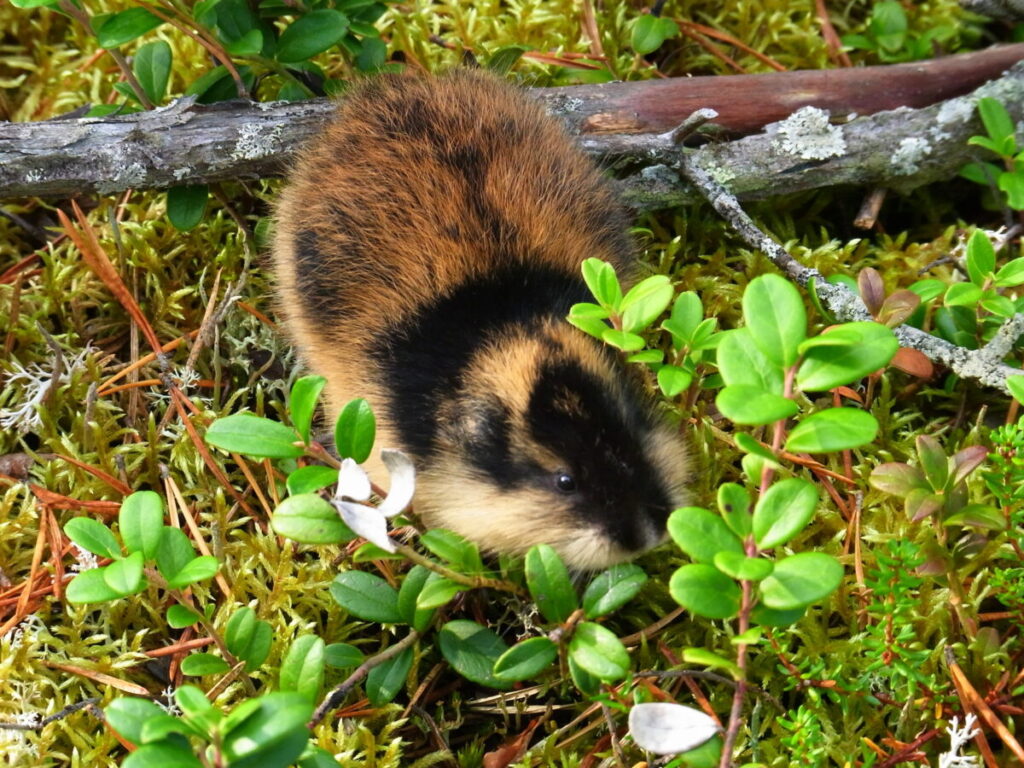
Norway lemmings thrive in tundra and alpine habitats, including fells and mountainous regions. They are well-adapted to the extreme conditions of these ecosystems, where they construct elaborate burrow systems to seek shelter and protection. The tundra and alpine areas provide an abundance of vegetation, including grasses, sedges, and mosses, which form the primary diet of the lemmings. These habitats also offer ample foraging opportunities and nesting sites, crucial for the survival and well-being of the Norway lemming population.
This comprehensive species profile provides a glimpse into the fascinating world of the Norway lemming, shedding light on its unique characteristics, distribution, and habitat preferences. As a crucial component of the delicate Arctic ecosystem, the Norway lemming serves as a captivating subject for conservation efforts and scientific inquiry, highlighting the interconnectedness of all living organisms in the natural world.
Facts About Norway Lemming
- The Norway lemming (Lemmus lemmus) is one of the largest lemming species globally.
- They are migratory rodents commonly found in the tundras of Scandinavia and Western Russia.
- Norway lemmings are herbivores, primarily feeding on sedges, grasses, mosses, and lichens.
- These lemmings are solitary, diurnal animals, meaning they are active during the day.
- The average body length of a Norway lemming ranges from 13 to 16 cm, with a height of 5.5 to 6.5 cm.
- They prefer to live near water sources and are often found in tundra and open fields.
- The Norway lemming’s diet consists mainly of sedges, grasses, and mosses.
- They are known for their cyclical population fluctuations, with peak numbers occurring every 3 to 4 years.
- Norway lemmings are well-adapted to their cold habitats and have a high reproductive rate.
- These rodents play a crucial role in their ecosystem, influencing vegetation dynamics and serving as prey for various predators.


