IUCN Red List Conservation Status


Vulnerable

LC
NT
VU
EN
CR
EW
EX

Official assessment evaluated in accordance with the IUCN Red List of Threatened Species criteria: Vulnerable.


Species Quick Facts

Scientific Name
Acinonyx jubatus

Average Lifespan
10-12 years in wild, 12-17 years in captivity

Average Weight
45-65 kg (99-143 lbs) – Males: 55 kg, Females: 45 kg

Average Length
110-150 cm (43-59 inches) – head-body length excluding tail

Overview & Identification

The Northeast African cheetah (Acinonyx jubatus soemmeringii) is a subspecies of the worldโ€™s fastest land mammal, belonging to the family Felidae and the monotypic genus Acinonyx. It inhabits the arid savannas, open grasslands, and semiโ€‘desert plains of Ethiopia, Somalia, Kenya, Sudan, and Djibouti, preferring areas with sparse vegetation that allow unobstructed highโ€‘speed chases. Its coat is a goldenโ€‘tan background covered with solid black spots, each surrounded by a dark halo, and distinctive black โ€œtearโ€‘streaksโ€ run from the inner corners of the eyes to the mouth, reducing glare and aiding visual focus during daylight hunts. Adult males weigh up to 65โ€ฏkg and can reach 150โ€ฏcm in headโ€‘body length, while females are slightly smaller. The subspecies is listed as Vulnerable on the IUCN Red List, with an estimated 2,500โ€“3,000 individuals remaining in the wild. Habitat fragmentation, poaching for skins, and conflict with livestock herders are the primary drivers of its decline. Conservation programs focus on antiโ€‘poaching patrols, communityโ€‘based livestock management, and the establishment of protected corridors that link fragmented populations, aiming to stabilize and eventually increase numbers across its historic range.

Behavior & Social Structure

Northeast African cheetahs are primarily solitary hunters, with adult females maintaining exclusive home ranges that may overlap with those of multiple males. Males, especially brothers, often form small coalitions of two to three individuals, which increase their ability to defend territories and attract mates. Activity peaks during the early morning and late afternoon when temperatures are moderate, and the cheetah relies on keen eyesight to spot prey from a distance of up to 500โ€ฏm. Territories are fluid; a male coalition may control an area of 30โ€“80โ€ฏkmยฒ, while a femaleโ€™s range can be 20โ€“50โ€ฏkmยฒ, adjusted seasonally according to prey availability. Communication is achieved through a repertoire of vocalizationsโ€”chirps, growls, and a distinctive highโ€‘pitched purrโ€”along with scent marking using urine and feces. Visual signals, such as tail flicks and body posture, convey aggression or submission during encounters with rivals or potential predators like lions and hyenas.

Diet & Hunting Patterns

The Northeast African cheetah is an obligate carnivore that specializes in mediumโ€‘sized ungulates, with Thomsonโ€™s gazelle (Eudorcas thomsonii), Grantโ€™s gazelle (Nanger granti), and impala (Aepyceros melampus) comprising the bulk of its diet. In arid zones, it also preys on smaller antelopes such as the gerenuk (Litocranius walleri) and the Dorcas gazelle (Gazella dorcas). Occasionally, it will hunt juveniles of larger species like the African buffalo (Syncerus caffer) or take hares, hares, and birds when preferred prey are scarce. An adult cheetah requires roughly 2โ€“3โ€ฏkg of meat per day, but during the highโ€‘energy chase it can consume up to 6โ€ฏkg in a single kill. Hunting strategy relies on stealth and a rapid acceleration to 96โ€ฏkm/h, followed by a short burst of 20โ€“30 seconds to close the distance. After a successful kill, the cheetah typically feeds for 30โ€“45 minutes before dragging the carcass to a shaded spot to avoid attracting scavengers. Unlike larger felids, it does not cache food, and competition with lions, leopards, and hyenas often forces it to abandon kills prematurely.

Reproduction & Life Cycle

Females reach sexual maturity at 20โ€“24 months, while males mature slightly later at 24โ€“30 months. Breeding is opportunistic and often coincides with periods of high prey abundance, typically between November and March. After a gestation period of 90โ€“95 days, a litter of three to five cubs is born in a concealed den made of grass or low vegetation. Neonates weigh about 1.2โ€ฏkg and are born with a mantle of long, silveryโ€‘gray fur that provides camouflage. The mother nurses the cubs for 3โ€“4 months, during which she remains highly protective and limits her movements to avoid detection by larger predators. Cubs begin to follow their mother on short hunts at around 10 weeks and are weaned by 4โ€“5 months. Juvenile mortality is high, with up to 70โ€ฏ% of cubs failing to survive their first year, primarily due to predation, disease, and starvation. Dispersal of subโ€‘adult males occurs at 18โ€“24 months, often leading them to form coalitions or become solitary wanderers in search of territories.

Threats & Conservation

The IUCN classifies the Northeast African cheetah as Vulnerable, with the global cheetah population estimated at 6,700โ€“7,100 individuals; the Northeast African subspecies accounts for roughly 2,500โ€“3,000 of those. Habitat loss due to expanding agriculture, infrastructure development, and human settlement fragments the open landscapes essential for highโ€‘speed hunting. Poaching for skins and retaliatory killings by pastoralists protecting livestock further depress numbers. Competition with larger predators, especially lions and spotted hyenas, reduces cub survival and forces cheetahs into suboptimal habitats. Climate change exacerbates water scarcity, diminishing prey abundance in already arid regions. Conservation initiatives include the Cheetah Conservation Fundโ€™s livestockโ€‘guarding dog programs, community education, and the creation of transโ€‘boundary protected corridors linking Kenya, Ethiopia, and Sudan. Despite these efforts, population trends remain downward, underscoring the need for intensified antiโ€‘poaching patrols and sustainable landโ€‘use planning.

Interesting Facts

โ€ข The Northeast African cheetah can accelerate from 0 to 96 km/h (60 mph) in just 3 seconds, faster than most sports cars.
โ€ข Its black โ€œtearโ€‘streaksโ€ reduce glare from the sun and help focus on prey during daylight hunts.
โ€ข Unlike other big cats, cheetahs cannot roar; they communicate with chirps, purrs, and a unique highโ€‘pitched scream.
โ€ข A coalition of male cheetahs often consists of brothers that stay together for life, improving their chances of holding a territory.
โ€ข The subspeciesโ€™ population is estimated at fewer than 3,000 individuals, making it one of the rarest cheetah groups on the continent.

Description

The Northeast African cheetah, scientifically known as Acinonyx jubatus soemmeringii, is a remarkable subspecies of the cheetah. This elegant and agile mammal is celebrated for its incredible speed and distinctive physical attributes. It was first described under the scientific name Cynailurus soemmeringii by the Austrian zoologist Leopold Fitzinger in 1855.

Appearance

The Northeast African cheetah is characterized by its slender build, deep chest, and a unique black “tear mark” running from the inner corner of each eye down to the mouth, which helps reduce glare from the sun while hunting. Its coat features a vibrant golden hue, adorned with evenly spaced, solid black spots. This subspecies is known for its exceptional speed, achieved through its long, slim legs and lightweight frame.

Distribution

The Northeast African cheetah is primarily found in the wide open lands, grasslands, and semi-arid areas of Northeast Africa, particularly in regions such as the East Sudanian Savanna. This subspecies can be observed in countries including Sudan, Ethiopia, South Sudan, and Somalia. However, due to habitat loss and human-wildlife conflict, the population of Northeast African cheetahs faces significant challenges.

Habitat Preferences
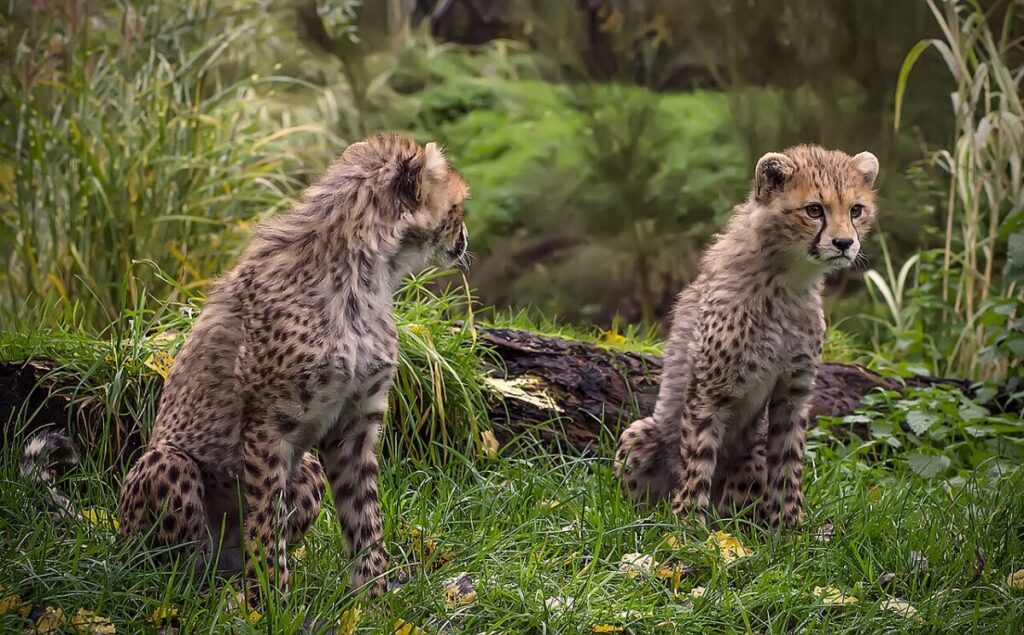
The Northeast African cheetah thrives in open habitats such as grasslands, savannas, and semi-arid areas where prey is abundant. These ecosystems provide the ideal conditions for the cheetah’s hunting prowess, as they offer ample visibility and opportunities for high-speed pursuits. However, the encroachment of human settlements and agricultural activities poses a threat to the cheetah’s natural habitat, necessitating conservation efforts to ensure the survival of this magnificent subspecies.

This comprehensive species profile aims to provide valuable insights into the captivating world of the Northeast African cheetah, shedding light on its unique characteristics, distribution, and habitat preferences.

Facts About Northeast African Cheetah

  • The Northeast African cheetah (Acinonyx jubatus soemmeringii) is a subspecies of cheetah found in Northeast Africa.
  • The wild population of the Northeast African cheetah is believed to be around 6,600 mature individuals and decreasing.
  • They are adapted for short, fast bursts of running, with long legs and “free-floating” shoulder blades.
  • The range of the Northeast African cheetah occurs widely but is extremely sparse and fragmented in the regions they inhabit.
  • Northeast African cheetahs are known to occur in South Sudan, Ethiopia, Somalia, and northern Kenya.
  • The Northeast African cheetah is listed as Vulnerable on the IUCN Red List of Threatened Species.
  • They face threats from habitat loss, human-wildlife conflict, and a decline in prey species.
  • The cheetah’s population has become extinct in at least 13 countries over the past 50 years.
  • Conservation efforts for the Northeast African cheetah include habitat protection and reducing human-wildlife conflict.
  • The Northeast African cheetah is an iconic and charismatic species, playing a crucial role in maintaining the ecological balance of its habitat.


Scientific Provenance & Verified Sources

Biological taxonomy, conservation status, and physical traits are cross-referenced with authoritative global registers:


Peer-reviewed by Wildlife Science Editors โ€ข Updated for 2026

Explore Other Species Profiles