

Description
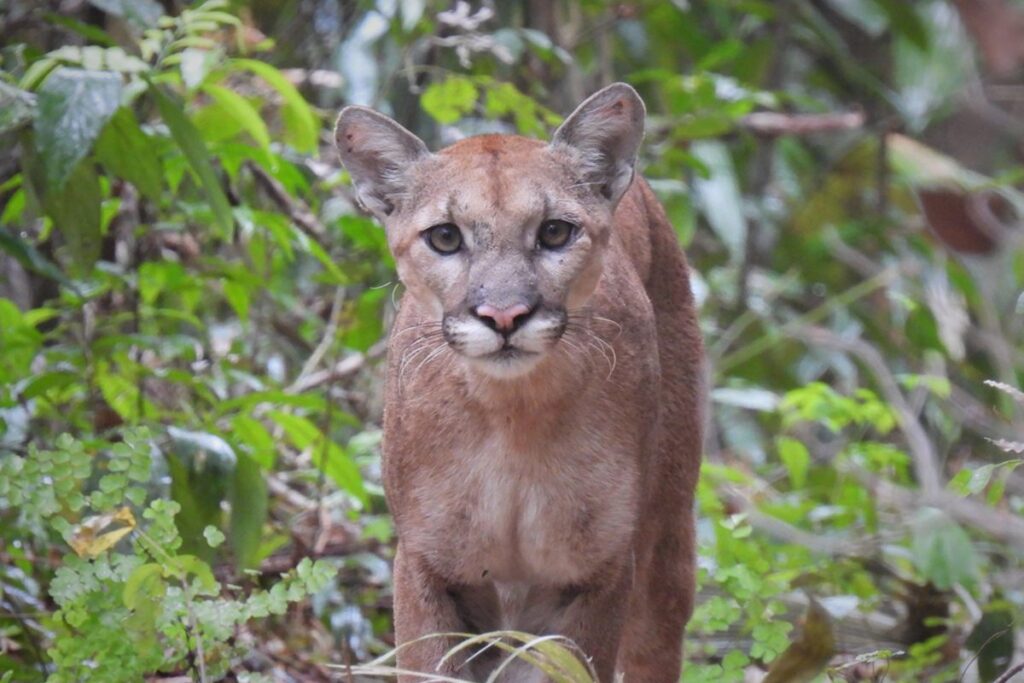
The North American cougar, scientifically known as Puma concolor couguar, is a remarkable and imposing feline species that holds the title of being the largest cat in North America. It is a subspecies of the cougar, also known as puma, mountain lion, or panther. This solitary and elusive predator boasts a sleek and muscular physique, making it a formidable hunter in its natural habitat.
Appearance

The North American cougar is recognized for its solid tan-colored coat, devoid of any spots, and its characteristic round head with erect ears. This subspecies’ slender and agile build sets it apart from other large cats, contributing to its exceptional hunting abilities and stealth in its environment.
Distribution
Historically, the North American cougar had a widespread presence across eastern North America, and it continues to maintain a significant population in the western half of the continent. Its range encompasses western Canada, the western United States, Mexico, and Central America, with potential extensions into South America. While the species faced challenges due to human encroachment and hunting pressure, conservation efforts have contributed to stabilizing its populations in various regions.
Habitat Preferences

The North American cougar exhibits remarkable adaptability, thriving in a diverse array of ecosystems, including mountains, forests, deserts, and wetlands. The species is particularly drawn to habitats with dense underbrush and rocky areas, providing ample cover for stalking prey. Its ability to inhabit such varied environments underscores its resilience and versatility as a predator, ensuring its survival and well-being in a range of ecological landscapes.
By highlighting the distinct characteristics, distribution, and habitat preferences of the North American cougar, we gain a deeper understanding of this magnificent species and the crucial role it plays in its respective ecosystems. As conservation efforts continue, it is imperative to safeguard the habitats and populations of the North American cougar, preserving the rich biodiversity and ecological balance it contributes to in the wild.
Facts About North American Cougar
- The North American cougar, also known as puma, mountain lion, or catamount, is the largest wildcat in North America.
- They have a solid tan-colored coat without spots and can weigh between 55-176 pounds.
- Cougars are solitary animals and are known for their stealth and agility in hunting.
- They have the largest range of any wild terrestrial mammal in the Western Hemisphere.
- Cougars can leap up to 40 feet horizontally and 15 feet vertically.
- They have a keen sense of sight and hearing, which aids in their hunting prowess.
- The cougar’s main prey includes deer, but they are also known to hunt smaller animals such as raccoons and rabbits.
- Females are usually about the same size as males, with an average weight of around 110 pounds.
- Cougars are capable of producing a wide range of vocalizations, including hisses, growls, and purrs.
- Despite their large size, cougars are elusive and tend to avoid confrontations with humans.


