

Description
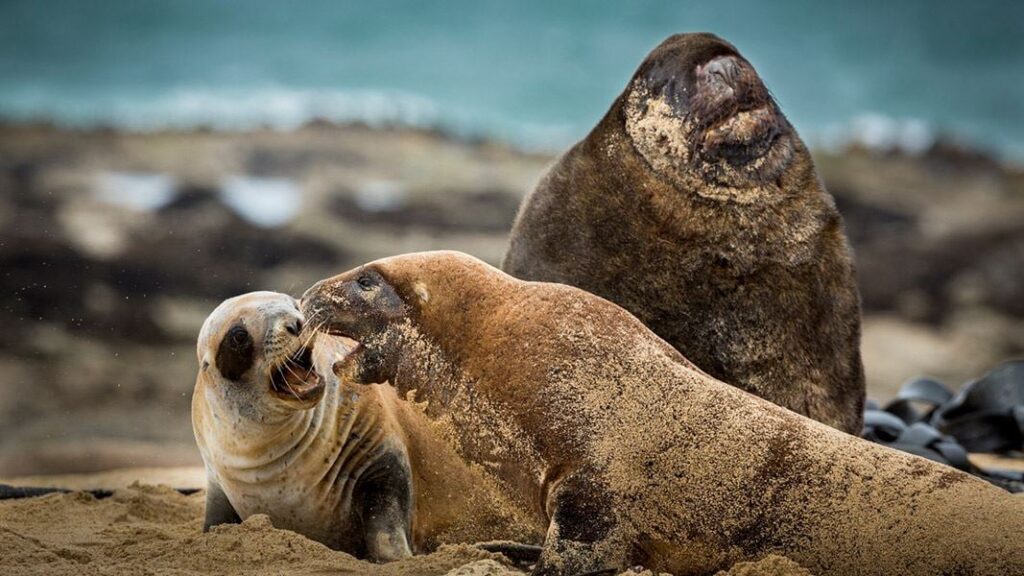
The New Zealand sea lion, scientifically known as Phocarctos hookeri, is a charismatic and distinctive species of sea lion endemic to New Zealand. This species, once known as Hooker’s sea lion, holds cultural significance among the Māori people, who refer to the male as “pakake” or “whakahao” and the female as “kaki.” These sea lions are known for their unique terrestrial behavior, which sets them apart from other pinniped species. They exhibit strong philopatry, returning to their breeding grounds annually, making them a remarkable species for conservation research and efforts.
Appearance

The New Zealand sea lion can be distinguished by its blunt nose, short whiskers, and large, soulful eyes. Males are known for their defined mane around their shoulders and can reach lengths between 2.4 and 3.5 meters, with a dark brown or black coloration. Females, on the other hand, exhibit a silver-grey dorsal coloration. These distinguishing features set them apart from other pinniped species and contribute to their unique appeal.
Distribution
This species primarily breeds on the New Zealand coastline, with notable populations found on the subantarctic Auckland and Campbell Islands. New Zealand sea lions are endemic to this region and are integral to the local marine ecosystem. Their distribution is limited to specific breeding grounds, and conservation efforts are crucial to maintaining and protecting these populations.
Habitat Preferences
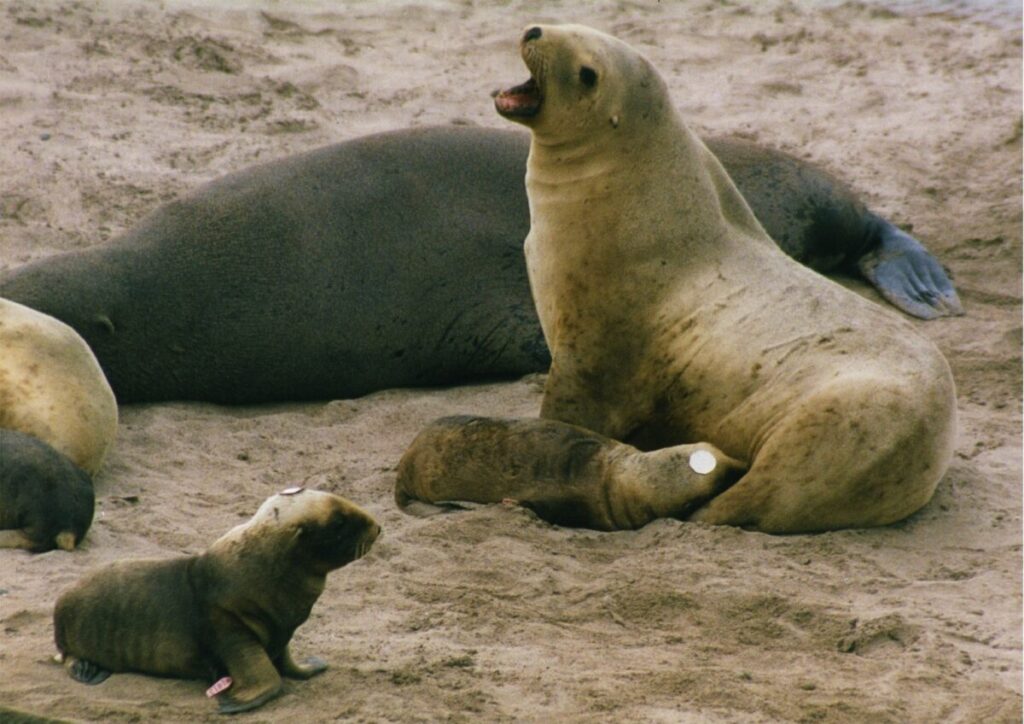
New Zealand sea lions thrive in a variety of coastal habitats, including sandy beaches and rocky shorelines. They are known to inhabit subantarctic and temperate ecosystems, where they rely on these environments for breeding, pupping, and foraging. These habitats play a vital role in supporting the survival and well-being of the species, making conservation of these coastal ecosystems essential for the continued existence of the New Zealand sea lion.
This comprehensive species profile provides a glimpse into the unique characteristics, appearance, distribution, and habitat preferences of the New Zealand sea lion, shedding light on the importance of conservation efforts to protect this remarkable species and its natural habitats.
Facts About New Zealand sea lion
- The New Zealand sea lion, also known as Phocarctos hookeri, is one of the rarest and most endangered sea lion species in the world.
- Adult male New Zealand sea lions can reach a length of 2.4 to 3.5 meters and weigh between 320 to 450 kilograms.
- Adult female New Zealand sea lions have an average reproductive rate of 65% per year.
- New Zealand sea lions have a highly restricted breeding range within the New Zealand subantarctic region.
- They are the only species of the genus Phocarctos.
- Male New Zealand sea lions have a defined mane around their shoulders and are dark brown or black in color.
- The median lifetime reproductive output of a female New Zealand sea lion at the Auckland Islands was estimated to be 4.4 pups.
- New Zealand sea lions are large, heavy-bodied, and sexually dimorphic animals.
- The population of New Zealand sea lions is estimated to be around 12,000.
- Also known as Hooker’s Sea Lion, the New Zealand Sea Lion is one of the largest animals found in New Zealand.


