New Zealand Fur Seal

IUCN Red List Conservation Status


Least Concern

LC
NT
VU
EN
CR
EW
EX

Official assessment evaluated in accordance with the IUCN Red List of Threatened Species criteria: Least Concern.


Species Quick Facts

Scientific Name
Arctocephalus forsteri

Average Lifespan
20-30 years in wild, 30-35 years in captivity

Average Weight
100-150 kg (220-330 lbs) – Males: 250-350 kg, Females: 100-150 kg

Average Length
180-260 cm (71-102 inches) – head-body length excluding tail

Overview & Identification

The New Zealand fur seal (Arctocephalus forsteri) belongs to the order Carnivora, family Otariidae, and genus Arctocephalus. It inhabits the temperate coastal waters of New Zealand, southern Australia, and several subโ€‘Antarctic islands such as the Auckland and Campbell Islands. Adults are distinguished by a dense, waterโ€‘repellent fur that ranges from dark brown to a lighter, golden hue in juveniles, external ear flaps, and powerful hind flippers that enable agile swimming and terrestrial locomotion. Colonies are typically found on rocky shorelines, seaโ€‘caves, and isolated islands where they haul out to rest, breed, and molt. The species is classified as Least Concern by the IUCN, with an estimated global population of roughly 250,000 individuals, although some local colonies have shown modest declines due to humanโ€‘related pressures. Their adaptability to a range of marine habitats, from kelp forests to open ocean foraging zones, underpins their resilience, yet ongoing monitoring remains essential to ensure longโ€‘term stability.

Behavior & Social Structure

New Zealand fur seals are highly social and form large, noisy colonies that can number in the thousands during the breeding season. Males establish and defend territories on land, using vocalizations, aggressive posturing, and physical combat to deter rivals. Females are more gregarious, often sharing haulโ€‘out sites and engaging in mutual grooming. The species is primarily diurnal, spending daylight hours foraging at sea and returning to shore to rest, molt, or nurse pups. Foraging trips can last from a few hours to several days, with individuals traveling up to 200 km from their colony. Communication includes a repertoire of barks, growls, and whines that convey alarm, aggression, or maternal calls, facilitating coordination within the densely packed colonies.

Diet & Hunting Patterns

The New Zealand fur seal is a strict carnivore, feeding primarily on pelagic fish such as sardines (Sardinops sagax), anchovies (Engraulis australis), and pilchards (Sardinops spp.), as well as cephalopods like the squid Nototodarus gouldi. Opportunistic predation on crustaceans, particularly krill (Euphausia superba), and occasional seabird eggs has been documented. Individuals can dive to depths of 200โ€“250 meters, employing both pursuit and ambush tactics. Daily food intake averages 5โ€“7% of body mass, with larger males consuming up to 30 kg of prey per day during the breeding season to sustain territorial displays. Foraging is largely opportunistic, guided by oceanographic features such as upwellings and frontal zones that concentrate prey.

Reproduction & Life Cycle

Sexual maturity is reached at 4โ€“5 years for females and 5โ€“6 years for males, though dominant males may not secure breeding territories until they are older and larger. Breeding occurs once a year, typically from June to August, with a short, intense mating period. After a gestation of approximately 11 months, females give birth to a single pup in March or April. Pups are born with a dark natal coat and are nursed for 4โ€“5 months, during which they gain up to 2 kg per day. Mothers alternate between foraging trips and nursing bouts, returning to the colony to suckle. Weaning coincides with the onset of the pupโ€™s own independent foraging, and juveniles remain with their mothers for a brief postโ€‘weaning period before dispersing to form their own foraging ranges.

Threats & Conservation

Historically, the New Zealand fur seal suffered severe declines due to commercial sealing in the 19th century, with populations reduced by over 90%. Modern threats are less acute but include entanglement in commercial fishing gear, particularly gillnets and longlines, leading to mortality rates estimated at 2โ€“4% of the population annually. Byโ€‘catch, habitat disturbance from coastal development, and pollution (plastic ingestion and oil spills) also pose risks. Climate change may alter prey distribution, potentially affecting foraging success. Although the IUCN lists the species as Least Concern, some regional colonies, especially on the mainland of New Zealand, have shown declines of up to 15% over the past two decades. Conservation measures such as protected marine areas, byโ€‘catch mitigation devices, and ongoing population monitoring are critical to maintain stable numbers.

Interesting Facts

โ€ข The New Zealand fur seal can hold its breath for up to 15 minutes while diving.
โ€ข Males can weigh as much as a small car, reaching up to 350 kg.
โ€ข They have a highly developed sense of hearing both on land and underwater.
โ€ข Unlike true seals, they can rotate their hind flippers forward, allowing them to walk on land.
โ€ข Their population rebounded from nearโ€‘extinction to over 250,000 individuals within a century.

Description

New Zealand Fur Seal

The New Zealand fur seal, scientifically known as Arctocephalus forsteri, is a charismatic and distinctive species of fur seal found mainly around southern Australia and New Zealand. This species is also known by various common names including the Australasian fur seal, South Australian fur seal, Antipodean fur seal, or long-nosed fur seal. These seals are known for their inquisitive nature and playful demeanor, making them a beloved and iconic marine mammal in the region.

Appearance
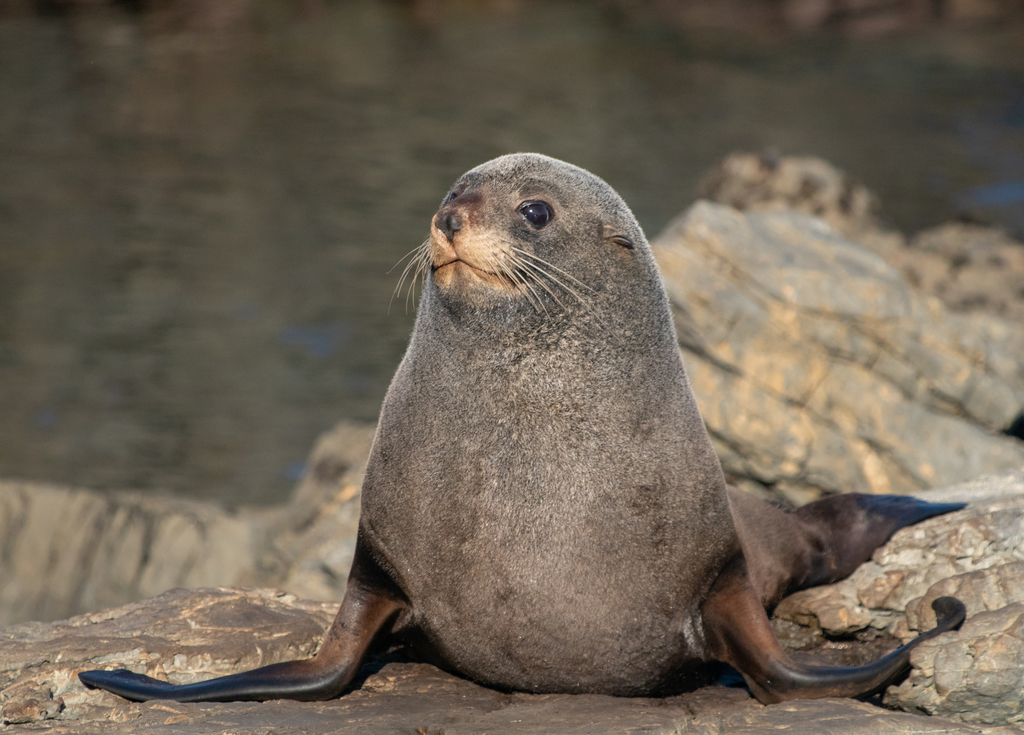
New Zealand Fur Seal Appearance

The New Zealand fur seal is easily recognizable by its long, slender snout and sleek, dark brown to grey fur. Adult males can reach lengths of up to 2.5 meters and weigh around 150-200 kilograms, while adult females are smaller, reaching lengths of around 1.5 meters and weighing approximately 30-50 kilograms. Both males and females have a distinctive mane of coarse, woolly hair around their neck and shoulders, adding to their unique appearance.

Distribution

New Zealand fur seals are primarily found in the coastal regions of southern Australia and New Zealand. They inhabit a wide range of environments including rocky shorelines, coastal vegetation areas, and offshore islands. The population density of these seals can vary across different regions, with significant breeding colonies established in specific locations.

Habitat
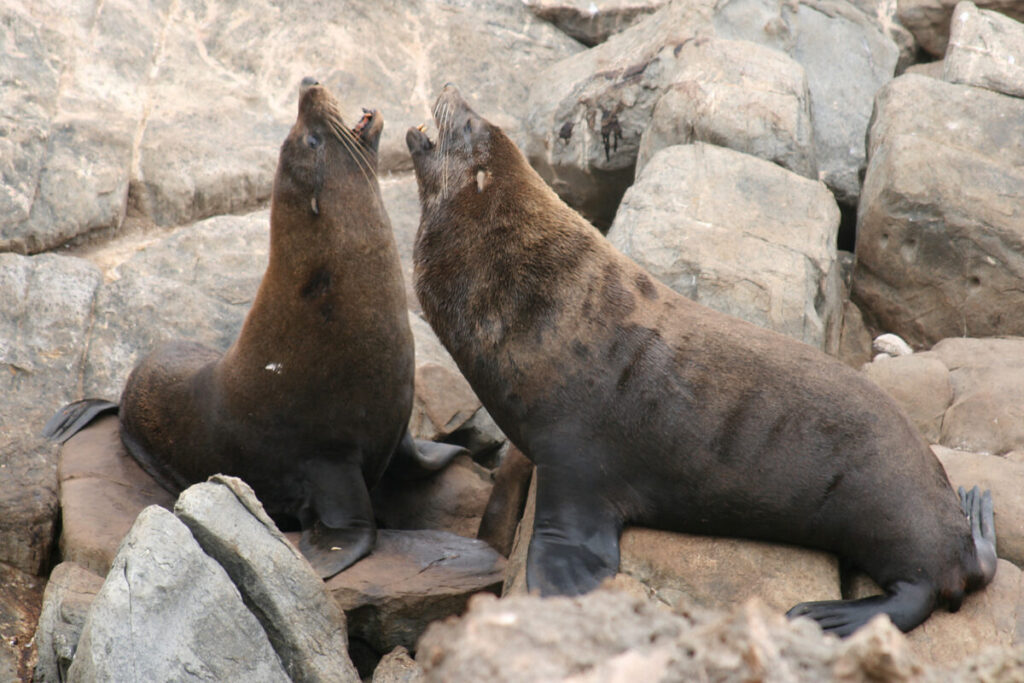
Arctocephalus forsteri

New Zealand fur seals are highly adaptable and can thrive in diverse ecosystems. They are commonly found in rocky coastal areas, where they seek shelter and protection for breeding and raising their young. These seals are also known to forage in the ocean, feeding on fish, cephalopods, and seabirds. The unique coastal and marine environments of southern Australia and New Zealand provide essential resources for the survival and well-being of the New Zealand fur seal population.

Overall, the New Zealand fur seal, with its distinctive appearance and habitat preferences, plays a crucial role in the marine ecosystems of southern Australia and New Zealand, contributing to the rich biodiversity of the region.

Facts About New Zealand Fur Seal

  • New Zealand fur seals (Arctocephalus forsteri) are a non-migratory coastal species.
  • Adult male New Zealand fur seals can reach 1.3 times the length and 3 times the weight of adult females.
  • The average lifespan of adult male New Zealand fur seals is up to 15 years, while females can live up to 12 years.
  • They inhabit New Zealand and the southern and western shores of Australia.
  • New Zealand fur seals display many unique features, including their size, range, diet, and life cycle.
  • Prior to being driven to near extinction, New Zealand fur seals had a wider geographic range.
  • New Zealand fur seals have a shorter lifespan compared to other fur seal species.
  • The species has a well-documented life history, distribution, abundance, diet, foraging, marine, and terrestrial habits.
  • New Zealand fur seals are sexually dimorphic, with distinct differences in size and weight between males and females.
  • New Zealand fur seals are known for their distinctive appearance and behavior, making them a fascinating species to observe.


Scientific Provenance & Verified Sources

Biological taxonomy, conservation status, and physical traits are cross-referenced with authoritative global registers:


Peer-reviewed by Wildlife Science Editors โ€ข Updated for 2026

Explore Other Species Profiles