Monito del monte climbing a moss-covered tree trunk in a forest

IUCN Red List Conservation Status


Least Concern

LC
NT
VU
EN
CR
EW
EX

Official assessment evaluated in accordance with the IUCN Red List of Threatened Species criteria: Least Concern.


Species Quick Facts

Scientific Name
Dromiciops gliroides

Average Lifespan
5-6 years in wild, 8-10 years in captivity

Average Weight
10-15 g (0.022-0.033 lbs) – Males: 12 g, Females: 10 g

Average Length
9-10 cm (3.5-4.0 inches) – head-body length excluding tail

Overview & Identification

The monito del Monte (Dromiciops gliroides) is the sole extant member of the order Microbiotheria, a lineage that links South American marsupials with the Australian marsupial radiation. Belonging to the family Microbiotheriidae, this diminutive nocturnal marsupial inhabits the temperate rainforests of southern Chile and adjacent western Argentina, especially the Valdivian and Patagonian Nothofagus forests. Adults measure 9โ€“10โ€ฏcm in headโ€‘body length, with a prehensile tail almost twice as long that aids in arboreal locomotion. Weighing only 10โ€“15โ€ฏg, the monito displays a soft, dense fur that ranges from grayโ€‘brown to reddishโ€‘brown, providing camouflage among mossโ€‘covered branches. Its large, dark eyes and acute hearing are adaptations for a nightโ€‘time lifestyle. The species constructs spherical nests of moss and lichens in tree cavities or dense understory vegetation. Although classified as Least Concern by the IUCN, the monitoโ€™s restricted distribution and dependence on mature forest make it vulnerable to habitat fragmentation. Conservation efforts focus on preserving continuous tracts of Valdivian forest and monitoring population trends across its range.

Behavior & Social Structure

The monito del Monte is primarily solitary, with individuals maintaining exclusive home ranges that average 0.5โ€“1.0โ€ฏha in mature forest. Males patrol larger territories than females, marking boundaries with scent glands located on the chest and by depositing urine on branches. Activity peaks during the first three hours after sunset, when the animal descends from its nest to forage on low to midโ€‘canopy branches. Although generally asocial, temporary associations occur during the breeding season, and unrelated females may share a nest to conserve heat during cold winter nights. Vocal communication consists of soft chirps, trills, and a distinctive alarm squeak that warns conspecifics of predators such as owls and foxes. The monito also employs tactile signals, tapping its hind feet against the substrate to convey agitation. Its arboreal agility is supported by a semiโ€‘prehensile tail, opposable hallux, and sharp claws that enable rapid leaps between branches.

Diet & Hunting Patterns

The monito del Monte is an opportunistic insectivoreโ€‘omnivore. Invertebrates constitute roughly 70โ€ฏ% of its diet, with beetles, moth larvae, spiders, and springtails captured by gleaning from bark and leaf litter. Fruit and seeds account for about 20โ€ฏ% of intake, especially the berries of Myrteae and Nothofagus saplings, which provide essential carbohydrates during the austral summer. The remaining 10โ€ฏ% includes nectar from endemic Proteaceae flowers and occasional small vertebrates such as amphibian larvae. Foraging occurs primarily on horizontal branches 1โ€“3โ€ฏm above ground, where the monito uses its acute hearing to locate moving prey and its elongated snout to probe crevices. Seasonal shifts are evident: during winter, when insects are scarce, the animal relies more heavily on fruit and nectar, increasing its role as a pollinator and seed disperser within the Valdivian forest.

Reproduction & Life Cycle

The monito reaches sexual maturity at 10โ€“12โ€ฏmonths for both sexes. Breeding is seasonal, occurring from September to February in the Southern Hemisphere, with a peak in November. After a brief gestation of 35โ€“40โ€ฏdays, the female gives birth to a single, sometimes twin, underโ€‘developed joey that immediately climbs into the pouch and attaches to a single nipple. The pouch remains open for about 60โ€ฏdays, during which the young continue to develop forelimbs and fur. At approximately 70โ€ฏdays the joey begins to exit the pouch and rides on the motherโ€™s back, gradually transitioning to independent foraging. Weaning is completed by 90โ€ฏdays, and juveniles attain full adult size by six months. Parental care is exclusively maternal; males do not participate in rearing but may defend overlapping portions of their territory to reduce predation risk for nearby females.

Threats & Conservation

The IUCN classifies Dromiciops gliroides as Least Concern, citing a relatively wide distribution and presumed large population. Nevertheless, the species faces several escalating threats. Ongoing logging of Valdivian temperate rainforest fragments its habitat, reducing the availability of nesting sites and continuous canopy needed for arboreal movement. Agricultural expansion and urban development further isolate populations, leading to genetic bottlenecks. Introduced predators such as domestic cats (Felis catus), European red foxes (Vulpes vulpes), and stoats (Mustela erminea) increase mortality, especially of juveniles. Climate change poses a longโ€‘term risk by altering precipitation patterns, potentially shifting the composition of Nothofagus forests upward in elevation. Current estimates suggest 10,000โ€“20,000 mature individuals, with a modest declining trend over the past decade. Conservation actions prioritize protecting large, contiguous forest blocks, implementing predator control programs, and conducting longโ€‘term monitoring to detect population changes.

Interesting Facts

โ€ข The monito del Monte is the only living representative of the ancient order Microbiotheria, linking South American marsupials to Australian species.
โ€ข Its prehensile tail can support up to 30โ€ฏ% of its body weight, allowing it to hang upsideโ€‘down while feeding.
โ€ข The species plays a key role in seed dispersal for several endemic plants, including the Chilean wine palm (Jubaea chilensis).
โ€ข Monitos have a low basal metabolic rate, enabling them to survive cold, wet winters with minimal food.
โ€ข Genetic studies show that the monito diverged from Australian marsupials around 46โ€ฏmillion years ago, making it a living โ€œfossilโ€ of marsupial evolution.

Description

The Monito Del Monte, scientifically known as Dromiciops gliroides, is a fascinating South American marsupial often referred to as the “monkey of the mountains.” Despite its colloquial name, it is important to note that this unique creature is not a monkey at all. Instead, it holds the distinction of being the only living member of Microbiotheria, making it a “living fossil” in the world of mammals.

Appearance
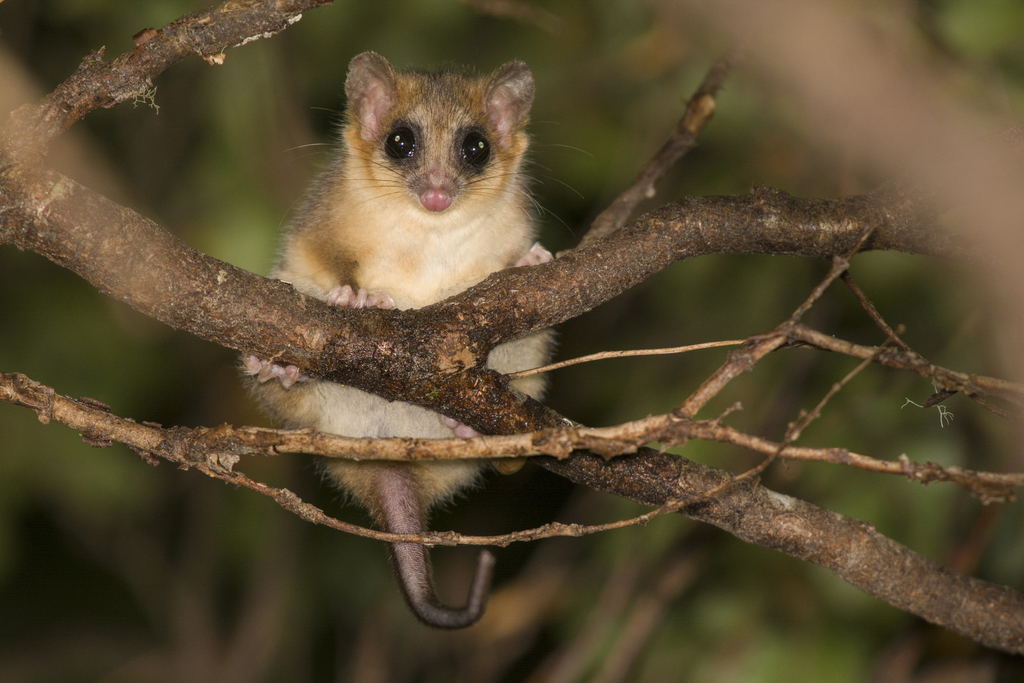
Monito Del Monte is a small marsupial that bears a resemblance to mice, yet it possesses distinctive features that set it apart from other species. With a head-and-body length ranging from 3.3 to 5 inches and a tail length of approximately 3.1 to 5.1 inches, it falls within the size range of a rat and a squirrel. Notably, it has a dental formula of 5.1.3.44.1.3.4, totaling 50 teeth, a characteristic shared with Didelphids.

Distribution

The Monito Del Monte is primarily found in the southern regions of South America, specifically in Chile and Argentina. Its distribution is notably limited, and it is crucial to note that it inhabits a specific habitat within these countries. The species’ population density exhibits a notable concentration in select areas, reflecting its preference for specific environmental conditions.

Habitat Preferences
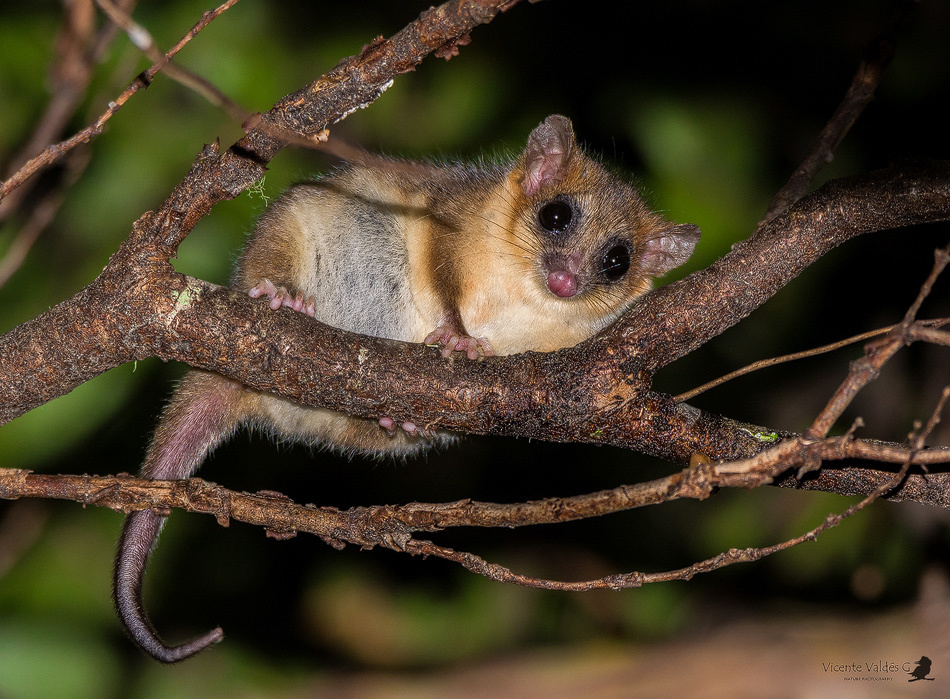
Monito Del Monte thrives in unique ecosystems, predominantly favoring temperate rainforests and montane forests. These environments provide the necessary conditions for its survival and well-being, offering abundant vegetation for shelter and sustenance. The species’ arboreal or scansorial nature is supported by its adaptability to life in the forest canopy, utilizing its prehensile tail, large hands and feet, and opposable thumbs to navigate its habitat with agility and precision.

As a conservation scientist with a deep understanding of wildlife, I emphasize the significance of preserving the habitat of the Monito Del Monte to ensure the continued existence of this remarkable “living fossil” within the intricate tapestry of South American biodiversity.

Facts About Monito Del Monte

  • The Monito Del Monte (Dromiciops gliroides) is a small marsupial found in central Chile and Argentina.
  • Adults may reach a length of 26 cm (10 inches) and weigh up to 49 grams.
  • They have a dental formula of 5.1.3.44.1.3.4, totaling 50 teeth.
  • The Monito Del Monte’s weight ranges from 16 to 42 grams (0.56โ€“1.48 oz).
  • Their lifespan is approximately 26 months.
  • Monito Del Montes are mostly insectivorous, foraging for and eating insect larvae and pupae, as well as some plant material.
  • They are well adapted to arboreal life, with opposable thumbs on all four limbs, exhibiting great precision and agility.
  • This species plays a key ecosystem role as the primary seed disperser of at least 16 native plant species.
  • Monito Del Montes are also known as “colocolo opossum” and “chumaihuรฉn” in Mapudungun.
  • They are considered a relict species, representing an ancient lineage of mammals.


Scientific Provenance & Verified Sources

Biological taxonomy, conservation status, and physical traits are cross-referenced with authoritative global registers:


Peer-reviewed by Wildlife Science Editors โ€ข Updated for 2026

Explore Other Species Profiles