
Description

The mongoose lemur, scientifically known as Eulemur mongoz, is a small primate belonging to the family Lemuridae. These arboreal animals are characterized by their pointed faces, long bushy tails, dark-brown upper parts, and pale bellies. Notably, the males have reddish beards, while the females have white beards, providing a visually striking feature that sets them apart.
Appearance

Mongoose lemurs are easily recognizable by their distinct physical features. They possess pointed faces, which are complemented by long, bushy tails. Their dark-brown upper parts and pale bellies contribute to their unique appearance, while the contrasting colors of the beards between males and females add to their visual appeal. These characteristics distinguish them from other lemur species and contribute to their individuality within the primate family.
Distribution
Mongoose lemurs are native to Madagascar and have also been introduced to the Comoros Islands. Within Madagascar, they are primarily found in the northwestern regions, particularly in dry deciduous forests, fragmented forests, scrublands, and secondary forests. Their distribution is closely tied to these specific habitats, and their presence contributes to the biodiversity of the region.
Habitat Preferences
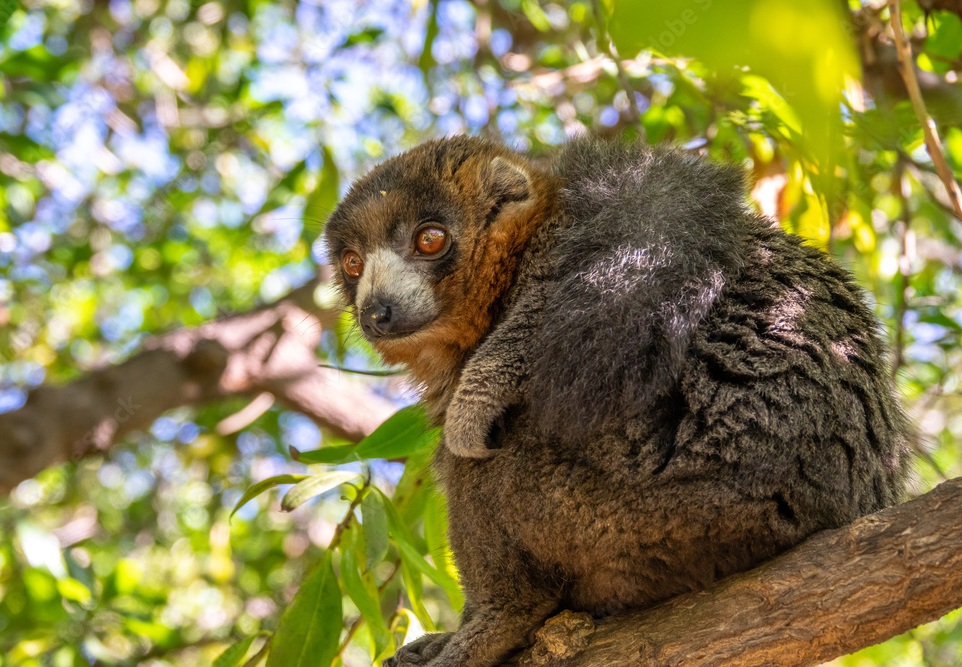
These primates thrive in a variety of forest ecosystems, including dry deciduous forests and scrublands. The ability of mongoose lemurs to adapt to and thrive in such environments showcases their resilience and flexibility. Their survival and well-being are supported by the rich biodiversity and resources present in these habitats, which provide them with the necessary food sources and shelter for their continued existence.
By understanding the unique characteristics, appearance, distribution, and habitat preferences of the mongoose lemur, we gain valuable insights into this fascinating primate species, which in turn can inform conservation efforts and contribute to the preservation of their natural habitats.
Facts About Mongoose Lemur
- The mongoose lemur (Eulemur mongoz) is native to Madagascar and has also been introduced to the Comoros Islands.
- Mongoose lemurs live in the dry, deciduous forests of northwestern Madagascar and must be flexible to contend with the six-month dry season.
- They are small primates in the family Lemuridae and are considered one of the smallest of the five species of lemurs found in the genus Eulemur.
- Mongoose lemurs have bushy, ringed tails and are known for their gentle disposition and slow eating habits.
- These lemurs are listed as critically endangered due to habitat loss and hunting.
- They are primarily frugivorous, but also consume leaves, flowers, and nectar.
- Mongoose lemurs are arboreal, spending most of their time in the trees.
- They are known for their nearly inaudible vocalizations.
- The species is endemic to the northwestern forests of Madagascar and inhabits dry deciduous forests, fragmented forests, and scrublands.
- Efforts are being made to compare the genetic material of the mongoose lemurs of Madagascar and of Anjouan (Comoros) to find out more about their population genetics and conservation status.


