
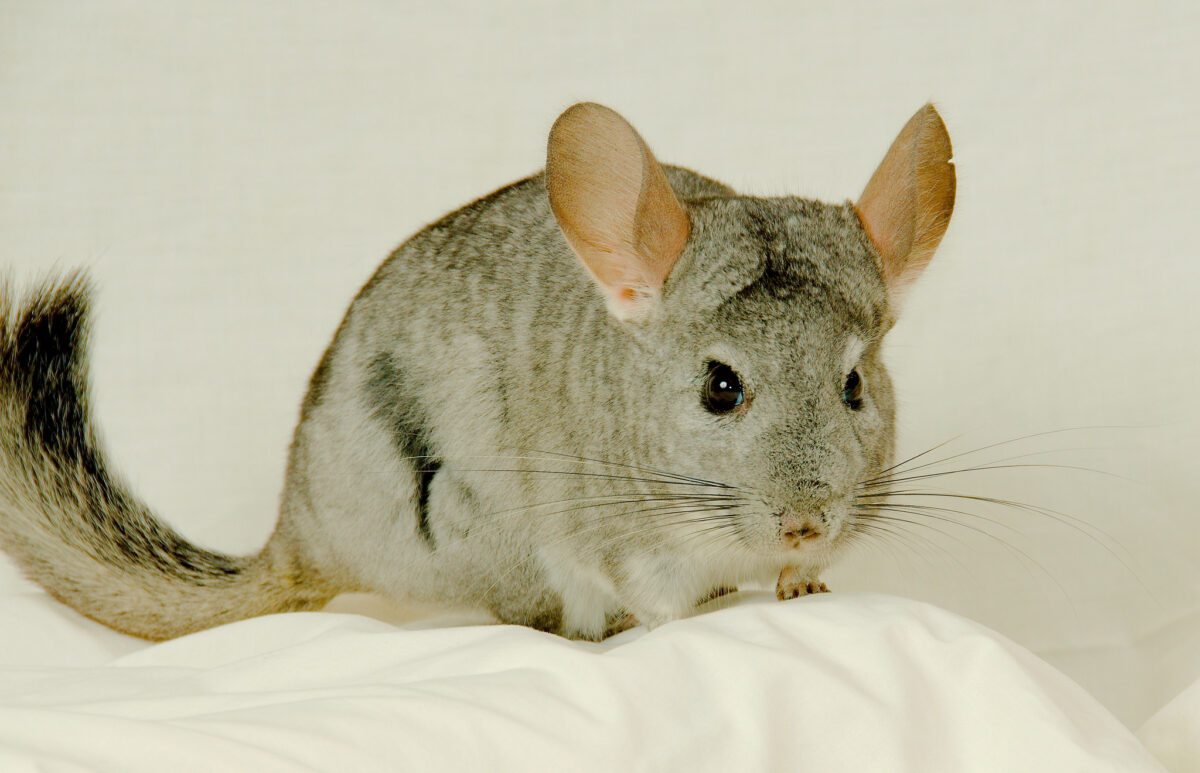

The Long-Tailed Chinchilla (Chinchilla lanigera), also known as the Chilean, coastal, common, or lesser chinchilla, is a small, crepuscular rodent known for its soft and dense fur. This species is one of two in the Chinchilla genus, with the other being C. chinchilla. Both species are endangered, making conservation efforts crucial for their survival.
Appearance

Long-Tailed Chinchillas are characterized by their soft, silky fur, which is highly valued in the fur trade. They have a compact, robust body with large, rounded ears and long whiskers. Their most distinctive feature is their long, bushy tail, which sets them apart from other chinchilla species. Their fur coloration can vary, ranging from gray to bluish-gray on the upper body, with a white or cream-colored underside.
Distribution
Long-Tailed Chinchillas are native to the Andes Mountains in South America, specifically in the countries of Chile, Peru, and Bolivia. They inhabit barren, arid, and rugged areas of the mountain chains, typically occurring in rocky or sandy areas with a sparse cover of thorn shrubs. Unfortunately, due to habitat destruction and hunting, their population density has significantly declined, leading to their endangered status.
Habitat Preferences

Long-Tailed Chinchillas are adapted to high-altitude environments, typically found at elevations of about 3,000 to 5,000 meters. They thrive in rocky crevices, burrows, and holes within the mountainous terrain. These habitats provide them with protection from predators and harsh weather conditions. Their diet consists primarily of vegetation, including grass, seeds, and leaves, which are available in their arid ecosystem.
In conclusion, the Long-Tailed Chinchilla is a remarkable species with unique characteristics and specific habitat requirements. Conservation efforts are essential to protect and preserve this endangered species for future generations to appreciate and study.
Facts About Long-Tailed Chinchilla
- The long-tailed chinchilla (Chinchilla lanigera) is native to the Andes mountains in South America.
- Long-tailed chinchillas have a lifespan of 10-20 years in the wild and in captivity.
- These chinchillas weigh between 600-800 grams and can grow to a length of 260 mm.
- Long-tailed chinchillas are known for their soft, dense fur, which helps them stay warm in their mountainous habitat.
- They are solitary, nocturnal herbivores, and are known to be social, matriarchal animals.
- The long-tailed chinchilla is an endangered species, facing threats from habitat loss and hunting for their fur.
- Long-tailed chinchillas are known for their agility and ability to jump up to 6 feet in the air.
- These chinchillas communicate through a variety of vocalizations and use scent marking to establish territories.
- Long-tailed chinchillas have a gestation period of about 111 days and typically give birth to 1-3 offspring.
- Chinchilla lanigera is known for its ability to take dust baths to maintain the health of its fur and skin.


