
Description
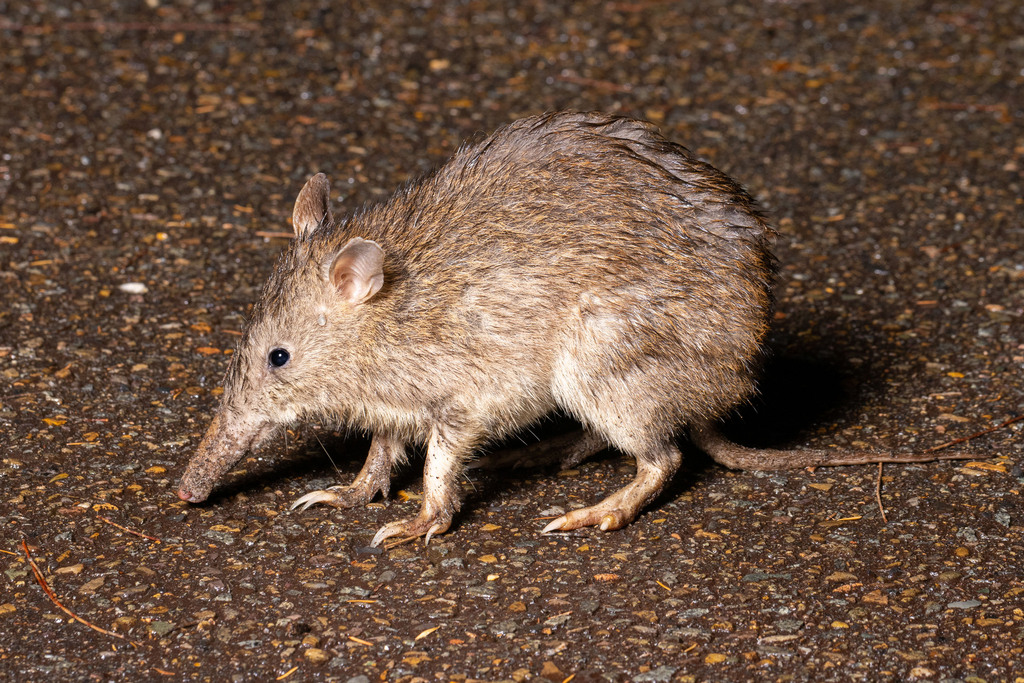
The long-nosed bandicoot, scientifically known as Perameles nasuta, is a remarkable marsupial species native to eastern Australia. This nocturnal, non-climbing, solitary, and omnivorous mammal is renowned for its distinctive long, pointed snout, which gives it its common name. Measuring approximately 40 centimeters (16 inches) in length, including its tail, the long-nosed bandicoot boasts sandy- or grey-brown fur, a white underbelly, and pointed ears. Its agile build and unique physical attributes enable it to thrive in a variety of habitats, making it a fascinating subject for wildlife enthusiasts and conservationists alike.
Appearance

The long-nosed bandicoot can be easily distinguished by its elongated snout, which sets it apart from other bandicoot species. Its sandy- or grey-brown fur, coupled with a white underbelly, offers effective camouflage in its natural environment. This species exhibits a compact build, with a body length of approximately 40 centimeters, making it a striking presence in the Australian wilderness.
Distribution
This species is predominantly found in eastern Australia, ranging from north Queensland along the east coast to Victoria. The long-nosed bandicoot’s distribution is characterized by its preference for diverse habitats within this region, showcasing its adaptability and resilience in varying ecosystems. Notably, it inhabits a range of environments, from coastal regions to inland woodlands, demonstrating its ability to thrive in different landscapes.
Habitat Preferences

Long-nosed bandicoots exhibit a preference for a range of habitats, including heathlands, woodlands, and coastal scrubs. These ecosystems provide the necessary cover and food sources for their survival. Their ability to thrive in diverse environments reflects their adaptability and underscores the importance of preserving these varied habitats for the long-term conservation of this unique species.
In conclusion, the long-nosed bandicoot, with its distinctive physical characteristics and adaptable nature, stands as a testament to the rich biodiversity of Australia’s eastern regions. Understanding and safeguarding its habitats is vital to ensuring the continued existence of this captivating marsupial for generations to come.
This detailed species profile provides a comprehensive overview of the long-nosed bandicoot, encompassing its unique characteristics, distribution, and habitat preferences.
Facts About Long-Nosed Bandicoot
- The Long-Nosed Bandicoot (Perameles nasuta) is a medium-sized, ground-dwelling marsupial native to Australia.
- They are known for their distinctive behavior of digging cone-shaped holes in search of insects, fungi, and fleshy plant roots.
- Long-Nosed Bandicoots communicate using visual, vocal, and chemical forms of communication.
- Their diet consists of a variety of food items including insects, earthworms, spiders, and plant material.
- These bandicoots are mainly nocturnal, being active from dusk to dawn.
- Long-Nosed Bandicoots have a wide-ranging distribution, found in eastern Australia from north Queensland along the east coast to Victoria.
- They are listed as a threatened species due to factors such as habitat loss, predation by introduced species, and human activities.
- The species exhibits sexual dimorphism, with males being larger than females.
- Long-Nosed Bandicoots have a relatively short gestation period of about 12.5 days.
- They are important for ecosystem health as they contribute to seed dispersal and soil aeration through their foraging behavior.


