
Description

The Leopard Seal (Hydrurga leptonyx) is a remarkable marine mammal and the second largest species of seal in the Antarctic, following the Southern elephant seal. It is the only species within the genus Hydrurga, making it a unique and distinct member of the seal family. This apex predator is renowned for its solitary nature and impressive hunting abilities, making it a fascinating subject for researchers and wildlife enthusiasts alike.
Appearance
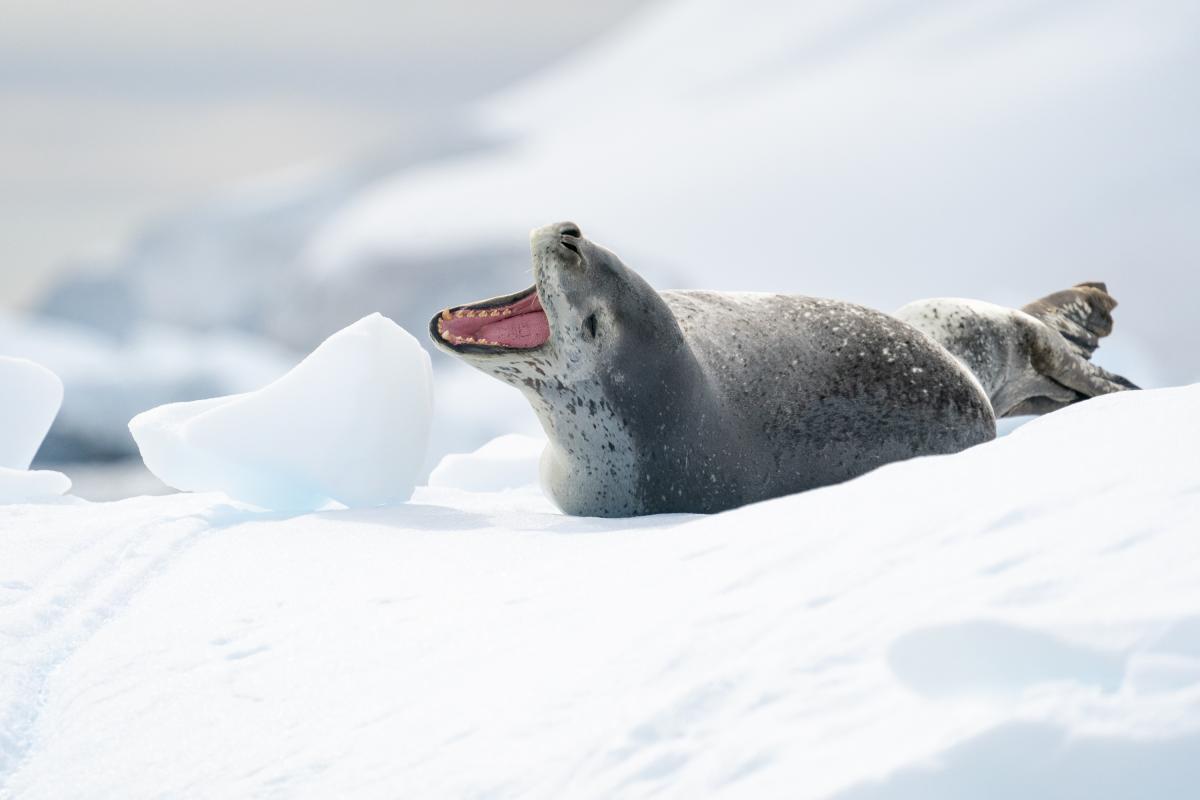
Leopard Seals boast a sleek and powerful physique, characterized by a mottled coat that resembles the distinctive markings of a leopard, hence its name. Their long, muscular bodies and disproportionately large heads set them apart from other seal species. With a length of up to 3.5 meters and a weight of around 840 kilograms, these seals are formidable predators in their environment. Their large, powerful jaws and long canine teeth are well-suited for capturing and consuming a diverse range of prey.
Distribution
Leopard Seals are primarily found in the frigid waters surrounding the Antarctic continent, including the pack ice and coastal regions. They have also been observed in sub-Antarctic islands such as South Georgia and the South Sandwich Islands. The population density of Leopard Seals varies across their range, with higher concentrations typically observed in areas with abundant prey, such as penguin colonies and other marine mammal breeding grounds.
Habitat Preferences

These formidable predators are well-adapted to the extreme conditions of their Antarctic habitat, where they thrive in a variety of environments including sea ice, open ocean, and coastal areas. Their ability to haul out onto ice floes and rocky shores allows them to rest, breed, and molt. The availability of prey, such as fish, squid, and other seals, is crucial to their survival, and they play a vital role in maintaining the ecological balance of the Antarctic marine ecosystem.
This comprehensive species profile provides a glimpse into the remarkable characteristics and ecological significance of the Leopard Seal, shedding light on the importance of conserving this iconic species and its fragile habitat.
Facts About Leopard Seal
- The leopard seal (Hydrurga leptonyx) is one of the largest predators in Antarctica, with adult males measuring up to 2.5-3.2m in length and weighing 200-455kg.
- They have a distinctively long and muscular body shape compared to other seals, with an overall length of adults ranging from 2.4–3.5 m (7.9–11.5 ft).
- Female leopard seals grow slightly longer than males, with a sinuous body and massive head and jaws, giving them an almost reptilian appearance.
- Their Latin name, Hydrurga leptonyx, translates to “slender-clawed water worker,” reflecting their unique physical characteristics.
- Leopard seals primarily feed on other seals, penguins, and fish, with an average weight ranging from 440 – 1,320 lbs (0.20 – 0.60 tons).
- They have an average life expectancy of around 12 years in the wild, with some individuals living up to 26 years.
- Leopard seals are known for their vocalizations, producing a wide range of sounds including growls, grunts, and high-pitched calls.
- These seals are solitary animals, typically found in the pack ice of the Antarctic and sub-Antarctic regions.
- The home range of leopard seals is mostly confined to the pack ice and coastal areas of Antarctica, where they are well-adapted to the cold environment.
- Leopard seals are listed as a species of “Least Concern” on the IUCN Red List of Threatened Species, indicating a stable population trend.


