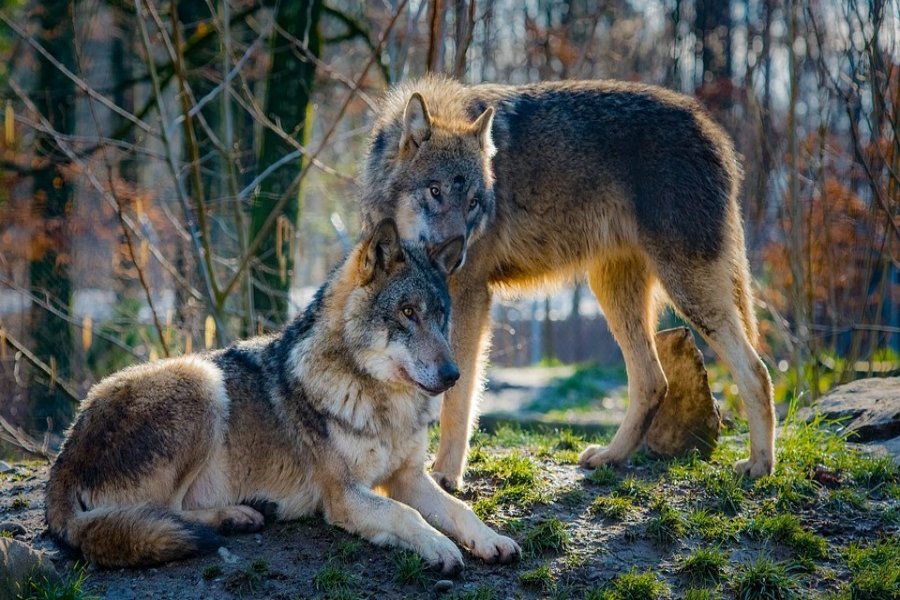
Labrador Wolf

IUCN Red List Conservation Status


Endangered

LC
NT
VU
EN
CR
EW
EX

Official assessment evaluated in accordance with the IUCN Red List of Threatened Species criteria: Endangered.


Species Quick Facts

Scientific Name
Canis lupus labradorensis

Average Lifespan
6-8 years in wild, 12-14 years in captivity

Average Weight
40-55 kg (88-121 lbs) – Males: 45 kg, Females: 40 kg

Average Length
115-135 cm (45-53 inches) – head-body length excluding tail

Overview & Identification

The Labrador wolf (Canis lupus labradorensis) is a subspecies of the gray wolf that historically inhabited the boreal forests, tundra, and mountainous regions of Labrador and parts of Newfoundland in eastern Canada. Classified within the family Canidae, it shares the typical canid morphology of a robust skull, powerful jaws, and a dense double coat that ranges from grayโ€‘brown to a silveryโ€‘white, providing insulation against harsh winter temperatures. Adult wolves occupy territories of 150โ€‘300 kmยฒ, depending on prey availability, and are apex predators that help regulate ungulate populations such as moose (Alces alces) and caribou (Rangifer tarandus). The subspecies is listed as Endangered by the IUCN due to severe population declines caused by historic overโ€‘hunting, habitat fragmentation, and competition with humans for game species. Conservation efforts focus on protecting remaining habitat corridors, enforcing antiโ€‘poaching regulations, and monitoring any residual individuals through genetic sampling. Although the Labrador wolf is considered extirpated from much of its former range, occasional sightings and DNA evidence suggest a few isolated individuals may persist, underscoring the need for continued research and protection.

Behavior & Social Structure

Labrador wolves live in highly structured packs typically comprising an alpha pair, their offspring, and occasionally unrelated adults. Packs maintain a strict hierarchy that minimizes intraโ€‘group aggression and coordinates cooperative hunting. They are primarily crepuscular, with peak activity at dawn and dusk, but can be nocturnal during the summer when daylight is prolonged. Territory is defended through scent marking, vocal howls, and visual displays such as tail raising. Packs patrol the perimeter of their range, which can span up to 300 kmยฒ, to deter neighboring packs and protect prey resources. Communication relies on a complex repertoire of vocalizations, body postures, and facial expressions, allowing individuals to convey alarm, submission, or social bonding. Seasonal changes influence pack size; during the breeding season, younger wolves may disperse to establish new territories, while in winter packs may temporarily merge to increase hunting success on large ungulates.

Diet & Hunting Patterns

The Labrador wolf is an obligate carnivore, with a diet dominated by large ungulates such as moose (Alces alces), caribou (Rangifer tarandus), and whiteโ€‘tailed deer (Odocoileus virginianus). Seasonal fluctuations dictate prey selection; in winter, wolves rely heavily on moose and caribou, while summer diets incorporate smaller mammals like snowshoe hares (Lepus americanus), beavers (Castor canadensis), and occasional fish from riverine habitats. An adult wolf consumes roughly 2.5โ€“5 kg of meat per day, equivalent to 5โ€“10% of its body weight, depending on prey size and availability. Hunting is typically cooperative, with pack members using endurance running and strategic ambushes to exhaust large prey. Scavenging also occurs, especially on carcasses left by bears or humans, but accounts for less than 15% of total intake. Wolves play a keystone role by removing weak or diseased individuals, thereby maintaining the health of prey populations.

Reproduction & Life Cycle

Labrador wolves reach sexual maturity at 2โ€“3 years for females and 3โ€“4 years for males. Breeding occurs once a year, typically between February and April, when the alpha pair mates after a period of increased affiliative behavior. Gestation lasts approximately 63 days, after which the female gives birth to a litter of 4โ€“6 pups in a den dug into snowbanks, soil, or under dense vegetation. Neonates weigh about 0.5 kg and are altricial, relying entirely on the motherโ€™s milk for the first 6โ€“8 weeks. Both parents, and often other pack members, participate in pup rearing, providing food, protection, and social learning. Pups are weaned at 8โ€“10 weeks and begin accompanying the pack on short forays, gradually mastering hunting techniques. By 12 months, juveniles are capable of independent hunting, though many remain with the natal pack for several years before dispersing to form new breeding units.

Threats & Conservation

The Labrador wolf is classified as Endangered on the IUCN Red List, with an estimated population of fewer than 500 mature individuals, most of which are believed to be fragmented or extirpated. Primary threats include historic and ongoing persecution through bounties, trapping, and illegal hunting, which have dramatically reduced numbers since the early 20th century. Habitat loss from logging, mining, and road development fragments the boreal landscape, limiting prey availability and disrupting pack territories. Climate change exacerbates these pressures by altering snow cover and vegetation patterns, affecting both wolves and their ungulate prey. Additionally, competition with expanding human populations for game species leads to increased humanโ€‘wolf conflicts. Conservation measures focus on legal protection, habitat restoration, and community outreach programs that promote coexistence and reduce retaliatory killings. Ongoing genetic monitoring aims to clarify the subspecies’ status and guide potential reintroduction efforts.

Interesting Facts

โ€ข The Labrador wolfโ€™s coat changes color seasonally, becoming lighter in winter to blend with snow.
โ€ข It is one of the few wolf subspecies that historically hunted both moose and caribou yearโ€‘round.
โ€ข Genetic studies show that Labrador wolves share a distinct mitochondrial haplotype separate from western gray wolves.
โ€ข Packs can travel up to 30 km in a single night while tracking prey across rugged terrain.
โ€ข The subspecies was first described by John Richardson in 1829 based on specimens collected near the Labrador coast.

Description

Labrador Wolf

The Labrador wolf, scientifically known as Canis lupus labradorius, is a subspecies of the gray wolf (Canis lupus). This elusive and enigmatic species is one of the least studied due to the fear it incites in people. It is closely related to the Newfoundland wolf, and together they form an integral part of the diverse canid family.

Appearance

Labrador Wolf Appearance

The Labrador wolf exhibits unique physical characteristics that set it apart from other subspecies of gray wolves. It is known for its robust build, thick fur, and a distinct coat coloration that provides effective camouflage in its natural habitat. This subspecies may display variations in fur color, ranging from shades of gray to brown, which aids in its adaptation to the diverse landscapes it inhabits.

Distribution

The Labrador wolf primarily inhabits the regions of Labrador and northern Quebec, with confirmed sightings in Newfoundland. Its geographical range may extend to the Labrador Peninsula north of the forest region. However, due to its elusive nature and the fear it evokes, comprehensive data on its population density and distribution patterns are limited.

Habitat Preferences

Labrador Wolf Habitat

The Labrador wolf thrives in boreal forests, taiga, and other remote, rugged terrains characteristic of its native habitats. These ecosystems provide the necessary cover and resources for the species to sustain its survival and well-being. The presence of prey species such as moose, caribou, beaver, musk oxen, and hares contributes to the Labrador wolf’s ability to thrive in its natural environment.

As a conservation scientist deeply committed to the preservation of wildlife, it is imperative to continue studying and understanding the Labrador wolf to ensure its protection and conservation for future generations.

Facts About Labrador Wolf

  • The Labrador wolf (Canis lupus labradorius) is a subspecies of the gray wolf native to Labrador and northern Quebec.
  • The color of the Labrador wolf varies from dark somewhat grizzly gray to almost white.
  • It is larger than the eastern wolf.
  • The Labrador wolf is one of the least studied subspecies of the gray wolf.
  • The population of Labrador wolves in northern Quebec has been described as being of moderate exploitation.
  • Wolves in general need about 7,818 square miles to maintain a viable population of 50 individuals.
  • The Labrador wolf is primarily found in Labrador and northern Quebec.
  • Activity patterns of the Labrador wolf vary and are observed to be predictable but variable across seasons and locations.
  • The Labrador wolf is feared by people, making it one of the least studied subspecies of the gray wolf.
  • The Labrador wolf is a significant and intriguing part of the ecosystem in Labrador and northern Quebec.


Scientific Provenance & Verified Sources

Biological taxonomy, conservation status, and physical traits are cross-referenced with authoritative global registers:


Peer-reviewed by Wildlife Science Editors โ€ข Updated for 2026

Explore Other Species Profiles