IUCN Red List Conservation Status


Least Concern

LC
NT
VU
EN
CR
EW
EX

Official assessment evaluated in accordance with the IUCN Red List of Threatened Species criteria: Least Concern.


Species Quick Facts

Scientific Name
Kobus kob

Average Lifespan
10-12 years in wild, 12-15 years in captivity

Average Weight
120-210 kg (265-463 lbs) – Males: 140-210 kg, Females: 120-170 kg

Average Length
120-180 cm (47-71 inches) – head-body length excluding tail

Overview & Identification

The kob (Kobus kob) is a mediumโ€‘sized antelope belonging to the family Bovidae and subfamily Reduncinae. It inhabits the floodplains, savannas, and grasslands of subโ€‘Saharan Africa, with dense populations in the Sudanโ€‘Guinea savanna, the Nile basin, and the Okavango Delta. Adult males display a striking dark brown to black coat with a white dorsal stripe, while females and juveniles are lighter, often reddishโ€‘brown. Both sexes possess a short, erect horn that curves slightly backward. Kob are well adapted to seasonal wetlands; their hooves are broad, allowing efficient movement through soft, waterโ€‘logged ground. The species plays a crucial role in ecosystem dynamics by grazing on grasses, which helps maintain open habitats and supports predator populations. The IUCN currently lists the kob as Least Concern, reflecting its wide distribution and large, stable populations, although localized declines have been recorded where habitat conversion and hunting pressure are intense.

Behavior & Social Structure

Kobs are primarily diurnal grazers that form mixed herds composed of females, juveniles, and a few subordinate males, while dominant bulls maintain separate territories that they defend during the breeding season. Herds can number from a few individuals to several hundred, especially during the rainy season when abundant forage attracts large aggregations. Males mark their territories with scent glands on the forehead and by depositing dung piles along preferred pathways. Communication relies on a repertoire of vocalizations, including low grunts and alarm snorts, as well as visual signals such as headโ€‘butting and horn displays during maleโ€‘male contests. Territorial bulls patrol the periphery of their range, often patrolling watercourses and highโ€‘grass ridges, and will aggressively chase intruders. Seasonal migrations occur in response to flood pulses, with groups moving to higher ground during peak inundation and returning to lowland grazing areas as waters recede.

Diet & Hunting Patterns

Kobs are strict herbivores that specialize in grazing on short, succulent grasses, particularly species of the genera Hyparrhenia, Panicum, and Andropogon. During the dry season they supplement their diet with sedges, aquatic plants, and occasionally browse on low shrubs when grass quality declines. An adult kob consumes roughly 2.5โ€“3.5% of its body weight in forage daily, equating to 3โ€“7 kg of vegetation. Feeding is typically continuous throughout daylight hours, with short resting bouts in shade or near water sources. Kobs employ a selective grazing strategy, preferring young, highโ€‘protein shoots and avoiding mature, fibrous blades. Their rumen microbes efficiently ferment cellulose, allowing them to extract nutrients from lowโ€‘quality forage during drought periods. Water intake is high; individuals may drink up to 30 liters per day, especially when feeding on dry grasses.

Reproduction & Life Cycle

Kobs reach sexual maturity at 1.5โ€“2 years for females and 2โ€“3 years for males, although dominant bulls often do not breed until they are older and have established a territory. Breeding peaks at the onset of the rainy season, when fresh grass stimulates estrus in females. After a gestation period of approximately 240โ€“250 days, a single calf is born, weighing about 15โ€“20 kg. Calving coincides with the period of maximum forage availability, enhancing calf survival. The mother hides the newborn in dense vegetation for the first 2โ€“3 weeks, visiting it only for nursing. By three months, the calf joins the herd and begins grazing. Females may produce a calf every 12โ€“14 months under favorable conditions. Dominant males provide limited direct care but protect the herd from predators during the birthing season, and they may attempt to herd calves to reduce predation risk.

Threats & Conservation

The International Union for Conservation of Nature (IUCN) classifies the kob as Least Concern, yet several regional populations face mounting pressures. Habitat loss due to agricultural expansion, irrigation schemes, and dam construction fragments the floodplain ecosystems essential for seasonal migrations. Overhunting for meat and trophies, particularly in West and Central Africa, reduces local numbers and disrupts social structures. Competition with livestock for grazing land can degrade preferred grass species and increase disease transmission. Climate change intensifies flood variability, altering the timing and extent of the wetโ€‘dry cycle that kobs rely on for breeding and foraging. Conservation actions include protectedโ€‘area management, communityโ€‘based hunting quotas, and transboundary monitoring programs. Population estimates suggest a total of 1.5โ€“2 million individuals, with some subpopulations declining by up to 30% over the past two decades.

Interesting Facts

โ€ข Kobs can run up to 60 km/h (37 mph) when startled.
โ€ข Their horns continue to grow throughout life, forming a subtle forward curve.
โ€ข During the rainy season, massive herds of up to 10,000 individuals can be seen moving together.
โ€ข Kobs have a unique scent gland on their forehead that they rub on vegetation to mark territory.
โ€ข They are one of the few antelope species that regularly swim across rivers to reach new grazing grounds.

The kob (Kobus kob) is a majestic antelope species found across Central Africa, parts of West Africa, and East Africa. Belonging to the Reduncinae tribe, along with closely related species such as reedbucks, waterbucks, lechwe, Nile lechwe, and puku, the kob exhibits unique characteristics and plays a significant role in the diverse ecosystems it inhabits.

Description

The kob is a medium-sized antelope with a striking appearance. It features a reddish-brown coat with white patches on its throat and belly, creating a visually captivating contrast. Both males and females have lyre-shaped, ridged horns, with those of the males being more robust and impressive. These elegant horns are a distinctive feature of the kob, adding to its allure and beauty.

Appearance

Distinctive features of the kob include its reddish-brown coat, white patches on the throat and belly, and lyre-shaped horns. These characteristics set it apart from similar antelope species and contribute to its unique and recognizable appearance.

Distribution

The kob’s range spans Central Africa, parts of West Africa, and East Africa. It can be found in countries such as Uganda, South Sudan, and the Democratic Republic of the Congo. Notable patterns in its population density include its preference for moist savannah, floodplains, and the margins of adjacent woodlands. Elevated areas with short grass are the preferred habitat for lek sites, where the kob engages in social and reproductive activities.

Habitat Preferences
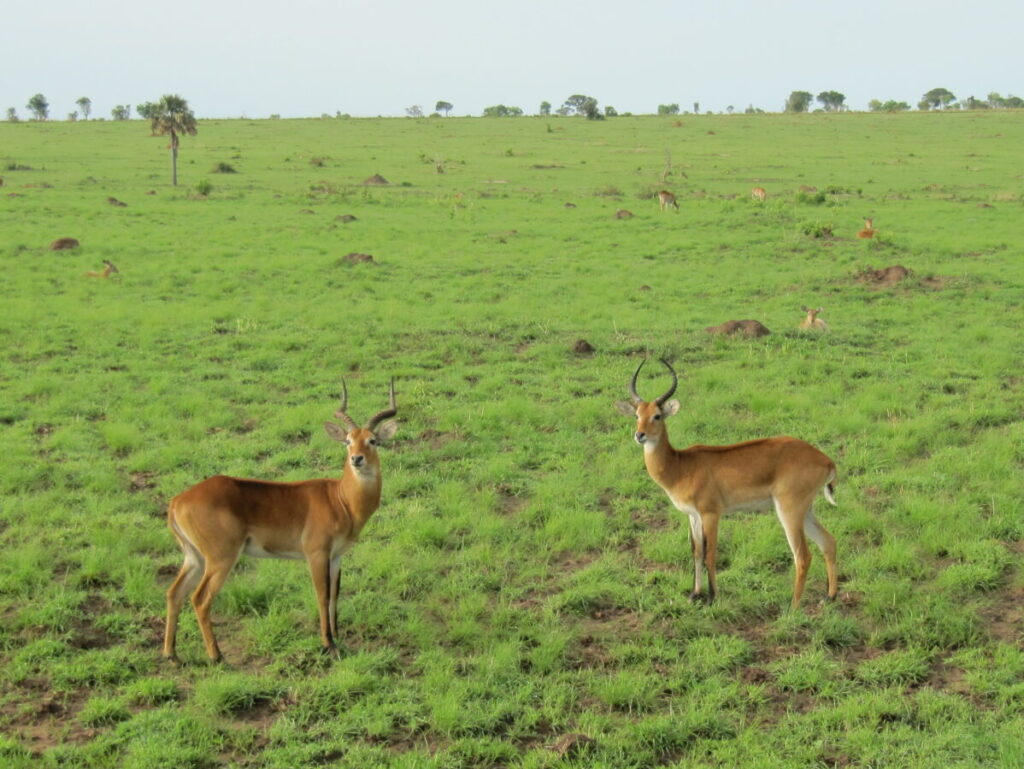
The kob thrives in a variety of ecosystems, including moist savannah, floodplains, and woodland margins. These environments provide the necessary resources for the kob’s survival and well-being, including suitable forage, access to water sources, and areas for social interactions and mating rituals.

Overall, the kob’s presence enriches the biodiversity of the African savannah and contributes to the intricate tapestry of life in its native habitats. Understanding and conserving the kob is essential for the preservation of these ecosystems and the continuation of its role in the natural world.

Facts About Kob

  • The Kob (Kobus kob) is an antelope species found in the moist savannah zones of Africa, ranging from Senegal to western Kenya.
  • It is known for its beautiful markings on the face and is relatively large, weighing up to 265 lbs.
  • The Kob has a lifespan of up to 18 years in the wild.
  • These antelopes stand at a height of up to 3 feet at the shoulder and can grow up to 5.6 feet in length.
  • They are social animals and live in groups, known as herds, which can consist of hundreds or even thousands of individuals.
  • The Kob’s diet mainly consists of grasses, herbs, and aquatic plants.
  • They are an important prey species for large carnivores such as lions and hyenas.
  • Male Kobs have long, spiraled horns, while females are hornless.
  • During the mating season, males establish territories and compete for the opportunity to mate with females.
  • The Ugandan Kob (Kobus kob thomasi) is a subspecies found in sub-Saharan Africa in South Sudan, Uganda, and the Democratic Republic of the Congo.


Scientific Provenance & Verified Sources

Biological taxonomy, conservation status, and physical traits are cross-referenced with authoritative global registers:


Peer-reviewed by Wildlife Science Editors โ€ข Updated for 2026

Explore Other Species Profiles