
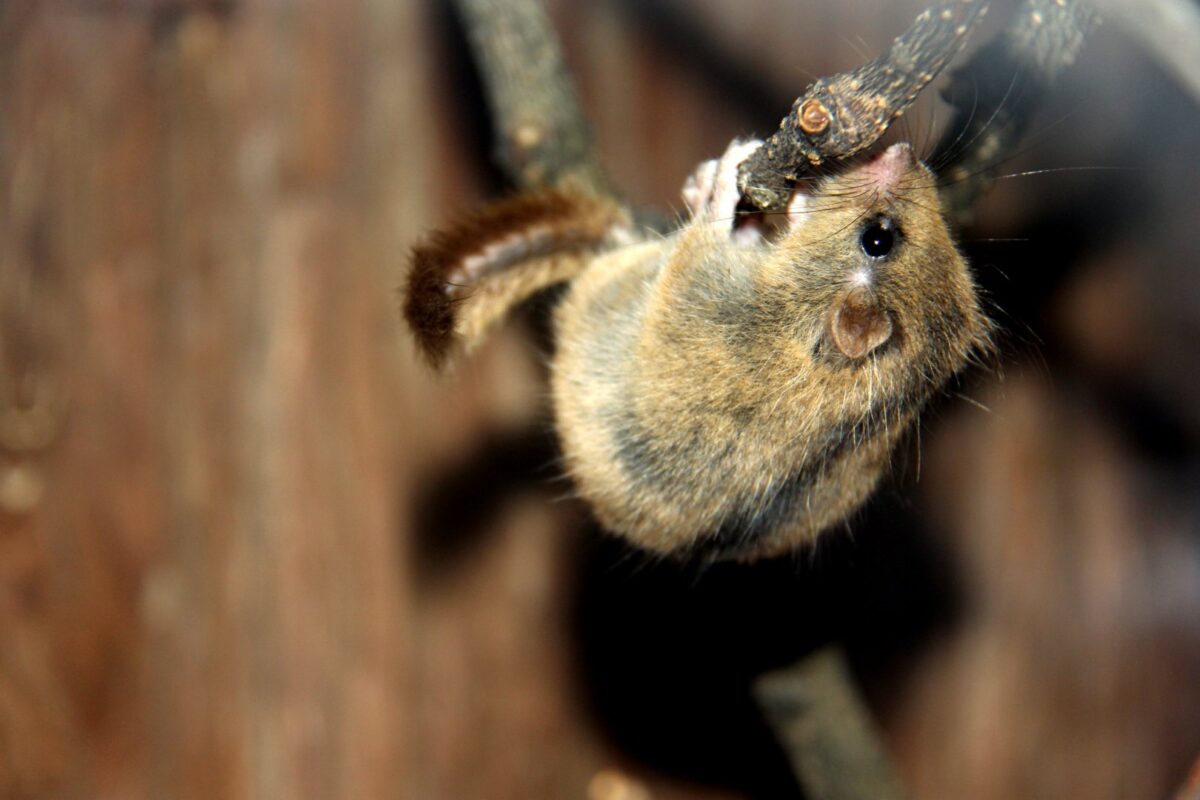
The Japanese dormouse, scientifically known as Glirulus japonicus, is a remarkable species of rodent belonging to the family Gliridae. Endemic to Japan, it holds the distinction of being the sole extant species within the genus Glirulus. In Japanese, it is referred to as yamane (やまね or 山鼠).
Description

The Japanese dormouse possesses a unique set of characteristics that distinguish it within the rodent family. It is renowned for its arboreal nature, primarily inhabiting temperate forests at medium to high elevations. This species exhibits remarkable agility and is adept at climbing and navigating its forest habitat with ease. Notably, the Japanese dormouse boasts a special ability to run at great speed, setting it apart from other members of the dormouse family.
Appearance

With its mouse-like appearance and furred tail, the Japanese dormouse is well adapted to its arboreal lifestyle. Its physical features enable it to thrive in forested environments, where its agility and climbing prowess are essential for survival. The species’ unique running ability further distinguishes it from other dormouse species, showcasing its exceptional adaptations for life in the forest canopy.
Distribution
The Japanese dormouse is exclusively found in Japan, where it is endemic to the temperate forests of the region. Its distribution is limited to specific areas within the country, and its population density reflects its preference for these temperate forest ecosystems. Conservation efforts are crucial to safeguarding its habitat and ensuring the preservation of this remarkable species.
Habitat Preferences

The Japanese dormouse thrives in temperate forests, where it finds the ideal conditions for its survival and well-being. These forests provide the species with essential resources such as suitable nesting sites, food sources, and protection from predators. The diverse flora and fauna of the temperate forests form a crucial part of the Japanese dormouse’s habitat, supporting its unique ecological niche within the forest ecosystem.
As a conservation scientist and advocate for wildlife preservation, it is imperative to recognize the significance of protecting the natural habitats of the Japanese dormouse to ensure the continued existence of this remarkable species.
Facts About Japanese dormouse
- The Japanese dormouse (Glirulus japonicus) is a species of rodent endemic to Japan.
- It is the only extant species within the genus Glirulus.
- Male Japanese dormice travel over a much larger home range than females.
- Japanese dormice are arboreal and solitary, spending most of their time in trees.
- They are nocturnal omnivores, meaning they are active at night and consume a varied diet.
- Japanese dormice are skillful climbers, utilizing their arboreal habitat effectively.
- The typical lifespan of wild Japanese dormice is an interesting aspect of their biology.
- They are known for their hibernation behavior, which is a notable feature of their life cycle.
- The physical and behavioral development of the Japanese dormouse has been studied in detail.
- Japanese dormice are native to Asia and are a unique and fascinating part of the region’s biodiversity.


