
Description
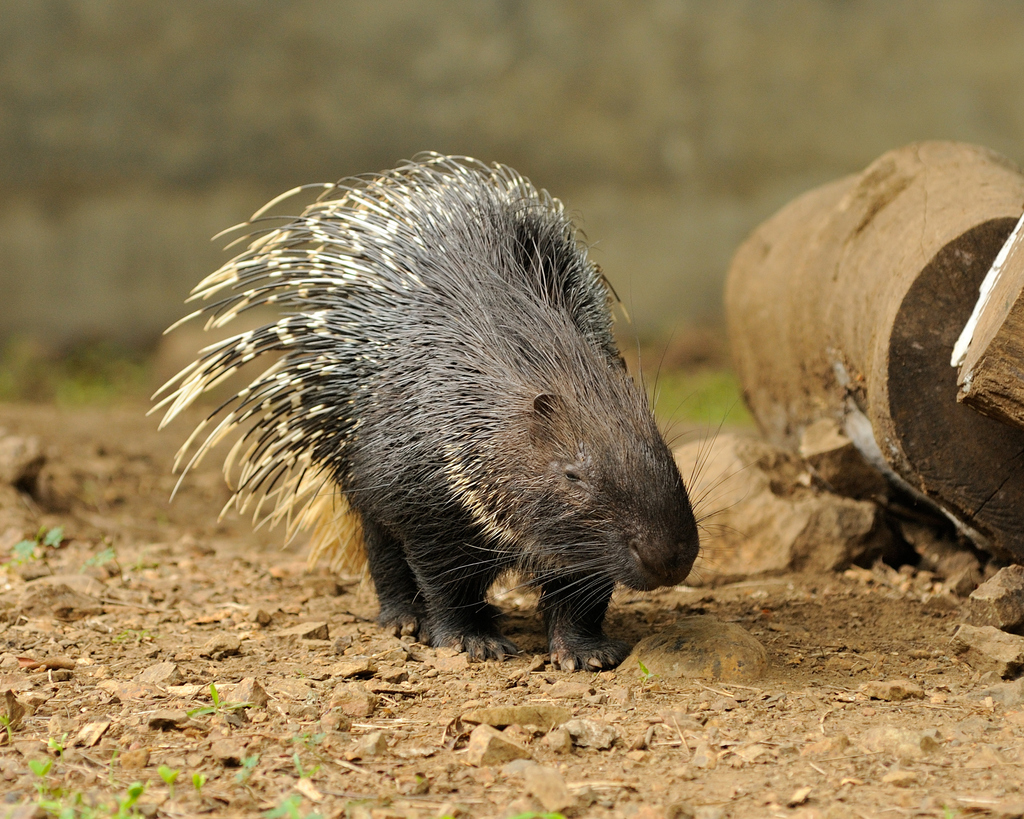
The Indian crested porcupine, scientifically known as Hystrix indica, is a hystricomorph rodent species belonging to the Old World porcupine family, Hystricidae. This fascinating mammal is native to southern Asia and the Middle East and is listed as Least Concern on the IUCN Red List, indicating a stable population trend. The Indian crested porcupine is characterized by its distinctive quills, which are modified hairs made of keratin, and its robust body, making it a unique and intriguing species.
Appearance

The Indian crested porcupine is known for its impressive appearance, with a body covered in sharp, barbed quills that serve as a formidable defense mechanism. These quills can reach up to 50 centimeters in length and are interspersed with shorter, softer spines. The animal’s quills are typically black and white, creating a striking visual display. The porcupine’s body is robust and well-built, with a short tail and strong, clawed feet. Its distinctive appearance sets it apart from other porcupine species and contributes to its unique charm.
Distribution
The Indian crested porcupine can be found across a wide range of regions in southern Asia and the Middle East, including countries such as India, Pakistan, Nepal, Bangladesh, Iran, and parts of the Arabian Peninsula. It thrives in diverse habitats, from forests and grasslands to rocky areas and agricultural landscapes. Despite its widespread distribution, the population density of Indian crested porcupines may vary based on the availability of suitable habitats and environmental factors.
Habitat Preferences

Indian crested porcupines exhibit a remarkable adaptability to various ecosystems, thriving in habitats ranging from scrublands and deserts to tropical and subtropical forests. They are known to inhabit areas with access to water sources and dense vegetation, utilizing burrows and rocky crevices for shelter. These adaptable mammals play a vital role in their ecosystems by contributing to seed dispersal and influencing vegetation dynamics. Their ability to thrive in diverse habitats underscores their resilience and ecological significance.
By incorporating these key aspects, the species profile provides a comprehensive understanding of the Indian crested porcupine, highlighting its unique characteristics, distribution, and habitat preferences.
Facts About Indian Porcupine
- The Indian crested porcupine (Hystrix indica) is native to southern Asia and the Middle East.
- It is listed as Least Concern on the IUCN Red List.
- The average lifespan of an Indian crested porcupine is around 20 years.
- They can weigh between 11-18 kg (24.2-39.6 lbs).
- The length of an Indian crested porcupine ranges from 70-90 cm (27.6-35.4 inches).
- Indian crested porcupines are nocturnal animals.
- They have a stocky build, short legs, and short, well-hidden tail.
- The body of the Indian crested porcupine is covered in a variety of quills.
- Indian crested porcupines are herbivores, primarily feeding on roots, bulbs, and fallen fruits.
- They are known for their distinctive quills, which they raise when threatened.


