Hose’s Langur

IUCN Red List Conservation Status


Vulnerable

LC
NT
VU
EN
CR
EW
EX

Official assessment evaluated in accordance with the IUCN Red List of Threatened Species criteria: Vulnerable.


Species Quick Facts

Scientific Name
Presbytis hosei

Average Lifespan
20-25 years in wild, 25-30 years in captivity

Average Weight
4-7 kg (8.8-15.4 lbs) – Males: 5.5 kg, Females: 4.5 kg

Average Length
40-55 cm (15.7-21.7 inches) – head-body length excluding tail

Overview & Identification

Presbytis hosei, commonly known as Hose’s langur or Hose’s leaf monkey, is a small arboreal primate belonging to the family Cercopithecidae. Endemic to the island of Borneo, its range is confined to the lowland and hill forests of Sabah and Sarawak in Malaysia and the adjacent provinces of Kalimantan, Indonesia. The species inhabits primary dipterocarp forest, secondary growth, and forest edges up to 1,200 m elevation, preferring dense canopy layers where its slender limbs and long tail aid agile movement. Adults display a grey‑brown dorsal pelage with a distinctive white cheek stripe and a blackish face; the ventral side is lighter, and the tail is longer than the body, often exceeding 60 cm. Hose’s langur is diurnal and primarily folivorous, feeding on young leaves, shoots, and occasional fruits. The International Union for Conservation of Nature (IUCN) classifies the species as Vulnerable, reflecting a declining population estimated at fewer than 10,000 mature individuals. Habitat loss from logging, conversion to oil‑palm plantations, and hunting for meat and the pet trade are the principal threats. Conservation actions include protected‑area designation, forest‑restoration projects, and community‑based monitoring, but continued habitat fragmentation threatens the long‑term viability of remaining populations.

Behavior & Social Structure

Hose’s langur lives in small, multimale–multifemale troops typically comprising 5–15 individuals, though larger aggregations are observed at abundant feeding sites. The groups maintain a loose home range of 5–15 km², defended through scent marking and occasional vocal displays. Activity peaks in the early morning and late afternoon; the monkeys spend most of the day foraging in the upper canopy, descending only briefly to move between trees. Social bonds are reinforced by grooming, which accounts for up to 20 % of daily activity. Communication includes a repertoire of soft whistles, alarm calls, and loud barks used to signal predator presence. Territorial boundaries are fluid, and neighboring groups may tolerate overlap, especially where food resources are plentiful.

Diet & Hunting Patterns

The diet of Hose’s langur is dominated by young leaves and leaf buds, classifying it as a strict folivore. Preferred plant families include Dipterocarpaceae, Myrtaceae, and Rubiaceae, with a particular affinity for the tender shoots of Shorea and Garcinia species. Fruits and seeds are consumed opportunistically, especially during periods of leaf scarcity, and occasional insects supplement protein intake. Individuals can ingest up to 30 % of their body weight in foliage daily, selecting leaves with high nitrogen and low tannin content. Specialized stomach chambers host symbiotic microbes that ferment cellulose, enabling efficient extraction of nutrients from fibrous material. Feeding typically occurs in the upper canopy, where the monkeys move silently between branches, minimizing competition with ground‑dwelling herbivores.

Reproduction & Life Cycle

Hose’s langur reaches sexual maturity at about 3 years for females and 4 years for males. Breeding occurs year‑round, with a slight peak during the rainy season when food is abundant. Gestation lasts approximately 165 days, after which a single infant is born, weighing around 300 g. Newborns cling to the mother’s belly for the first 2–3 weeks before transitioning to dorsal riding. Maternal care is intensive; the mother nurses the infant for 5–6 months and continues to carry it for up to a year. Juveniles achieve independence at 2–3 years but often remain within the natal group as subordinate members. Interbirth intervals average 18–24 months, reflecting the species’ relatively slow reproductive rate.

Threats & Conservation

The IUCN lists Hose’s langur as Vulnerable, with the population estimated at fewer than 10,000 mature individuals and declining at an estimated rate of 20 % over the past three generations. Primary threats are habitat loss and fragmentation driven by commercial logging, conversion of forest to oil‑palm and rubber plantations, and infrastructure development. Hunting for bushmeat and the illegal pet trade add direct mortality pressure, especially in remote villages. Small, isolated subpopulations suffer from reduced genetic diversity, increasing susceptibility to disease. Conservation measures include the establishment of protected areas such as Kinabalu Park and Danum Valley, enforcement of anti‑logging regulations, and community outreach programs that promote sustainable livelihoods. Ongoing population monitoring and habitat corridors are essential to mitigate fragmentation.

Interesting Facts

• Hose’s langur has a specialized stomach that ferments cellulose, similar to ruminants.
• It prefers young leaves that contain higher protein and lower toxins than mature foliage.
• The species is named after the Dutch naturalist G. J. P. J. van der Hoeve, who collected the type specimen.
• Unlike many primates, Hose’s langur rarely descends to the forest floor, spending >90% of its time in the canopy.
• Its vocal repertoire includes a unique “purring” call used during close social interactions.

Hose’s Langur, scientifically known as Presbytis hosei, is a captivating species of primate native to Southeast Asia. This remarkable mammal was first identified in Kutai National Park and Sangkulirang Peninsula, East Kalimantan, Indonesia, in 1985, and has since become a subject of great interest for conservationists and wildlife enthusiasts alike.

Description
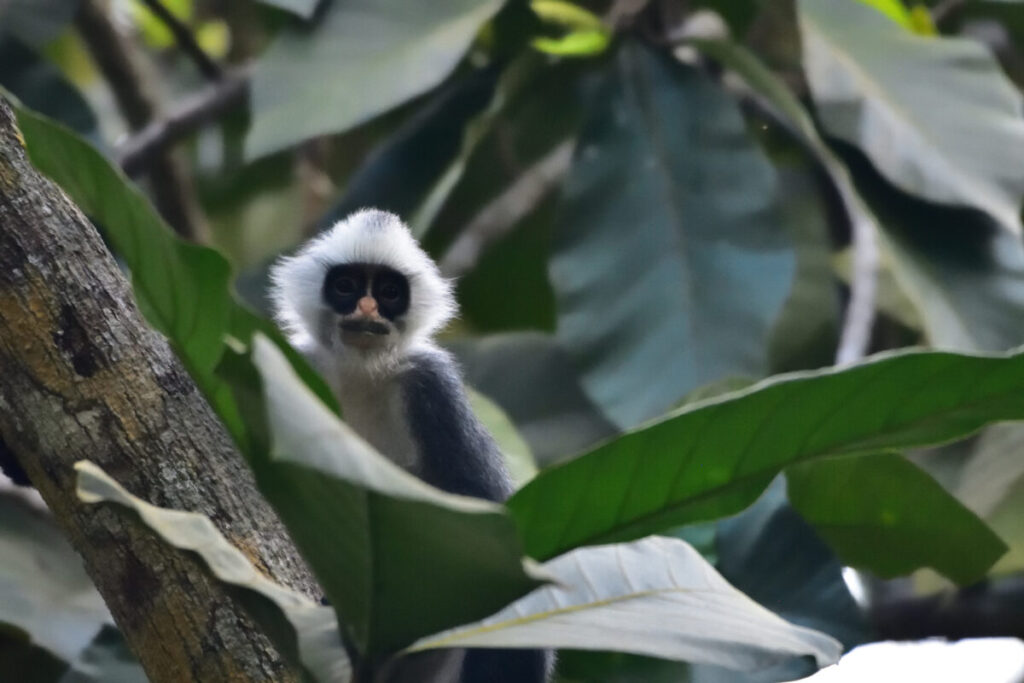
Hose’s Langur

Hose’s Langur is a medium-sized leaf-eating monkey with a striking appearance. Its long, slender limbs and tail, along with a distinctive black face and hands, make it a visually captivating species. The fur of Hose’s Langur ranges from dark brown to black, with unique variations in coloration across individuals. These primates are known for their agile and acrobatic behavior, often observed leaping through the forest canopy with remarkable grace.

Appearance
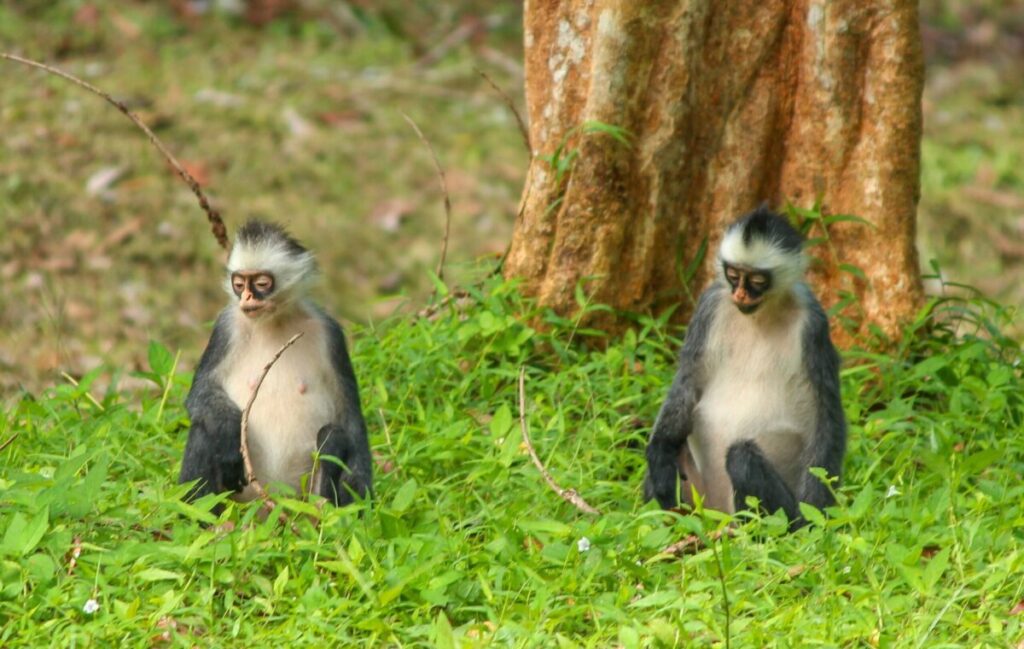
Hose’s Langur Appearance

The most notable feature of Hose’s Langur is its striking contrast in coloration. The jet-black face and hands stand out against the dark brown or black fur, creating a visually stunning appearance. Additionally, the long tail and limbs aid in their arboreal lifestyle, allowing them to move swiftly through the treetops. These distinctive physical characteristics set Hose’s Langur apart from other primate species in the region.

Distribution

Hose’s Langur is predominantly found in the lush forests of Borneo, including Brunei, Kalimantan (Indonesia), and East Malaysia. This species exhibits a preference for subtropical and tropical dry forests, where it can be observed thriving in the canopies of these diverse ecosystems. While once more widespread, habitat loss and human activity have led to a decline in population density, making conservation efforts crucial for the survival of this species.

Habitat Preferences
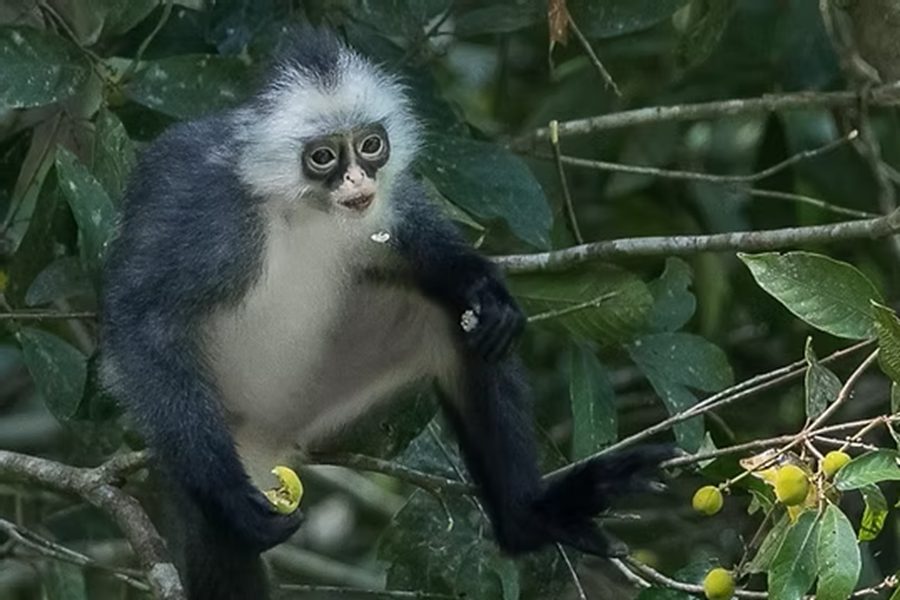
Hose’s Langur Habitat

Hose’s Langur is well adapted to subtropical and tropical dry forests, where it finds ample sustenance and shelter within the dense vegetation. The diverse array of leaves, fruits, and flowers in these environments provides a rich and varied diet for the langurs, contributing to their well-being and survival. The intricate canopy structure of these forests also offers ample opportunities for locomotion and refuge, allowing Hose’s Langur to display its remarkable agility and arboreal prowess.

Overall, Hose’s Langur’s unique characteristics, distribution, and habitat preferences make it a species of great significance in the realm of primate conservation, warranting continued attention and efforts to ensure its long-term survival in the wild.

Facts About Hose’s Langur

  • The Hose’s langur (Presbytis hosei) is a primate species endemic to the island of Borneo, including Brunei, Kalimantan, and Sarawak.
  • These langurs have a distinctive appearance with a black body and striking orange or yellow fur on their limbs and face.
  • The average weight of male Hose’s langurs is around 13.6 pounds (6,200 grams), while females typically weigh around 12.2 pounds (5,570 grams).
  • Hose’s langurs primarily inhabit lowland to hill dipterocarp rainforests, including areas such as Mount Kinabalu, with an elevational range from sea level to around 1000 meters.
  • Their diet mainly consists of leaves, fruits, seeds, and flowers, reflecting their status as folivorous and frugivorous animals.
  • The reproductive behavior of Hose’s langurs involves a single offspring being born after a gestation period of around 6 months.
  • These langurs are known for their arboreal lifestyle, spending most of their time in the trees and displaying remarkable agility and leaping abilities.
  • Unfortunately, the population size of Hose’s langurs is currently unknown, and they are listed as an endangered species due to habitat loss and hunting.
  • Conservation efforts are being undertaken to protect the remaining populations of Hose’s langurs, aiming to safeguard their natural habitat and ensure their survival.
  • Hose’s langurs play a crucial role in the ecosystem as seed dispersers, contributing to the regeneration of the forests in which they reside.


Scientific Provenance & Verified Sources

Biological taxonomy, conservation status, and physical traits are cross-referenced with authoritative global registers:


Peer-reviewed by Wildlife Science Editors • Updated for 2026

Explore Other Species Profiles