

Description

The Hog Deer, scientifically known as Hyelaphus porcinus, is a small to medium-sized deer species belonging to the Cervidae family. This elusive mammal is characterized by its slender build, relatively short legs, and a distinctively arched back. The name “Hog Deer” is derived from its habit of running with its head held low, resembling a hog, and not from any physical resemblance to a hog.
Appearance
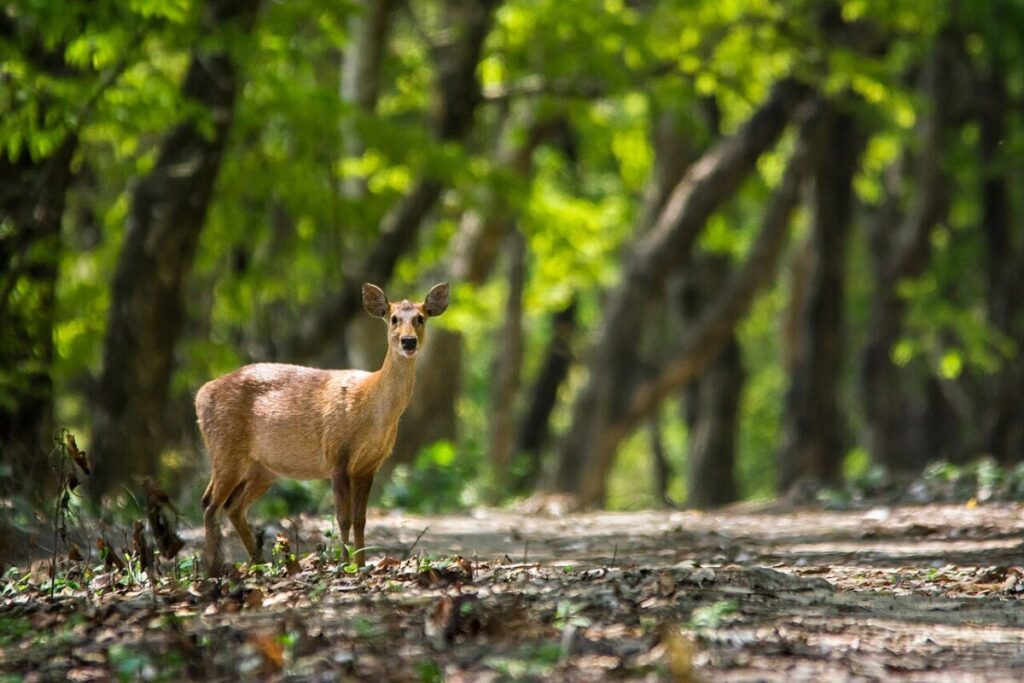
Distinctive features of the Hog Deer include a reddish-brown coat with a paler underside, white spots on the body, and a black dorsal stripe running along the spine. The males are adorned with short, three-tined antlers, adding to their unique appearance. These physical characteristics differentiate the Hog Deer from other deer species, contributing to its unmistakable presence in its natural habitat.
Distribution
The Hog Deer is primarily found in the Indo-Gangetic Plain, encompassing regions of Pakistan, northern India, Nepal, Bangladesh, and mainland Southeast Asia. Additionally, the species occurs in western Thailand, with historical records suggesting its presence in China. However, there are indications that it may have been extirpated from certain areas within China. The population density of Hog Deer varies across its range, with some areas exhibiting stable populations while others face threats and challenges.
Habitat Preferences

Hog Deer are typically associated with tall grasslands, alluvial grasslands, and riverine habitats. These ecosystems provide the necessary cover and forage for the species, supporting their survival and well-being. The preference for open grasslands also influences their behavior, as they are often spotted feeding in small groups when food is plentiful. However, habitat loss due to settlement, agriculture, and fragmentation poses significant threats to their population in certain regions.
Overall, the Hog Deer’s distribution and habitat preferences highlight the species’ adaptability to diverse environments within its range, while also emphasizing the need for conservation efforts to safeguard its future.
Facts About Hog Deer
- The Indian hog deer (Hyelaphus porcinus) is a small cervid native to the Indian subcontinent and the Indo-Gangetic Plain.
- A mature hog deer stag stands about 70 cm at the shoulder and weighs approximately 50 kg, while hinds are much smaller, standing about 61 cm and weighing in the…
- The hog deer’s habitat ranges from Pakistan, through northern India, to mainland Southeast Asia.
- Hog deer are herbivores, primarily feeding on grasses, aquatic plants, and fallen fruits.
- They are primarily found in tall grasslands, reed beds, and riverine forests.
- The hog deer population faces threats from habitat loss, hunting, and predation by tigers and leopards.
- Hog deer are known for their distinctive bark-like alarm call when sensing danger.
- The species has been introduced to areas outside its native range, such as Australia, where it is considered endangered.
- Hog deer are known for their solitary and elusive nature, making them challenging to observe in the wild.
- Conservation efforts are underway to protect and restore hog deer populations in their native habitats.


