

Description

The Harbor seal (Phoca vitulina) is a true seal that inhabits the temperate and Arctic marine coastlines of the Northern Hemisphere. It is recognized as the most widely distributed species of pinniped, which includes walruses, eared seals, and true seals. Harbor seals are known for their streamlined bodies, large, soulful eyes, and distinctive V-shaped nostrils. They have short, thick fur that ranges in color from light gray to brown, often with darker spots or rings. Their bodies can grow to lengths of about 5-6 feet and weigh up to 200-300 pounds.
Appearance

Harbor seals are easily distinguishable by their relatively small, rounded heads and short snouts. Their lack of external ear flaps and the way they move on land, wriggling on their bellies, also set them apart from other seal species. Their coloring and markings can vary widely, with some individuals having dark spots or rings covering their bodies, while others may have a more uniform coloration.
Distribution
Harbor seals are found along the temperate and Arctic marine coastlines of the Northern Hemisphere, including the coastal waters of the North Atlantic and North Pacific Oceans. They can be spotted in regions ranging from the eastern North Atlantic to the Bering Sea, as well as along the coasts of Japan and the western Pacific. Notable populations can be found in the coastal waters of the United States, Canada, the United Kingdom, and Scandinavia.
Habitat Preferences
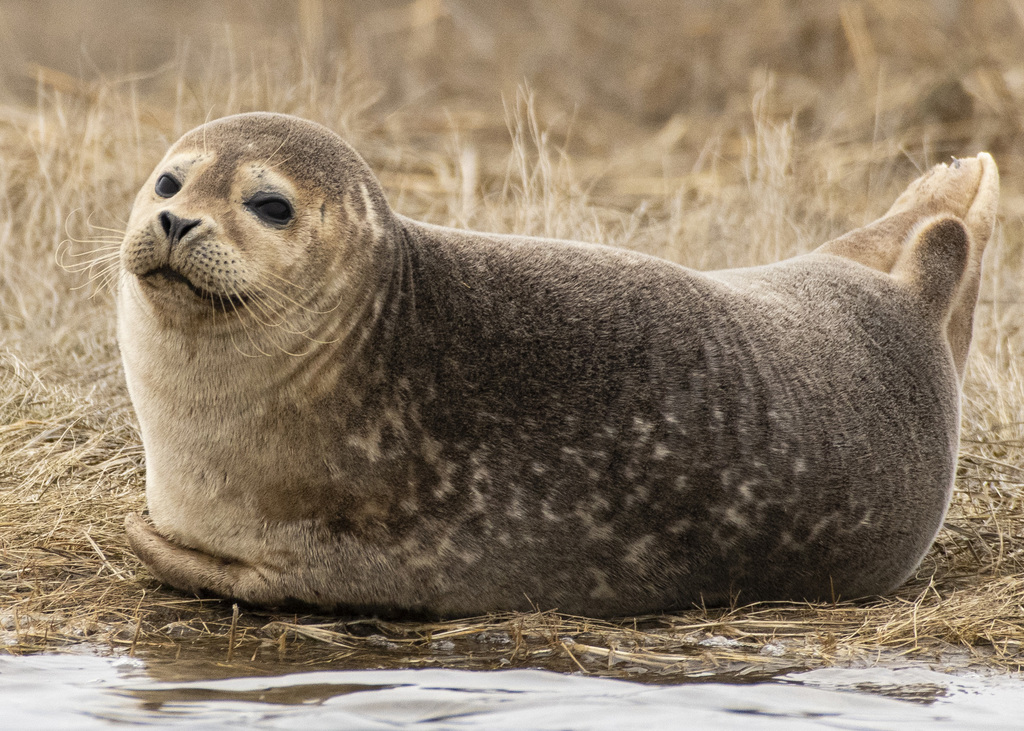
Harbor seals are highly adaptable and are known to inhabit a variety of coastal and estuarine habitats. They can be found in areas such as rocky coastlines, sandy beaches, and drifting glacial ice. These seals are known to haul out and rest on rocks, reefs, and beaches when they are not foraging. They are also often observed in and around estuaries, where they primarily forage for prey. The rich marine ecosystems of these coastal areas provide the harbor seals with ample food sources and suitable breeding grounds, supporting their survival and well-being.
This comprehensive species profile provides a detailed insight into the unique characteristics, appearance, distribution, and habitat preferences of the fascinating Harbor seal (Phoca vitulina).
Facts About Harbor Seal
- The harbor seal (Phoca vitulina) is one of the most common marine mammals along the U.S. West and East Coasts (source: NOAA Fisheries).
- The global population of harbor seals is estimated to be about 600,000 (source: SeaWorld Parks & Entertainment).
- The total population of harbor seals has been increasing since around the 1970s (source: Animal Diversity Web).
- Harbor seals, also known as common seals, are found along temperate and Arctic marine coastlines of the Northern Hemisphere (source: Wikipedia).
- Harbor seals are covered with short, stiff, bristle-like hairs, which give them a sleek appearance (source: Alaska Department of Fish and Game).
- The most abundant subspecies of harbor seals is found in the North Atlantic and the North Pacific (source: SeaWorld Parks & Entertainment).
- Harbor seals have a torpedo-like body shape with little differentiation of neck or hips, giving them a thick, solid appearance (source: OBIS-SEAMAP Species Profile).
- Harbor seal colonies around Britain have been in decline, with populations in Orkney and Shetland declining by as much as 40% over a 5-year period (source: Seal Conservation Society).
- Harbor seals in the UK are protected under the Conservation of Seals Act 1970, which prohibits killing, injuring, or taking seals except under license (source: Seal Conservation Society).
- Harbor seals are known for their curious and playful nature, often seen bobbing in the water or basking in the sun on rocky shores (source: MarineBio Conservation Society).


