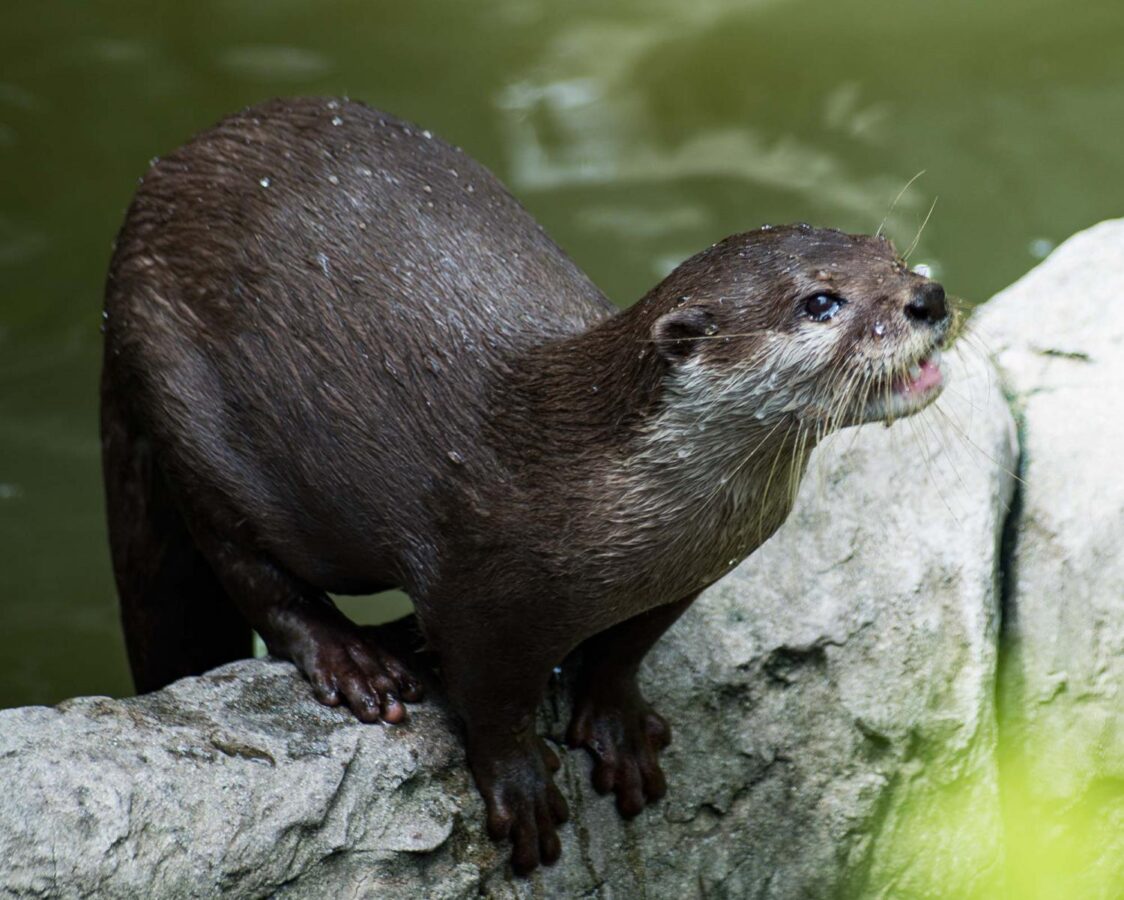
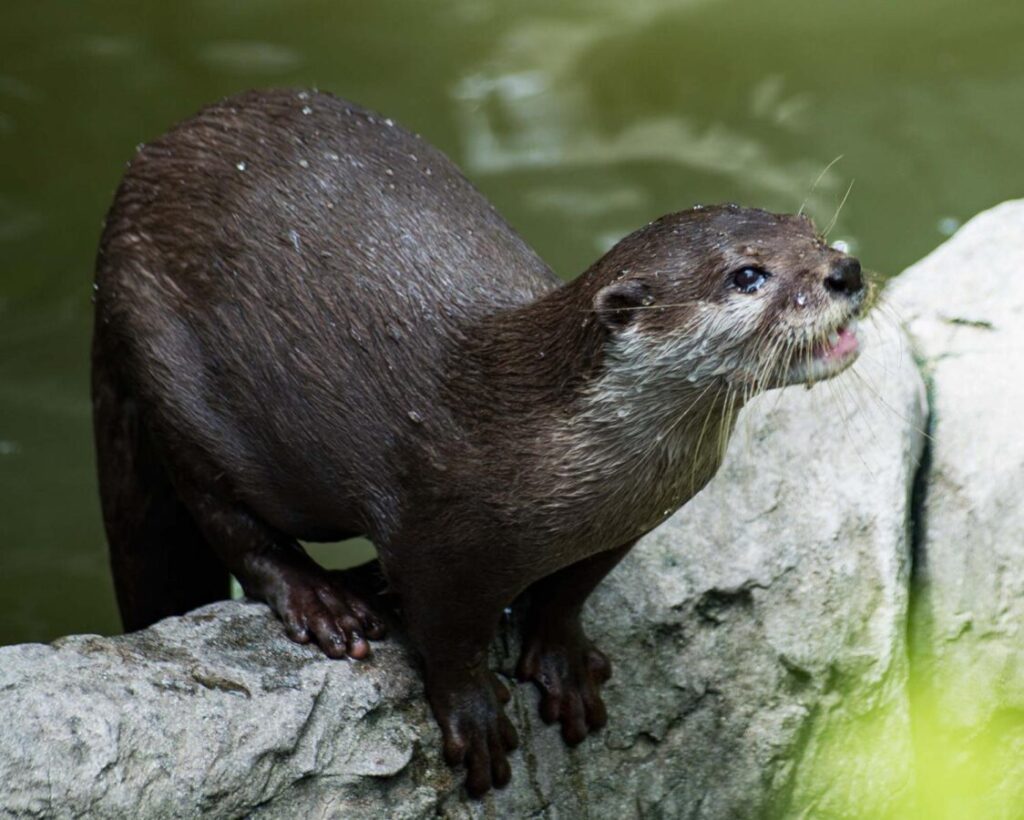
Hairy-Nosed Otter

IUCN Red List Conservation Status


Endangered

LC
NT
VU
EN
CR
EW
EX

Official assessment evaluated in accordance with the IUCN Red List of Threatened Species criteria: Endangered.


Species Quick Facts

Scientific Name
Lutra sumatrana

Average Lifespan
8-12 years in wild, 12-15 years in captivity

Average Weight
5-10 kg (11-22 lbs) – Males: 6 kg, Females: 5 kg

Average Length
70-100 cm (27-39 inches) – head-body length excluding tail

Overview & Identification

The hairyโ€‘nosed otter (Lutra sumatrana) is a mediumโ€‘sized mustelid native to the lowland riverine and peatโ€‘swamp forests of Southeast Asia. Classified within the family Mustelidae, it is the only otter species whose range is confined to the islands of Sumatra, Borneo and the Malay Peninsula. Adults measure 70โ€“100โ€ฏcm in headโ€‘body length, with a muscular tail adding another 45โ€“60โ€ฏcm, and weigh 5โ€“10โ€ฏkg, males being slightly larger than females. Its dense, coarse fur is dark brown to black with a distinctive thick, hairโ€‘filled nose that gives the species its common name. Unlike many otters, the hairyโ€‘nosed otter prefers shallow, slowโ€‘moving freshwater habitats such as oxbow lakes, flooded forests, and peatโ€‘swamp channels, where it can hide among tangled roots and dense vegetation. The species is listed as Endangered by the IUCN, reflecting a rapid decline driven by habitat conversion, water pollution, and illegal hunting for pelts. Population estimates suggest fewer than 2,500 mature individuals remain, making it one of the rarest otters worldwide. Conservation actions focus on protecting remaining peatโ€‘forest blocks, restoring river connectivity, and enforcing antiโ€‘poaching laws. Despite its elusive nature, the hairyโ€‘nosed otter plays a crucial role as an apex predator in freshwater ecosystems, helping to regulate fish populations and maintain ecological balance.

Behavior & Social Structure

Hairyโ€‘nosed otters are primarily solitary hunters, but a mated pair and their offspring often occupy a shared home range of 2โ€“5โ€ฏkmยฒ along river corridors. They are crepuscular to nocturnal, emerging at dusk to forage and retreat to dens of woven vegetation and riverbank burrows during daylight. Territory is defended through scent marking with anal gland secretions deposited on rocks, logs, and vegetation, as well as vocal signals such as chirps, whistles, and low growls that convey alarm or social cohesion. Individuals maintain overlapping ranges with neighboring families, tolerating brief encounters but aggressively repelling intruders that threaten food resources. Swimming proficiency allows rapid pursuit of fish, while the otterโ€™s webbed feet and streamlined body enable efficient navigation through dense aquatic vegetation. Seasonal floods expand available foraging grounds, prompting temporary shifts in territory boundaries. Communication also includes tactile contact; pups are carried on the motherโ€™s belly while swimming, reinforcing pair bonds.

Diet & Hunting Patterns

Hairyโ€‘nosed otters are obligate carnivores, with a diet dominated by small to mediumโ€‘sized fish such as cyprinids, catfish, and gobies, which can constitute up to 80โ€ฏ% of intake by mass. They supplement fish with crustaceans (freshwater crabs, shrimp), amphibians (frogs, tadpoles), mollusks, and occasionally small mammals, birds, and eggs when available. Foraging occurs primarily at night; the otter uses its sensitive whiskers to detect prey movements in turbid water and employs rapid, sideโ€‘swimming strokes to chase fish into shallow channels. Captured prey is often beaten against the belly to stun or kill it before consumption. An adult requires roughly 1.5โ€“2โ€ฏkg of food per day, adjusting intake according to seasonal prey abundance. In peatโ€‘swamp habitats, the otter exploits the rich invertebrate fauna among submerged roots, while in clearer streams it relies more heavily on fish. Opportunistic feeding on carrion has been recorded, but the species prefers fresh, live prey.

Reproduction & Life Cycle

Sexual maturity in hairyโ€‘nosed otters is reached at 2โ€“3โ€ฏyears for both sexes. Breeding is not strictly seasonal, though peaks occur during the rainy season when prey abundance is highest. After a gestation period of 60โ€“63โ€ฏdays, the female gives birth to a litter of one to three altricial pups in a concealed den constructed from riverbank roots, leaf litter, and grass. Neonates weigh about 200โ€ฏg and are blind, relying entirely on maternal care. The mother nurses the young for 8โ€“10โ€ฏweeks, during which time the male assists by provisioning fish and defending the den. Pups begin to follow their parents in the water at three weeks old and learn hunting techniques through observation. By eight weeks they are capable of independent foraging, though they remain within the familyโ€™s territory until the following breeding season. Longevity of parental care enhances pup survival, a critical factor given the speciesโ€™ low reproductive rate and high juvenile mortality in degraded habitats.

Threats & Conservation

The IUCN classifies the hairyโ€‘nosed otter as Endangered, with an estimated global population of fewer than 2,500 mature individuals and a continuing decline of at least 30โ€ฏ% over the past three generations. Primary threats stem from rapid conversion of lowland forests and peat swamps to oil palm plantations, timber extraction, and infrastructure development, which fragment and degrade the otterโ€™s freshwater habitats. Water pollution from agricultural runoff, mining, and domestic waste reduces prey availability and introduces toxic contaminants. Illegal hunting for fur and the pet trade, though less common than for other otters, still occurs in remote areas. Bycatch in gillโ€‘nets and other fishing gear further elevates mortality. Climateโ€‘induced changes, such as increased drought frequency, exacerbate peatโ€‘land drying, intensifying fire risk and habitat loss. Conservation measures include the establishment of protected river corridors, peatโ€‘forest restoration projects, communityโ€‘based antiโ€‘poaching patrols, and environmental education programs. Ongoing monitoring using camera traps and eDNA surveys aims to refine population estimates and assess the effectiveness of habitat protection.

Interesting Facts

โ€ข The hairyโ€‘nosed otterโ€™s nose is covered in dense, stiff hairs that help detect prey in murky water.
โ€ข It is the only otter species that primarily inhabits peatโ€‘swamp forests rather than open rivers.
โ€ข Despite its rarity, it can swim at speeds up to 7โ€ฏkm/h using its powerful hind limbs.
โ€ข Its fur is among the coarsest of all otters, providing extra insulation in cool, shaded waterways.
โ€ข Local communities sometimes mistake its vocalizations for those of small wild cats.

Description

Hairy-Nosed Otter

The Hairy-Nosed Otter, scientifically known as Lutra sumatrana, is a remarkable semiaquatic mammal endemic to Southeast Asia. This elusive species is characterized by its unique features, including webbed feet for efficient swimming, a streamlined body adapted for aquatic life, and a distinctive hairy nose, from which it derives its name.

Appearance
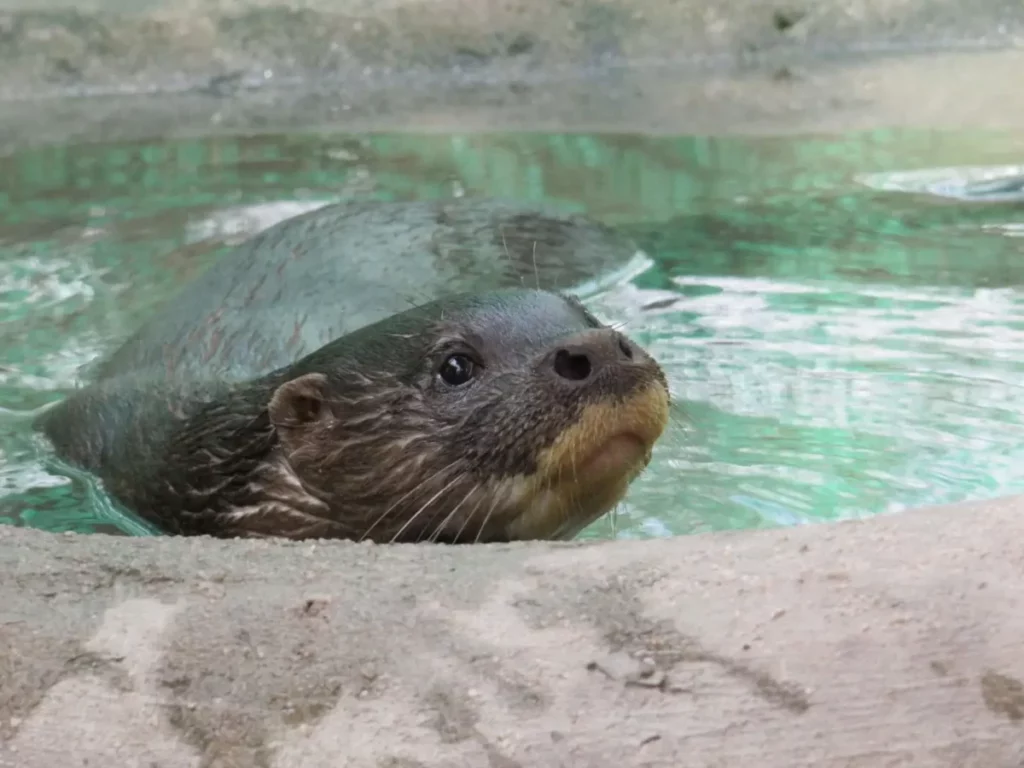
Hairy-Nosed Otter Appearance

The Hairy-Nosed Otter possesses a sleek, dark brown coat with a lighter underside, aiding in camouflage within its aquatic habitats. Its most notable feature is the prominent whiskers and the dense, tactile hairs on its nose, setting it apart from other otter species. This distinguishing characteristic aids in sensory perception and navigation in aquatic environments.

Distribution

This rare and least-known otter species is primarily found in Southeast Asia, with its range extending across countries such as Thailand, Vietnam, Cambodia, and Malaysia. The Hairy-Nosed Otter’s distribution is limited, and it is known to inhabit coastal areas and larger inland rivers. Due to habitat loss and fragmentation, as well as poaching, the population density of this species is notably low, making conservation efforts crucial for its survival.

Habitat Preferences

Hairy-Nosed Otter Habitat

The Hairy-Nosed Otter thrives in a variety of aquatic ecosystems, including coastal areas, freshwater rivers, and wetland habitats. These environments provide the otter with ample food sources, including fish and invertebrates, as well as shelter and suitable breeding grounds. However, the species faces significant threats due to habitat degradation and human encroachment, highlighting the importance of preserving these vital ecosystems.

By shedding light on the unique characteristics, distribution, and habitat preferences of the Hairy-Nosed Otter, it is essential to raise awareness and advocate for the conservation of this remarkable and endangered species. Efforts to protect its natural habitats and mitigate human-induced threats are crucial to ensuring the long-term survival of the Hairy-Nosed Otter and the preservation of Southeast Asia’s rich biodiversity.

Facts About Hairy-Nosed Otter

  • The Hairy-Nosed Otter (Lutra sumatrana) is one of the rarest and least known otter species.
  • It is a semiaquatic mammal native to Southeast Asia.
  • The species has a short brown fur.
  • Hairy-Nosed Otters live in very wet, boggy areas like flooded forests, peat swamps, and mangroves.
  • Until 1998, it was thought to have been extinct, but small populations have been discovered.
  • The IUCN reclassified the Hairy-Nosed Otter from Data Deficient to Endangered in 2014.
  • The primary threats to the species include poaching and habitat loss.
  • They are known to be excellent swimmers and divers.
  • Hairy-Nosed Otters are also known as the Sumatran otter.
  • The species is listed as Endangered on the IUCN Red List.


Scientific Provenance & Verified Sources

Biological taxonomy, conservation status, and physical traits are cross-referenced with authoritative global registers:


Peer-reviewed by Wildlife Science Editors โ€ข Updated for 2026

Explore Other Species Profiles