

The golden bamboo lemur, also known as Hapalemur aureus, bokombolomena, or varibolomena in Malagasy, is a captivating medium-sized primate that is endemic to the lush, tropical rainforests of southeastern Madagascar. This unique lemur species is renowned for its distinctive characteristics, including its bamboo-based diet and striking golden fur, making it a fascinating subject for wildlife enthusiasts and conservationists alike.
Appearance

The golden bamboo lemur is easily distinguished by its striking golden fur, which sets it apart from other lemur species. This medium-sized primate typically exhibits a rich golden to reddish-brown coat, with a lighter underbelly, creating a visually stunning appearance. Additionally, the golden bamboo lemur’s large, expressive eyes and unique facial features contribute to its charismatic and endearing presence in its natural habitat.
Distribution
The golden bamboo lemur is exclusively found in the tropical, moist, southeastern rainforests of Madagascar. This species has a limited distribution, primarily inhabiting specific regions within southeastern Madagascar, including the Ranomafana National Park and other small patches of rainforest near the southeastern coast. Due to habitat fragmentation and human encroachment, the population density of golden bamboo lemurs has become increasingly threatened, leading to their classification as a critically endangered species.
Habitat Preferences
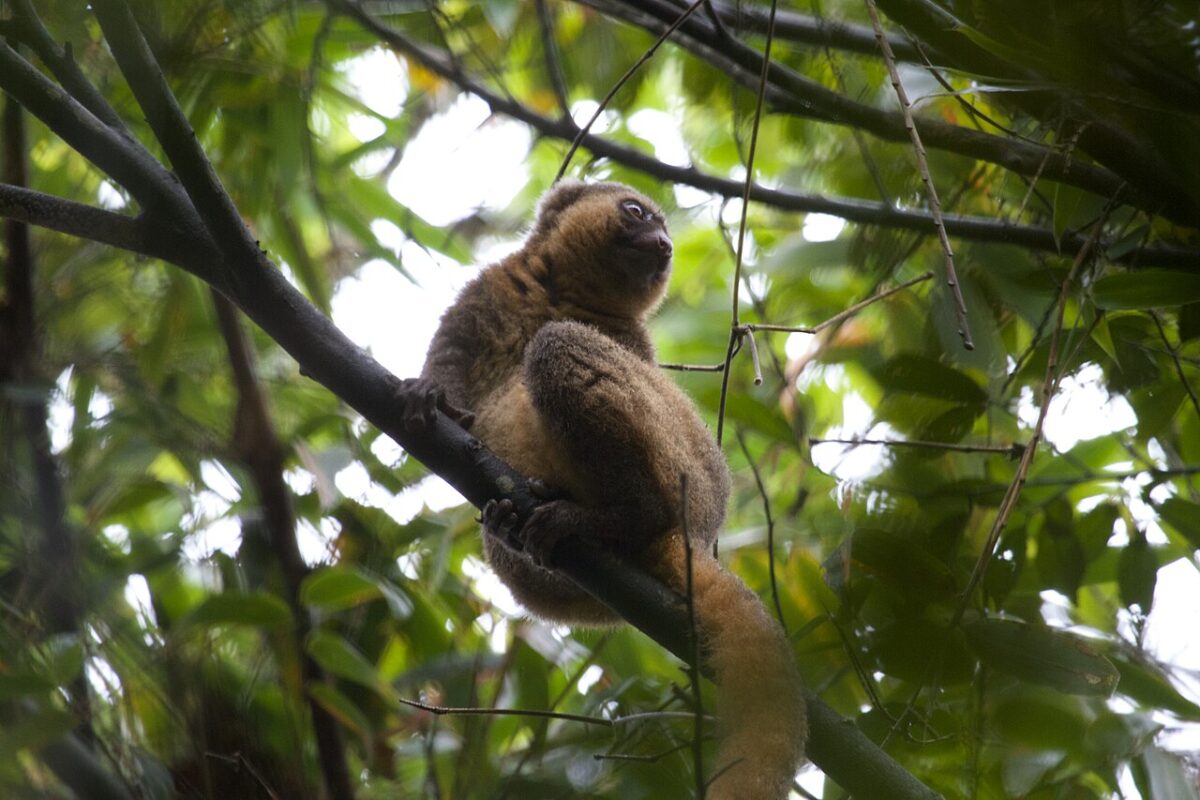
The golden bamboo lemur thrives in bamboo-laden tropical forests and marshes, where it relies on the dense bamboo thickets for shelter, food, and protection. These ecosystems provide the ideal environment for the golden bamboo lemur to exhibit its arboreal behavior, moving through the forest quadrupedally and utilizing its strong hands and feet to grip onto bamboo stems. The species’ dependence on bamboo for sustenance underscores the critical importance of preserving its unique habitat to ensure its survival and well-being.
Overall, the golden bamboo lemur’s captivating appearance, restricted distribution, and specialized habitat preferences highlight the urgent need for conservation efforts to safeguard this remarkable species and its fragile ecosystem in southeastern Madagascar.
Facts About Golden Bamboo Lemur
- The golden bamboo lemur (Hapalemur aureus) is one of the world’s most critically endangered primates, with a population of less than 1000 individuals.
- This lemur is known for its unique diet, as it primarily feeds on the leaves of the giant bamboo plant, which contains high levels of cyanide.
- The golden bamboo lemur was first discovered in 1986 by Dr. Patricia Wright in Madagascar.
- It is estimated that the golden bamboo lemur can consume enough cyanide in one day to kill a human, yet it shows no ill effects.
- This species has a distinctive golden coloration, which sets it apart from other lemurs.
- The golden bamboo lemur has a specialized digestive system that allows it to safely process the cyanide found in bamboo leaves.
- Due to habitat destruction and deforestation, the golden bamboo lemur’s natural habitat is under threat, further endangering the species.
- The golden bamboo lemur is a solitary and territorial animal, typically living in small family groups.
- This lemur species is endemic to southeastern Madagascar, where it inhabits lowland rainforests and bamboo thickets.
- Efforts are underway to protect the remaining populations of the golden bamboo lemur through conservation initiatives and habitat preservation.


