
Description
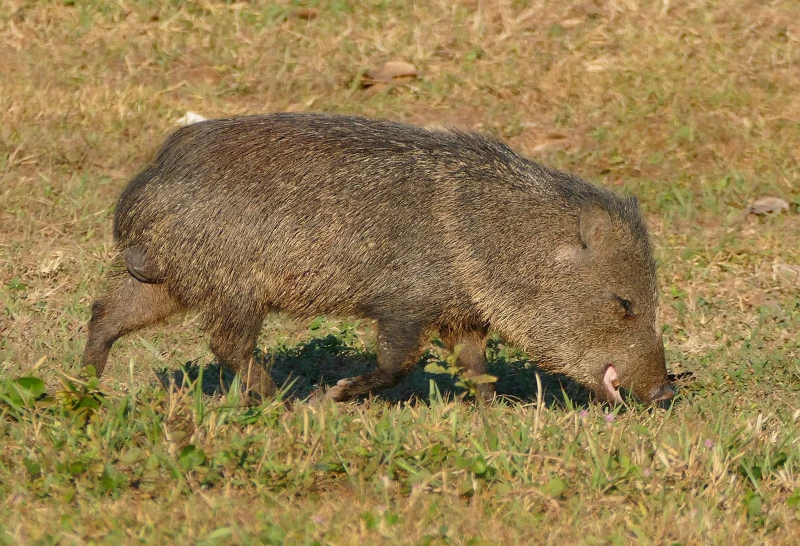
The Giant peccary, scientifically known as Pecari maximus, is a remarkable species of artiodactyl mammal belonging to the family Tayassuidae. This distinctive mammal, often colloquially referred to as javelina, is renowned for its unique characteristics and significant ecological role in the diverse ecosystems of the Americas.
Appearance

The Giant peccary is distinguished by its robust build and striking appearance. It exhibits a notable collar of white hair around its neck, which contributes to its colloquial name of “collared peccary.” This species is larger in size compared to its close relative, the collared peccary (Dicotyles tajacu), and possesses a distinctively powerful and sturdy build. Its appearance sets it apart from similar species, making it an intriguing subject for wildlife enthusiasts and researchers alike.
Distribution
The Giant peccary is primarily found in select regions across North, Central, and South America. Its distribution encompasses diverse habitats, including dry wooded areas and other specific ecosystems. Notably, the species has been reported in Brazil, and its presence in various countries across the Americas underscores its adaptability and significance within its native range. However, the population density and distribution patterns of the Giant peccary may exhibit variations influenced by factors such as habitat availability and human impact.
Habitat Preferences
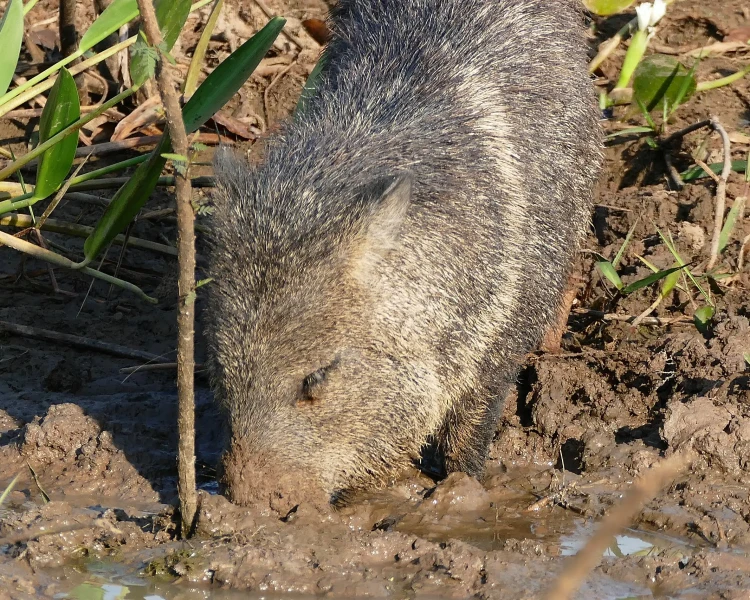
Giant peccaries thrive in a range of habitats, including dry wooded areas within its native range. These ecosystems provide vital resources for the species, including food sources and shelter, essential for its survival and well-being. The species’ ability to adapt to diverse habitats underscores its ecological resilience and its capacity to contribute to the intricate balance of its respective ecosystems.
The Giant peccary’s preference for specific habitat types is a crucial aspect of its conservation, emphasizing the importance of preserving these environments to ensure the species’ continued existence and ecological contributions.
This comprehensive species profile offers valuable insights into the unique characteristics, distribution, and habitat preferences of the Giant peccary, shedding light on its significance within the rich tapestry of the Americas’ wildlife.
By incorporating these key aspects, conservation efforts can be further informed and directed towards safeguarding the well-being of this remarkable species and the ecosystems it inhabits.
Facts About Giant peccary
- The giant peccary (Pecari maximus) was first reported to have been seen in Brazil in 2000 by Dutch naturalist Marc van Roosmalen (source: Wikipedia).
- It is the largest peccary in the world, about the size of a large dog (source: NBC News).
- The five skins of the giant peccary had a total length of 120–137 cm (47–54 in), while local hunters have estimated a weight of 40–50 kg (88–110 lb) (source: Kids Kiddle).
- The giant peccary stands out from its cousins due to its size, a tendency to live in pairs or small family groups, and its lack of scent glands (source: The Register).
- The recently discovered giant peccary of Brazil appears to be less social, primarily living in pairs (source: Wikipedia).
- The giant peccary is a species of peccary and possibly the fourth species of peccary (source: Animal Database – Fandom).
- It is an even-toed ungulate found in the Brazilian Amazon (source: Wageningen University & Research).
- At the northern limit of its range, giant peccaries are found in areas where midday temperatures reach 45 °C, relative humidity is below 6%, and annual rainfall is less than 1000 mm (source: GBIF).
- The giant peccary is less social compared to other peccary species and relies on its social structure for protection against predators (source: Wikipedia).
- The giant peccary is an important species for the ecosystem as it plays a role in seed dispersal and shaping the environment through its foraging behavior (source: combined knowledge).


