Emperor tamarin with a long white mustache perched on a tree branch in a leafy forest

IUCN Red List Conservation Status


Near Threatened

LC
NT
VU
EN
CR
EW
EX

Official assessment evaluated in accordance with the IUCN Red List of Threatened Species criteria: Near Threatened.


Species Quick Facts

Scientific Name
Saguinus imperator

Average Lifespan
10-20 years (to 24 in captivity)

Average Weight
300-600 g (10-21 oz)

Average Length
23-26 cm (9-10 in) head-body

Overview & Identification

Emperor Tamarins are characterized by their striking long, white mustache, which extends from ear to ear, resembling the facial hair of Wilhelm II, the German Emperor. Their small size and unique facial markings make them easily distinguishable from other primate species. These social creatures are known for their playful and inquisitive nature, often displaying remarkable agility and coordination as they navigate their arboreal habitat.

Behavior & Social Structure

Emperor tamarins are strictly diurnal primates, active from dawn to dusk as they move through the middle and upper canopy of the forest in search of food and social interaction. They live in cohesive social groups of 2 to 15 individuals, typically averaging 4 to 8 members, that include multiple adult males and females along with their offspring. Unlike many primates, emperor tamarin groups exhibit a flexible, often polyandrous mating system in which cooperative infant care is central to group cohesion, with all group members—not just the biological parents—participating in carrying and protecting infants.

Communication among emperor tamarins is highly developed and multimodal. They produce a range of vocalizations including high-pitched whistles, trills, and chirps used to maintain group contact, signal alarm, or announce food discoveries. Scent marking, achieved through specialized glands on the chest and anogenital region, plays an important role in territory demarcation and reproductive signaling, particularly among dominant females who may suppress ovulation in subordinate females through pheromonal cues. Tactile communication, including grooming and huddling, reinforces social bonds within the group.

Home ranges typically span 30 to 40 hectares, and groups defend these territories against neighboring tamarin troops through vocal displays and occasional physical confrontation. Emperor tamarins frequently form mixed-species associations with saddleback tamarins (Leontocebus fuscicollis), foraging together and providing mutual predator vigilance—a striking adaptive behavior that reduces predation risk and may enhance foraging efficiency for both species.

Diet & Hunting Patterns

As omnivores, emperor tamarins consume a varied diet composed of ripe fruit, flower nectar, plant exudates (gums and saps), and a substantial proportion of animal prey including insects, spiders, small lizards, and occasionally frog eggs. Their small body size (typically under 500 grams) necessitates a nutrient-dense diet, and they employ opportunistic foraging strategies, moving in small groups through the canopy while using their clawed digits to cling to tree trunks and extract insects from bark crevices. Their specialized lower incisors allow them to gouge tree bark to stimulate and access gum flows, particularly during periods when fruit availability is low.

Seasonal shifts in diet are pronounced, with fruit consumption peaking during the wet season when fleeting fruiting events are abundant, and increased reliance on gums and insects during the drier months when fruit is scarce. Water is primarily obtained through food sources such as fruit pulp and dew, minimizing the need to descend to the forest floor, which also reduces predation risk. This dietary flexibility, combined with a fast metabolism typical of small-bodied primates, allows emperor tamarins to exploit a wide ecological niche within their forest habitat.

Reproduction & Life Cycle

Emperor tamarins typically breed seasonally, with births concentrated between September and March to coincide with peak food availability during the wetter months. Their mating system is notably flexible, encompassing polyandry, monogamy, and occasional polygyny, with cooperative breeding being a hallmark of the species. Gestation lasts approximately 140 to 145 days, after which females most commonly give birth to twins, though singletons and, rarely, triplets also occur.

Parental care is a cooperative group effort, with adult males, subadults, and even juvenile helpers assisting the mother in carrying infants—often for up to 70% of daylight hours—transferring them to the mother primarily for nursing. Infants are weaned at approximately 2 to 3 months of age, though they may continue to receive food shared by group members afterward. Sexual maturity is reached between 16 and 24 months, though reproductive suppression of subordinate females by the dominant breeding female often delays actual reproduction until social conditions change, such as through dispersal to a new group.

Threats & Conservation

The primary threat to emperor tamarins is habitat loss and fragmentation driven by deforestation for cattle ranching, agriculture, and logging within the southwestern Amazon Basin spanning Peru, Brazil, and Bolivia. As forest patches become increasingly isolated, gene flow between populations is restricted, and remaining habitat often fails to support the mixed-species foraging associations and large home ranges these tamarins require. Illegal pet trade poses an additional pressure, as their striking appearance—including their namesake white mustache—makes them targets for capture despite legal protections in range countries.

Natural predators include raptors such as harpy eagles, forest hawks, and species of arboreal snakes and wild cats like ocelots, against which emperor tamarins rely on vigilance, alarm calls, and mixed-species group associations for protection. Climate change poses an emerging concern, as shifting precipitation patterns may alter fruiting phenology and food availability across their range. Conservation initiatives include protected areas such as Manú National Park in Peru, community-based forest management programs, and IUCN-supported habitat corridor projects aimed at reconnecting fragmented populations, though continued monitoring and enforcement against illegal trade remain critical.

Interesting Facts

  • A Royal Namesake: The emperor tamarin was reportedly named in jest by a German zoo director for its resemblance to the flamboyant mustache of German Emperor Wilhelm II.
  • Cooperative Fatherhood: Male emperor tamarins often carry infants more than females do, sometimes bearing twin offspring on their backs for the majority of daylight hours.
  • Clawed Climbers: Unlike most primates, emperor tamarins have modified claws instead of flat nails on most digits, an adaptation that aids in vertical clinging and rapid tree-trunk locomotion.
  • Twin Specialists: Due to a genetic predisposition, emperor tamarins almost always give birth to fraternal twins that can even share a single placenta and exchange blood-forming stem cells in utero, resulting in genetic chimerism.
  • Mixed-Species Alliances: They frequently form long-term foraging associations with saddleback tamarins, effectively doubling their group’s vigilance against predators without competing heavily for the same food resources.
  • Tiny but Mighty: Weighing less than half a kilogram, emperor tamarins are among the smallest anthropoid primates in the world, yet they defend territories spanning dozens of hectares.
  • Reproductive Suppression: Dominant females in a group can hormonally suppress ovulation in subordinate females, a rare reproductive strategy among primates that concentrates breeding rights within the group.

The Emperor Tamarin, scientifically known as Saguinus imperator, is a captivating New World monkey renowned for its endearing appearance and distinctive long, white mustache. This small primate species holds a special place in the hearts of wildlife enthusiasts due to its charming features and intriguing behavior.

Description
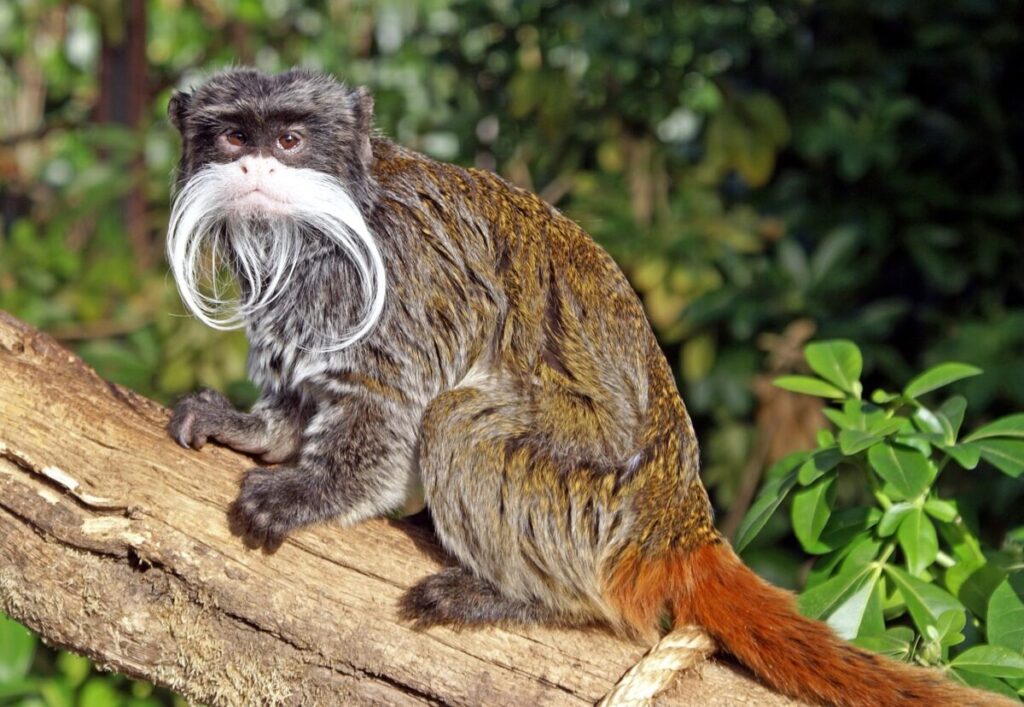
Emperor Tamarins are characterized by their striking long, white mustache, which extends from ear to ear, resembling the facial hair of Wilhelm II, the German Emperor. Their small size and unique facial markings make them easily distinguishable from other primate species. These social creatures are known for their playful and inquisitive nature, often displaying remarkable agility and coordination as they navigate their arboreal habitat.

Appearance
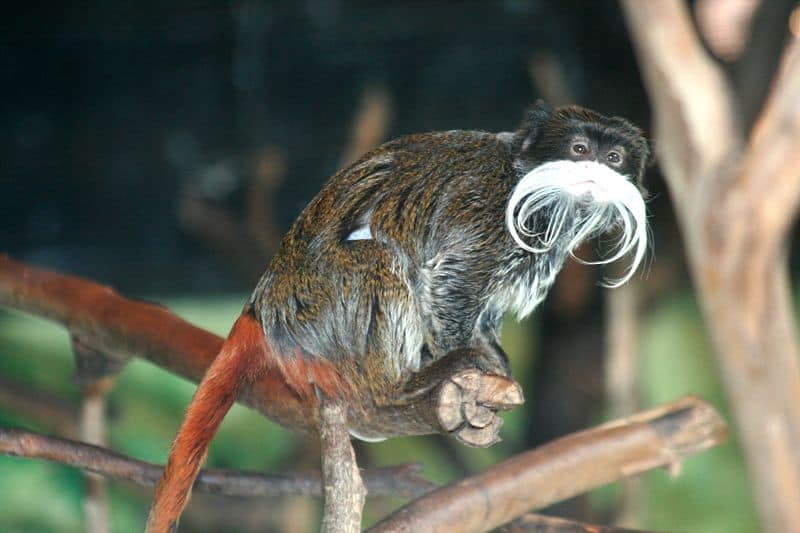
The most striking feature of the Emperor Tamarin is its long, white mustache, which gives it a regal and distinguished appearance. In addition to their distinctive facial adornment, these tamarins boast a coat of dense, soft fur, typically colored in shades of brown, black, and gray. Their diminutive size and agile movements contribute to their captivating presence, making them a delight to observe in their natural habitat.

Distribution

Emperor Tamarins are native to the lush tropical forests of South America, with their range spanning across regions east of the upper Purus River in countries such as Peru, Bolivia, and Brazil. These charismatic primates are primarily found in the Amazonian tropical forest regions, where they navigate the dense canopy with remarkable agility. While their populations may face localized threats, they continue to thrive in these biodiverse ecosystems.

Habitat Preferences
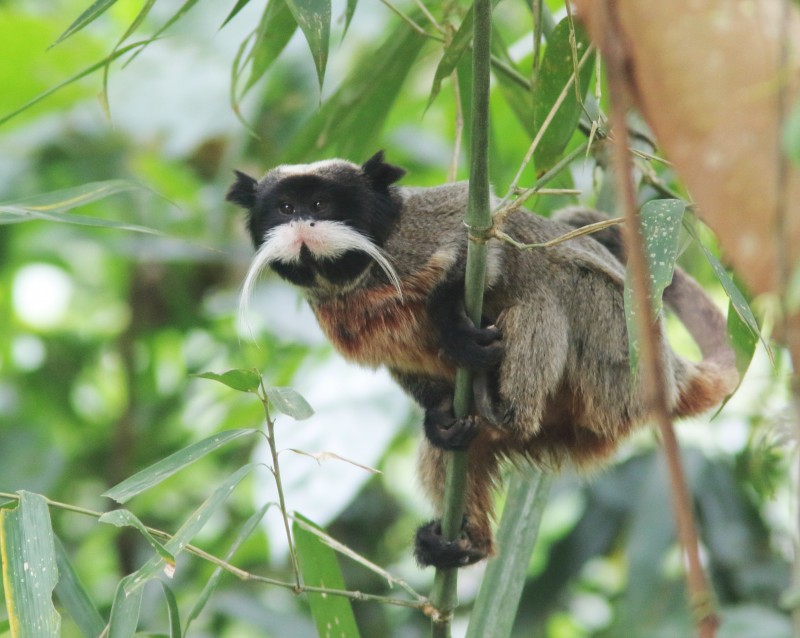
Emperor Tamarins are highly adapted to life in the tropical rainforests, where they rely on the dense vegetation and abundant canopy for shelter, foraging, and social interactions. Their agile nature allows them to navigate the intricate network of branches and vines with ease, making the forest canopy their preferred domain. These ecosystems provide an abundance of fruits, flowers, insects, and other resources that sustain the tamarins’ dietary and social needs, contributing to their overall well-being and survival.

In summary, the Emperor Tamarin stands out as a captivating and charismatic species, adding to the rich tapestry of biodiversity in the South American rainforests. Its distinctive appearance, agile nature, and reliance on the tropical forest ecosystems underscore the significance of conservation efforts to ensure the continued thriving of this enchanting primate species.

Facts About Emperor Tamarin

  • The Emperor tamarin is a small monkey native to the southwest Amazon Basin.
  • They are easily identified by their long, white whiskers that look like a mustache.
  • Emperor tamarins have a body length of about 9.2 to 10.4 inches and a tail length of 14 to 16.6 inches.
  • They are relatively lightweight, reaching only between 10 to 14 ounces.
  • These monkeys live in the states of Acre and Amazonas, western Brazil, and the southwestern Amazon basin.
  • The Emperor tamarin is named for its resemblance to the German emperor Wilhelm II.
  • They are highly social animals and live in groups of up to 10 individuals.
  • Emperor tamarins are primarily frugivorous, but they also consume insects and nectar.
  • The average lifespan of Emperor tamarins in the wild is around 15 years.
  • Conservation status: Least Concern (population stable)


Scientific Provenance & Verified Sources

Biological taxonomy, conservation status, and physical traits are cross-referenced with authoritative global registers:


Peer-reviewed by Wildlife Science Editors • Updated for 2026

Explore Other Species Profiles