Desert Hedgehog

IUCN Red List Conservation Status


Least Concern

LC
NT
VU
EN
CR
EW
EX

Official assessment evaluated in accordance with the IUCN Red List of Threatened Species criteria: Least Concern.


Species Quick Facts

Scientific Name
Hemiechinus aethiopicus

Average Lifespan
2-5 years in wild, 6-10 years in captivity

Average Weight
0.4-0.7 kg (0.9-1.5 lbs) – Males: 0.55 kg, Females: 0.45 kg

Average Length
15-25 cm (5.9-9.8 inches) – head-body length excluding tail

Overview & Identification

The desert hedgehog (Hemiechinus aethiopicus) is a small nocturnal mammal belonging to the family Erinaceidae within the order Eulipotyphla. It inhabits arid and semiโ€‘arid regions of North Africa, the Arabian Peninsula, and parts of the Middle East extending into western Iran. Preferred habitats include true deserts, sandy semiโ€‘deserts, scrubby steppe, and sparse shrubland where loose soil permits burrowing. Adults are covered in a coat of stiff spines that can be erected for defense, and they possess a distinctive white facial mask and a short, hairโ€‘covered tail. Their diet is opportunistic, allowing them to thrive in environments where prey availability fluctuates seasonally. Although classified as Least Concern by the IUCN, localized pressures such as habitat conversion for agriculture and overโ€‘collection for the pet trade have caused population declines in some peripheral areas. The species plays a key role in controlling insect populations and contributes to seed dispersal through occasional consumption of fruits.

Behavior & Social Structure

Desert hedgehogs are solitary for most of the year, establishing individual home ranges that may overlap at resource hotspots. They are primarily nocturnal, emerging at dusk to forage while avoiding the extreme daytime heat. Territories are defended through scent marking with secretions from the anal glands and occasional vocalizations such as low grunts or hisses when threatened. When confronted, the hedgehog curls into a tight ball, presenting its spines outward as a mechanical deterrent. Seasonal movements are limited; however, individuals may travel up to 500 meters to locate water or abundant prey after prolonged droughts. Communication is largely olfactory, with individuals recognizing familiar neighbors by scent cues, reducing unnecessary aggressive encounters.

Diet & Hunting Patterns

The desert hedgehog is principally an insectivore but exhibits omnivorous tendencies, especially during periods of prey scarcity. Its diet consists of beetles, locusts, termites, ants, and other arthropods, which can comprise up to 80% of intake during the rainy season. In arid months, the hedgehog supplements its diet with seeds, fruits such as desert figs, and occasional small vertebrates like lizards or newborn rodents. Daily food consumption averages 5โ€‘10% of body mass, with individuals foraging for up to three hours each night. Hedgehogs employ a keen sense of smell and acute hearing to locate hidden prey beneath the sand, using their strong forelimbs to dig and their elongated snout to probe crevices. Water needs are minimal; they obtain most moisture from prey and succulent plant matter.

Reproduction & Life Cycle

Sexual maturity is reached at 10โ€‘12 months for both sexes, though females in optimal conditions may breed as early as eight months. Breeding season aligns with the cooler months of October to March, when food is more abundant. After a gestation period of approximately 35โ€‘40 days, females give birth to litters of 2โ€‘6 hoglets in shallow burrows lined with dry vegetation. Newborns are altricial, blind and hairless, relying entirely on maternal milk for the first three weeks. The mother nurses the young once daily, gradually introducing insects and soft plant material as the hoglets develop spines. By six weeks, the juveniles are weaned and begin independent foraging, though they may remain within the maternal home range for several months before dispersing to establish their own territories.

Threats & Conservation

The IUCN lists the desert hedgehog as Least Concern, estimating a stable global population of roughly 500,000 mature individuals. However, regional assessments indicate declines of up to 30% in parts of the Arabian Peninsula due to habitat loss from expanding agriculture, overgrazing, and infrastructure development. Road mortality is a significant source of mortality in areas where roads intersect traditional foraging routes. Additionally, illegal capture for the exotic pet trade has intensified in recent years, with an estimated 5,000 individuals removed annually from the wild. Climate change poses a longerโ€‘term threat by exacerbating desertification and reducing insect prey availability. Conservation actions include protected area designation, public awareness campaigns to curb pet trade, and research programs monitoring population trends and habitat connectivity.

Interesting Facts

โ€ข Can enter a state of torpor during extreme heat, lowering body temperature to conserve water
โ€ข Possesses a unique defensive behavior of rolling into a ball, a trait shared with only a few other mammalian groups
โ€ข Has a highly developed sense of smell, able to detect prey buried up to 10 cm beneath sand
โ€ข Females can produce multiple litters per year if conditions are favorable, with up to three breeding cycles in a single season
โ€ข Plays a crucial ecological role by controlling pest insect populations in desert ecosystems

Description

Desert Hedgehog

The Desert Hedgehog, scientifically known as Paraechinus aethiopicus, is a remarkable species of mammal belonging to the family Erinaceidae. This small, spiny mammal is well-adapted to the arid desert regions it inhabits, displaying unique characteristics that distinguish it from other hedgehog species.

Appearance

Desert Hedgehog Appearance

The Desert Hedgehog is the smallest member of the hedgehog family, measuring up to 10 inches in length and weighing up to 1.5 pounds. Its most distinctive feature is its dense coat of spines, which provides protection from predators and harsh desert conditions. These spines are interspersed with soft fur, giving the Desert Hedgehog a distinctive appearance.

Distribution

This species is primarily found in hot, dry deserts, with its range extending across regions such as the edges of the Sahara and Arabian Deserts in Africa and parts of the Middle East. The Desert Hedgehog can also be found in vegetated areas of oases or coastal regions. Its distribution reflects its remarkable ability to thrive in some of the world’s most challenging environments.

Habitat Preferences
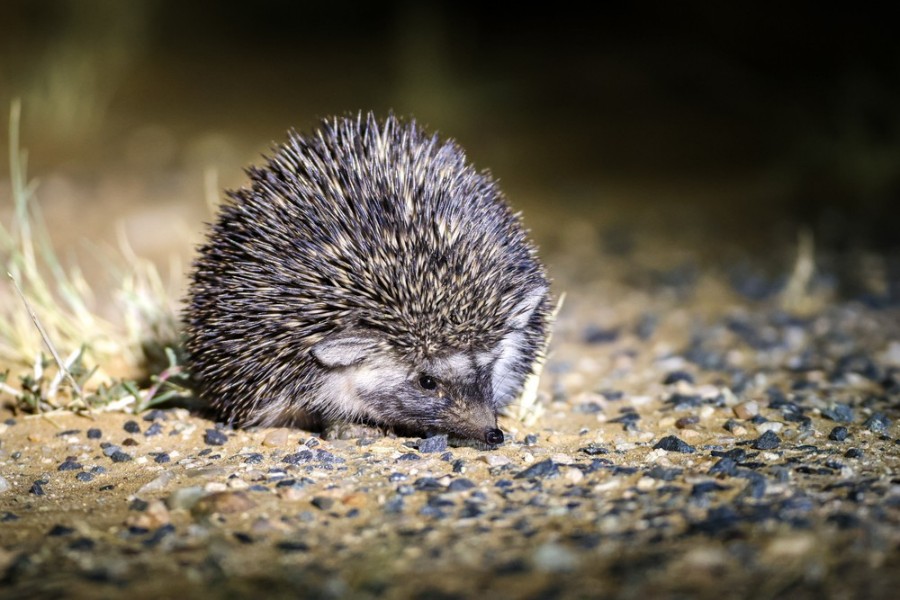
Desert Hedgehog Habitat

Desert Hedgehogs thrive in arid desert regions, where they have adapted to the harsh conditions through specialized behaviors and physiological traits. They are well-suited to sandy desert areas, utilizing their keen sense of smell and ability to burrow to find shelter and food. Their ability to thrive in such extreme environments highlights their remarkable resilience and adaptability.

This comprehensive species profile offers a detailed insight into the unique characteristics, distribution, and habitat preferences of the Desert Hedgehog, shedding light on the fascinating adaptations that enable this species to thrive in its challenging desert environment.

Facts About Desert Hedgehog

  • The Desert Hedgehog (Paraechinus aethiopicus) is well adapted to arid, drought-like conditions and is native to Ethiopia.
  • It is one of the smallest hedgehog species, measuring 5.5 to 11 inches in length and weighing about 10 to 18 ounces.
  • These hedgehogs are solitary, nocturnal carnivores and are well-suited for desert, semi-desert, and dry steppe habitats.
  • Their average lifespan ranges from 3 to 10 years.
  • The top speed of the Desert Hedgehog is approximately 19.12 km/h (12 mph).
  • They are known to live for 54 months and can grow to a length of 181.87 mm.
  • The species is believed to have a wide distribution across North Africa and the Middle East.
  • Their population size is currently unknown.
  • The Desert Hedgehog is well-adapted to arid environments and can be found in hot, dry deserts as well as vegetated areas of oases.
  • They are reasonably tolerant of habitat disturbance and can thrive in various environmental conditions.


Scientific Provenance & Verified Sources

Biological taxonomy, conservation status, and physical traits are cross-referenced with authoritative global registers:


Peer-reviewed by Wildlife Science Editors โ€ข Updated for 2026

Explore Other Species Profiles