Daubenton’s Bat

IUCN Red List Conservation Status


Least Concern

LC
NT
VU
EN
CR
EW
EX

Official assessment evaluated in accordance with the IUCN Red List of Threatened Species criteria: Least Concern.


Species Quick Facts

Scientific Name
Myotis daubentonii

Average Lifespan
8-12 years in wild, 12-20 years in captivity

Average Weight
0.005-0.009 kg (0.011-0.020 lbs) – Males: 0.006 kg, Females: 0.007 kg

Average Length
3.5-5.0 cm (1.4-2.0 inches) – head-body length excluding tail

Overview & Identification

Daubenton’s bat (Myotis daubentonii) belongs to the family Vespertilionidae, the largest family of insect‑eating bats. It inhabits a broad Palearctic range, extending from the British Isles across temperate Europe to western Siberia, the Korean Peninsula, and northern Japan. The species favors riparian woodlands, mature deciduous forests, and sometimes urban parks where water bodies such as streams, rivers, and lakes provide abundant insect prey. Roosting sites include tree cavities, under bark, bridges, and old buildings, often close to water. Its fur is brownish‑grey on the back and paler ventrally, with a distinctive dark facial mask. The wings are long and narrow, giving it agile flight over water surfaces where it forages low to the water, skimming to capture emergent insects. Daubenton’s bat is listed as Least Concern by the IUCN due to its wide distribution and stable population trends, although local declines have been recorded where water quality deteriorates. Conservation actions focus on preserving riparian habitats, maintaining water quality, and protecting roosting structures. The species plays a vital ecological role by controlling aquatic and terrestrial insect populations, linking aquatic and terrestrial food webs.

Behavior & Social Structure

Daubenton’s bat is a nocturnal, solitary forager that forms small maternity colonies of up to 30 females during the breeding season, while males typically roost alone or in mixed‑sex groups. Individuals emerge at dusk and travel up to 10 km from roost sites to hunt over water, using echolocation calls of 45–50 kHz to detect insects on the water surface. Their flight pattern is low and agile, allowing them to skim the water and capture midges, mayflies, and caddisflies. Home ranges overlap minimally, and individuals defend foraging corridors through acoustic signaling rather than physical aggression. Social communication includes a repertoire of social calls used in mother‑pup reunions and during colony formation. Seasonal migrations are limited; bats may move short distances to locate optimal hibernation sites in caves, mines, or cellars where temperatures remain above 0 °C during winter.

Diet & Hunting Patterns

Daubenton’s bat is an insectivore that specializes in aquatic and semi‑aquatic insects. Its diet consists primarily of Diptera (midges, especially Chironomidae), Trichoptera (caddisflies), Ephemeroptera (mayflies), and occasional Coleoptera (beetles). Studies using fecal DNA analysis show that over 70 % of prey items are captured directly from water surfaces, with the remainder taken from foliage near water. An adult consumes roughly 3–5% of its body weight each night, equivalent to 0.2–0.4 g of insects, providing the energy needed for flight and thermoregulation. Foraging is opportunistic; bats adjust prey selection based on seasonal insect emergences, increasing mayfly consumption in spring and shifting to midges in summer. Their echolocation is tuned to detect the faint wing beats of small insects on water, and they employ a “trawling” flight technique, skimming the water while extending their tail membrane to scoop prey.

Reproduction & Life Cycle

Females reach sexual maturity at one year of age, while males mature slightly later. Mating occurs in late summer and early autumn, with females storing sperm over winter (delayed fertilization). Gestation lasts 50–60 days, culminating in the birth of a single pup in May or early June. Pups are born hairless, with eyes closed, and weigh about 1.2 g. Mothers form maternity colonies in warm, humid roosts where they nurse pups once daily, providing milk rich in protein and fat. Pups fledge after 4–5 weeks, gaining flight proficiency quickly to join night foraging. Juveniles become independent by late July and may disperse up to 30 km to establish their own territories. Longevity is enhanced by low predation risk and the species’ ability to hibernate in protected sites during winter.

Threats & Conservation

The IUCN classifies Daubenton’s bat as Least Concern, but regional populations face several pressures. Habitat loss from river channelization, drainage of wetlands, and deforestation reduces foraging grounds and roosting sites. Water pollution, particularly from agricultural runoff and pesticide use, diminishes insect prey abundance and can cause bioaccumulation of toxins in bats. Disturbance of roosts in old buildings, bridges, and tree cavities by human activity or renovation projects leads to colony abandonment. Climate change may alter the phenology of aquatic insects, creating mismatches between bat breeding periods and peak prey availability. Conservation measures include protecting riparian buffers, maintaining water quality under EU Water Framework Directive standards, and installing bat boxes to replace lost natural roosts. Population surveys across Europe estimate roughly 5–7 million individuals, with stable trends in most western countries but declines of up to 30 % in parts of eastern Europe where habitat degradation is severe.

Interesting Facts

• Often called the “water bat” because it feeds low over streams and rivers.
• Uses a unique low‑frequency echolocation call (45–50 kHz) adapted for detecting insects on water surfaces.
• Can enter torpor for short periods during cold spells, conserving energy without full hibernation.
• Females store sperm over winter, allowing fertilization to occur in spring when conditions are optimal.
• Has been observed roosting under the eaves of historic churches, leading to cultural heritage collaborations for bat conservation.

Description

Daubenton’s Bat

Daubenton’s Bat, scientifically known as Myotis daubentonii, is a small to medium-sized Eurasian bat species belonging to the Vespertilionidae family. This species is named in honor of the esteemed French naturalist Louis-Jean-Marie Daubenton by Heinrich Kuhl in 1817. Daubenton’s Bat is recognized for its distinctive foraging behavior over water bodies, where it skims the surface to capture its prey.

Appearance
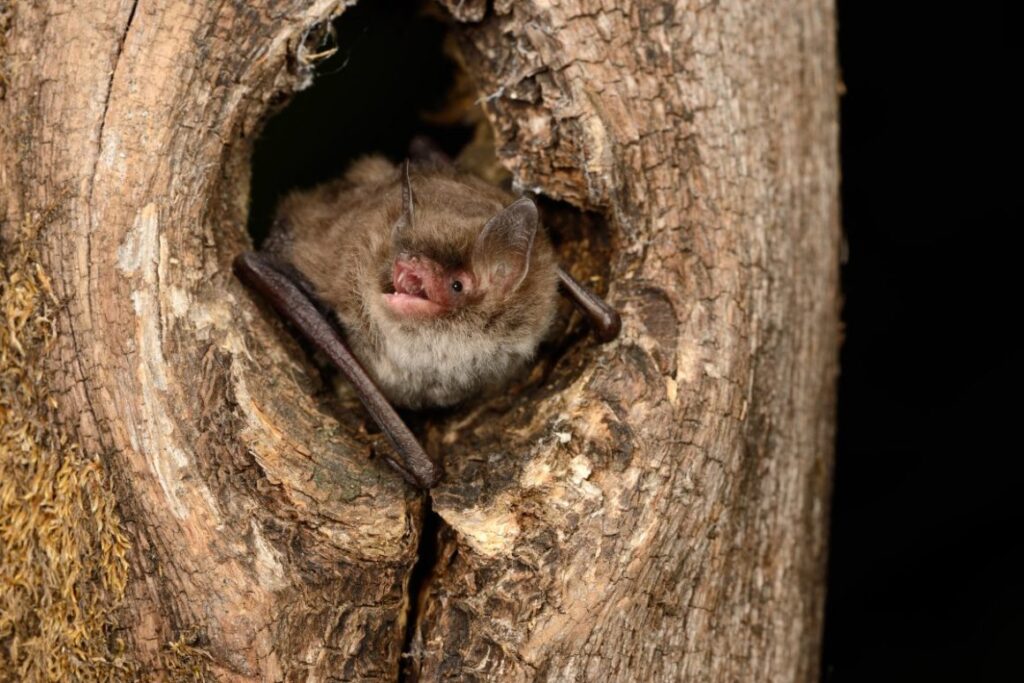
Daubenton’s Bat Habitat

Daubenton’s Bat is characterized by its unique physical features, including a reddish-brown fur coat, a broad and robust wingspan, and relatively long ears compared to other bat species. Notably, its ventral fur is paler than its dorsal fur, which aids in camouflage during flight. This species can be distinguished from similar bats by its habit of flying low over water, a behavior that sets it apart from other aerial hunters.

Distribution

Daubenton’s Bat is widely distributed across the Paleartic region, encompassing countries such as Ireland, Portugal, Norway, and various parts of continental Europe. Its population density shows notable patterns of increase in many areas, indicating positive trends in its conservation status. The species’ adaptability to diverse water-rich habitats has contributed to its expanding range in recent years.

Habitat Preferences
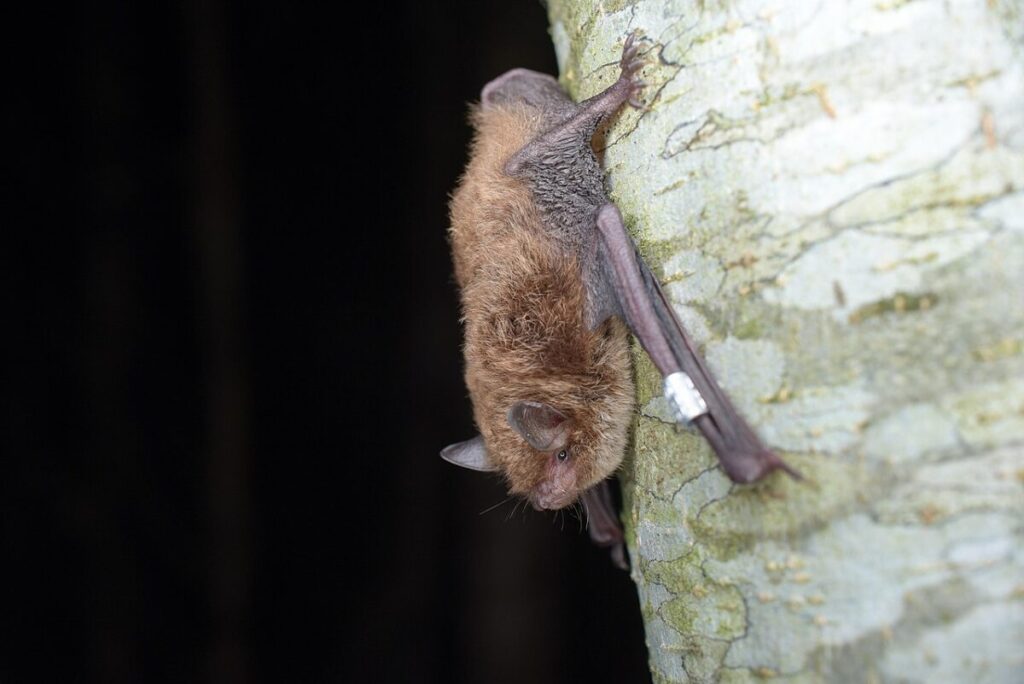
Myotis daubentonii

Daubenton’s Bat exhibits a strong affinity for riparian habitats, favoring areas near calm, slow-moving water bodies such as lakes, rivers, and ponds. These environments provide abundant insect prey, particularly non-biting midges, small flies, mayflies, and moths, which constitute the primary diet of Daubenton’s Bat. The species also utilizes roosting sites in caves, tunnels, and tree holes, often in close proximity to its foraging grounds, ensuring efficient access to food sources.

This comprehensive species profile provides valuable insights into the unique characteristics, distribution, and habitat preferences of Daubenton’s Bat, shedding light on its significance in the Eurasian ecosystem and the conservation efforts aimed at preserving this remarkable species.

Facts About Daubenton’s Bat

  • Daubenton’s bats have a body length of 4.5-5.5cm and a wingspan of 24-27cm.
  • The average weight of a Daubenton’s bat is 7-12g.
  • The average lifespan of a Daubenton’s bat is 4-4.5 years.
  • Their fur is brownish-grey on the back and silvery-grey on the underside.
  • Daubenton’s bat has a steady flight, often within a few centimeters of the water surface.
  • The species ranges from Ireland to Japan (Hokkaido).
  • Juveniles have darker fur than adults.
  • Maximum age for males banded as juveniles is 23 years.
  • Average life expectancy is 2.7–4.2 years for females and 3.3–5.1 for males.
  • Daubenton’s bat is reminiscent of a small hovercraft in flight.


Scientific Provenance & Verified Sources

Biological taxonomy, conservation status, and physical traits are cross-referenced with authoritative global registers:


Peer-reviewed by Wildlife Science Editors • Updated for 2026

Explore Other Species Profiles