Dall's porpoise swimming just below the surface of calm gray-blue ocean water

IUCN Red List Conservation Status


Least Concern

LC
NT
VU
EN
CR
EW
EX

Official assessment evaluated in accordance with the IUCN Red List of Threatened Species criteria: Least Concern.


Species Quick Facts

Scientific Name
Phocoena dalli

Average Lifespan
20-25 years in wild, 25-30 years in captivity

Average Weight
70-100 kg (154-220 lbs) – Males: 80 kg, Females: 70 kg

Average Length
190-240 cm (75-95 inches) – head-body length excluding tail

Overview & Identification

The Dallโ€™s porpoise (Phocoena dalli) belongs to the order Cetacea, family Phocoenidae. It inhabits the cold temperate waters of the North Pacific, ranging from the Bering Sea and Gulf of Alaska to the coasts of Japan and the Russian Far East. Preferring offshore and nearโ€‘coastal zones, it can be found in both deep pelagic waters and shallower continental shelf areas, often associating with seaโ€‘ice edges in winter. Its robust, spindleโ€‘shaped body is black on the dorsal side with a distinctive white patch on the flank that expands with age, giving it a striking โ€œcheekโ€‘stripeโ€ appearance. The dorsal fin is small and triangular, while the flippers are short and rounded, adaptations that aid its highโ€‘speed, porpoising locomotion. Dallโ€™s porpoises are among the fastest cetaceans, capable of bursts up to 55 km/h. Although the IUCN classifies the species as Least Concern, localized declines have been recorded due to byโ€‘catch and habitat disturbance. The species plays a key role in marine ecosystems as a midโ€‘level predator, linking squid and small fish populations to higher trophic levels.

Behavior & Social Structure

Dallโ€™s porpoises are highly gregarious, typically forming groups of 5โ€‘15 individuals, though aggregations of several hundred have been documented during feeding events. They are diurnal foragers, spending daylight hours hunting and night hours resting near the surface. Their social structure is fluid; individuals frequently change groups, and there is no strong territoriality. Communication relies on a repertoire of highโ€‘frequency clicks and burstโ€‘pulsed sounds used for echolocation and social interaction. Porpoisingโ€”leaping out of the water in a series of rapid jumpsโ€”serves both to reduce drag during highโ€‘speed travel and possibly to signal conspecifics. They exhibit strong site fidelity to productive feeding grounds but can travel hundreds of kilometers following prey migrations. Seasonal movements are modest compared to larger cetaceans, with most movements linked to prey availability rather than breeding.

Diet & Hunting Patterns

Dallโ€™s porpoises are opportunistic carnivores, feeding primarily on cephalopods (especially squid species such as Gonatus spp.) and a variety of pelagic fish including Pacific herring (Clupea pallasii), walleye pollock (Theragra chalcogramma), and Pacific cod (Gadus macrocephalus). Their diet can shift seasonally; squid dominate in summer, while fish become more important in winter when squid are less abundant. Daily food intake is estimated at 3โ€‘5% of body weight, roughly 2โ€‘4 kg for an adult. They employ highโ€‘speed pursuit and deepโ€‘diving tactics, often hunting in groups that herd schools of fish or drive squid to the surface. Echolocation clicks enable precise detection of prey in lowโ€‘light or turbid waters, and they can adjust click frequency to target different prey types. Occasionally, they consume crustaceans and small marine mammals, but these items constitute a minor portion of their diet.

Reproduction & Life Cycle

Sexual maturity is reached at about 4โ€‘6 years for both sexes, with females typically larger and reaching maturity slightly later. Breeding occurs primarily in winter months, although regional variation exists. The gestation period lasts 10โ€‘11 months, after which a single calf is born, weighing roughly 10โ€‘12 kg and measuring about 45โ€‘55 cm. Calves are nursed for 6โ€‘9 months, during which they rely exclusively on their motherโ€™s milk before transitioning to solid prey. Maternal care is intensive; mothers protect calves from predators and guide them to suitable foraging areas. Calving intervals are generally 2โ€‘3 years, allowing females to invest substantial resources in each offspring. Juveniles attain independence by age two, after which they join mixedโ€‘sex groups and adopt adult foraging behaviors.

Threats & Conservation

The IUCN lists the Dallโ€™s porpoise as Least Concern, with an estimated global population of 300,000โ€‘500,000 individuals. However, several anthropogenic threats have caused regional declines. Byโ€‘catch in gillnets and trawl fisheries is the most significant mortality source, accounting for an estimated 5โ€‘10% of the population annually in some areas. Habitat degradation from coastal development, oil spills, and increased marine traffic adds further stress. Noise pollution from seismic surveys and vessel traffic interferes with echolocation, reducing foraging efficiency. Climate change may alter prey distribution, forcing porpoises to shift ranges and potentially increasing competition with other predators. Conservation measures include byโ€‘catch mitigation programs, protected marine areas, and monitoring of population trends to ensure sustainable numbers.

Interesting Facts

โ€ข Dallโ€™s porpoises can reach speeds up to 55 km/h, making them one of the fastest marine mammals.
โ€ข Their distinctive white flank patch expands with age, creating a striking โ€œcheekโ€‘stripeโ€ pattern.
โ€ข They are known for their energetic porpoising behavior, leaping out of the water in rapid succession.
โ€ข Despite being classified as Least Concern, they are among the most frequently caught cetaceans in North Pacific fisheries.
โ€ข Dallโ€™s porpoises have a highly developed echolocation system, using clicks up to 150 kHz to locate prey in dark, deep waters.

Description

Dall’s porpoise, scientifically known as Phocoenoides dalli, is a remarkable species of porpoise that is endemic to the North Pacific. It is recognized as the largest member of the porpoise family and holds the distinction of being the sole species in the genus Phocoenoides. This charismatic mammal is named after the esteemed American naturalist, W. H. Dall.

Appearance
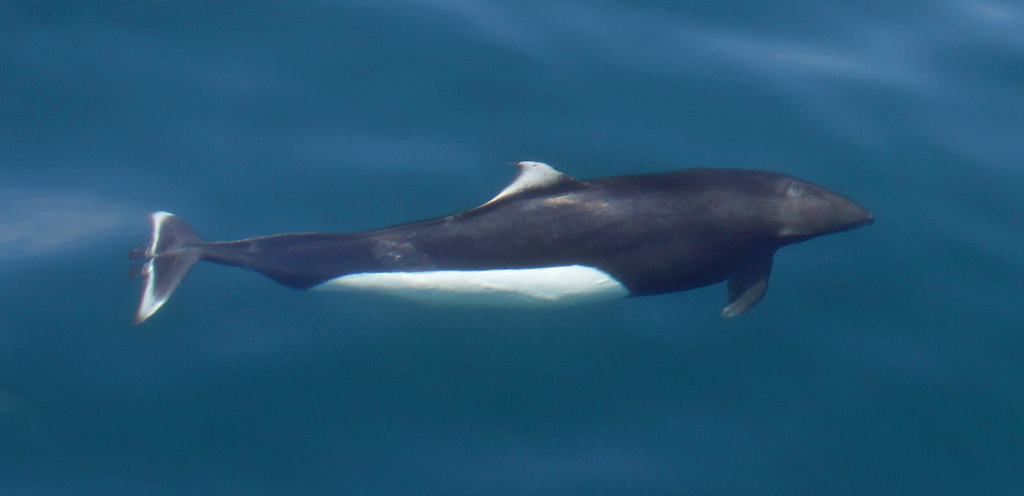
Dall’s porpoise boasts a distinctive appearance characterized by its robust and streamlined body. It features a relatively small, triangular head with little or no beak, setting it apart from other porpoise species. The animal’s flippers are small, round, and positioned near the front of its body. Notably, Dall’s porpoise is adorned with striking black and white markings, adding to its allure and making it easily distinguishable from other marine mammals.

Distribution

This species is primarily found in the North Pacific, with its range extending from the coastal waters of Japan, Russia, and Alaska, down to the coast of Baja California in Mexico. Dall’s porpoise is known for its wide distribution across these regions, and it is often observed in offshore waters as well as nearshore habitats. Notably, this porpoise species is known for its preference for deep, cold waters, and it is commonly sighted in areas with strong currents and upwelling, indicative of its adaptability to various oceanic conditions.

Habitat Preferences
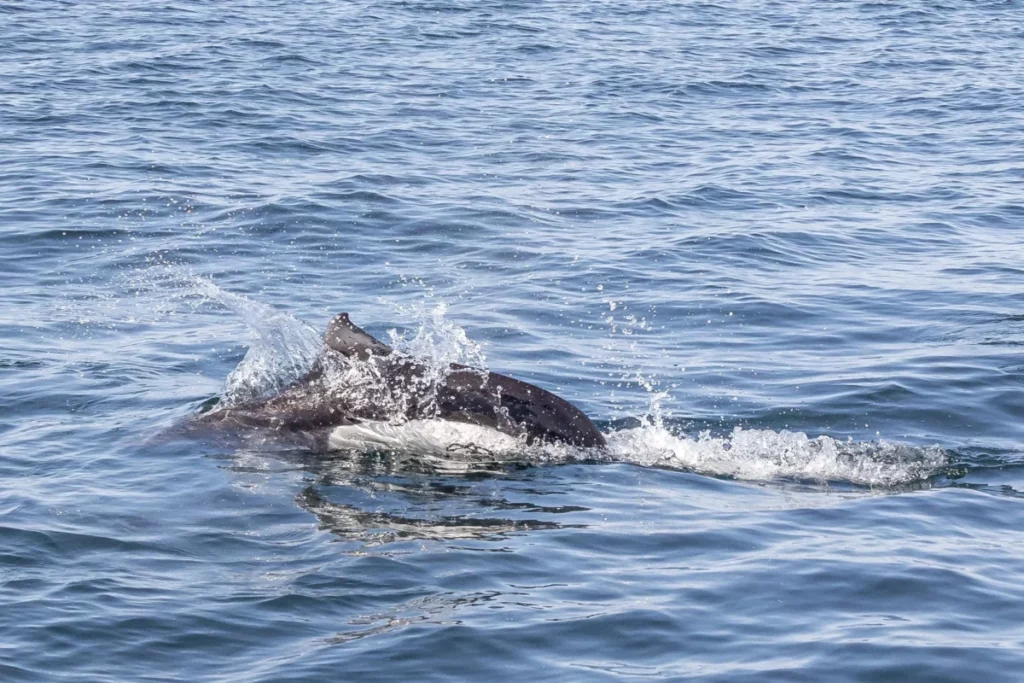
Dall’s porpoise thrives in a diverse range of habitats within the North Pacific, including the temperate and subarctic waters of this region. It is commonly sighted in areas characterized by steep underwater topography, such as continental shelf edges and submarine canyons. These dynamic environments support the porpoise’s foraging behavior, as they are known to feed on a variety of fish and cephalopods. The species’ ability to navigate through these complex habitats reflects its remarkable adaptability and resilience in the face of diverse oceanic conditions.

Overall, Dall’s porpoise is an intriguing and significant species within the marine ecosystem of the North Pacific, captivating researchers and conservationists with its unique characteristics and ecological importance.

Facts About Dall’s Porpoise

  • Dall’s Porpoise can reach speeds of up to 55 km/hour (30 knots).
  • Adult Dall’s Porpoise can grow to lengths of 1.7-2.2 meters for females and 1.8-2.4 meters for males.
  • They have a maximum weight of about 200 kg.
  • Dall’s Porpoise have a lifespan of 15 to 20 years.
  • Their diet consists of small fish, cephalopods, and crustaceans.
  • Dall’s Porpoise are found in the North Pacific Ocean.
  • They are known for being one of the fastest small cetaceans.
  • Newborn Dall’s Porpoise are about 1 meter long.
  • Dall’s Porpoise are not shy mammals and are often found bow-riding on the wake of moving vessels.
  • They are prey to transient killer whales.


Scientific Provenance & Verified Sources

Biological taxonomy, conservation status, and physical traits are cross-referenced with authoritative global registers:


Peer-reviewed by Wildlife Science Editors โ€ข Updated for 2026

Explore Other Species Profiles