Colombian Weasel (Mustela felipei)

IUCN Red List Conservation Status


Least Concern

LC
NT
VU
EN
CR
EW
EX

Official assessment evaluated in accordance with the IUCN Red List of Threatened Species criteria: Least Concern.


Species Quick Facts

Scientific Name
Mustela felipei

Average Lifespan
Unknown/undocumented; possibly 1-6 years based on very limited data (extremely rare species, fewer than 10 known specimens ever recorded)

Average Weight
120-150 g (4.2-5.3 oz)

Average Length
Head-body ~22 cm (8.7 inches); tail ~11.5 cm (4.5 inches)

Overview & Identification

The Colombian weasel is one of the rarest and least-known carnivores in South America, recorded only from a handful of sites in the Andes of Colombia and northern Ecuador. It is a small, dark-furred weasel with partially webbed feet, suggesting semiaquatic habits. So few specimens exist that much of its biology remains a mystery.

Behavior & Social Structure

The Colombian weasel (Mustela felipei) is one of the least-studied carnivores in the Americas, and much of what is known about its behavior is inferred from a handful of museum specimens and rare field observations. Available evidence suggests it is primarily nocturnal to crepuscular, foraging most actively during twilight and nighttime hours when its rodent prey are also most active. Like other members of the genus Mustela, it is presumed to be solitary outside of brief breeding encounters, with individuals maintaining independent home ranges that are not actively shared except during mating season or by a mother with dependent young.

Communication in this species likely mirrors that of closely related weasels, relying heavily on scent marking via anal and other glandular secretions to advertise territorial boundaries, reproductive status, and individual identity along stream banks and burrow systems. Vocalizations, when documented in related mustelids, include short chirps, hisses, and screeches used during aggressive encounters or courtship. Tactile communication is presumed important during the brief mating period and in mother-offspring interactions within the den.

Adaptive behaviors reflect the species’ close association with Andean freshwater ecosystems: an elongated, slender body plan and reduced size allow it to pursue prey into narrow burrows and along riverbanks, while partial webbing between the toes is thought to aid in semi-aquatic movement. Because so few individuals have been observed alive, precise home range sizes remain unknown, though its patchy, elevation-restricted distribution along Andean streams suggests naturally low population densities and correspondingly large home ranges relative to body size.

Diet & Hunting Patterns

The Colombian weasel is an obligate carnivore whose diet, based on limited stomach-content analyses and ecological inference, consists primarily of small rodents, particularly semi-aquatic and riparian species such as fish-eating rats (Ichthyomys and related genera), along with other small mammals found near mountain streams. Its diminutive size and elongated body allow it to pursue prey directly into burrows, crevices, and dense riparian vegetation, employing rapid pursuit and a swift killing bite to the neck or skull, a hunting strategy typical of small mustelids with high metabolic demands.

Due to its small body mass, the Colombian weasel likely possesses an extremely high metabolic rate relative to larger carnivores, necessitating frequent feeding to sustain its energy requirementsโ€”a common trait among weasels of the genus Mustela. Its close association with fast-flowing Andean streams suggests it may also opportunistically consume aquatic invertebrates, amphibians, or small fish, and it is presumed to be highly water-dependent, rarely straying far from riparian corridors. Seasonal dietary shifts have not been documented, though prey availability tied to Andean wet and dry seasons likely influences foraging effort and range use.

Reproduction & Life Cycle

Reproductive biology of the Colombian weasel remains almost entirely undocumented in the wild due to the extreme rarity of confirmed sightings. Based on close phylogenetic relatives, it is presumed to follow a promiscuous or polygynous mating system, with males seeking out multiple receptive females during a discrete breeding season, though the exact timing has not been confirmed for wild populations in Colombia or the Venezuelan border region.

By extrapolation from related small mustelids, gestation is estimated to last approximately one month, with litters likely comprising just one to a few altricial young born in a concealed den near water. Maternal care is presumed to be the sole form of parental investment, with the mother nursing and protecting offspring until weaning, after which juveniles disperse to establish independent territories. Sexual maturity in comparably sized weasels is typically reached within the first year of life, though this has not been empirically verified for Mustela felipei.

Threats & Conservation

The Colombian weasel is classified by the IUCN as Endangered, reflecting its extremely restricted and fragmented range within high-elevation Andean cloud forest and pรกramo streams of Colombia and, historically, far western Venezuela. The foremost threat is habitat loss and degradation driven by agricultural expansion, cattle ranching, mining, and deforestation along Andean waterways, which directly destroys the riparian corridors on which this species depends for both shelter and prey. Water pollution and hydrological alteration from dam construction and agricultural runoff further degrade the aquatic ecosystems that support its rodent prey base.

Because the species is so rarely encountered, direct poaching pressure appears minimal, though incidental mortality from trapping intended for other small mammals may occur. Climate change poses an emerging concern, as shifting precipitation patterns and rising temperatures threaten to alter the delicate high-altitude stream ecosystems it inhabits. Natural predators likely include larger carnivores such as foxes and raptors, though predation pressure is poorly documented. Conservation initiatives remain limited, focused mainly on protected area designation within Colombia’s Andean national parks and increased survey efforts to better understand population status, distribution, and habitat requirements.

Interesting Facts

  • Extreme Rarity: Fewer than two dozen confirmed specimens or sightings of the Colombian weasel exist, making it one of the rarest and least-documented carnivores in South America.
  • Smallest New World Weasel: Mustela felipei is the smallest member of the genus Mustela found in the Americas, with an elongated body adapted for pursuing prey through narrow spaces.
  • Named After a Naturalist: The species epithet “felipei” honors Colombian naturalist Felipe Hernรกndez Camacho, who contributed extensively to South American mammalogy.
  • Andean Specialist: It is found only along fast-flowing streams at elevations between roughly 1,100 and 2,700 meters in the Andes, an unusually narrow and specific habitat niche for a mustelid.
  • Possible Semi-Aquatic Adaptations: Partial webbing between its toes suggests an evolutionary adaptation for hunting along stream margins and possibly in water, a trait shared with a small number of other riparian mustelids.
  • Discovered in 1978: The species was first formally described in 1978, making it one of the more recently recognized carnivore species in the Western Hemisphere.
  • Cross-Border Mystery: While primarily known from Colombia, a single unconfirmed historical record suggests a range extension into western Venezuela, though this remains scientifically debated.

The Colombian weasel, scientifically known as Mustela felipei, is a rare and elusive species of weasel found in the cloud forests of the Colombian Andes. Also known as Don Felipe’s weasel, this small mammal is primarily known from the departments of Huila and Cauca in Colombia, with additional sightings in nearby northern Ecuador.

Description

Colombian Weasel (Mustela felipei)

The Colombian weasel is characterized by its small size and slender body, typically measuring around 20-25 centimeters in length. It possesses a distinct reddish-brown fur with a creamy white underbelly, making it easily distinguishable from other weasel species. Known for its agility and swift movements, the Colombian weasel is a skilled predator within its natural habitat.

Appearance

Colombian Weasel

The Colombian weasel’s unique appearance sets it apart from similar species. Its reddish-brown fur, often with a hint of chestnut, provides effective camouflage within the dense vegetation of the cloud forests. The contrast with its creamy white underbelly further enhances its distinctiveness. Additionally, its slender build and agile movements distinguish it from other weasel species.

Distribution

This species is primarily known from the cloud forests of the Colombian Andes, specifically in the departments of Huila and Cauca. It has also been documented in the neighboring northern regions of Ecuador. The Colombian weasel’s distribution is limited to these specific areas, making it a particularly rare and localized species.

Habitat Preferences
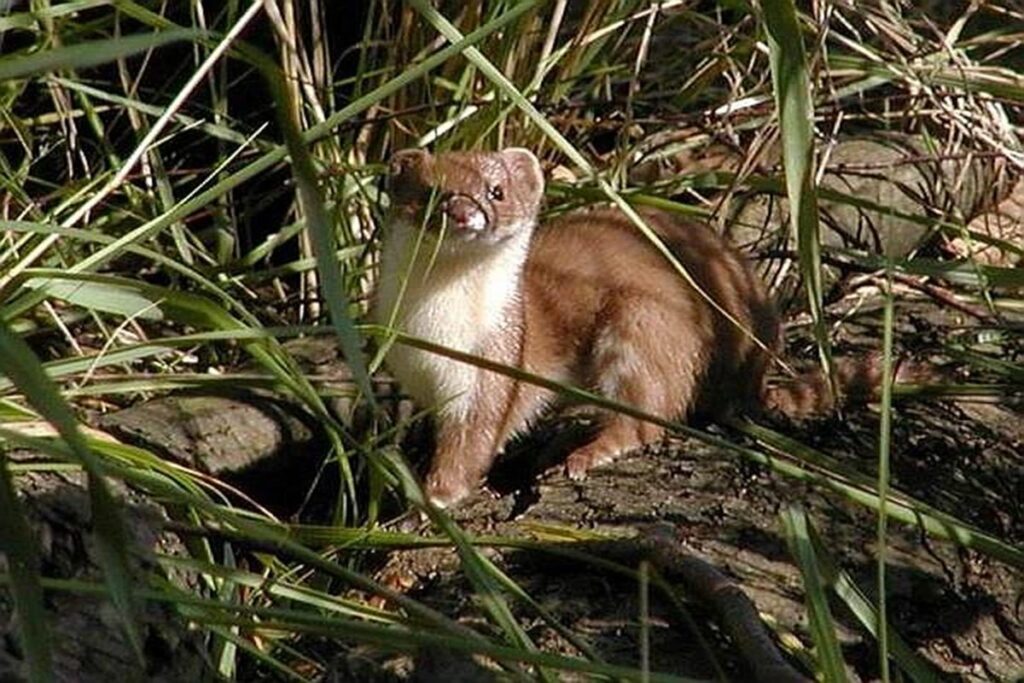
Colombian Weasel (Mustela felipei)

The Colombian weasel thrives in the unique ecosystems of the cloud forests, where it finds suitable conditions for survival and well-being. These cloud forests provide the ideal combination of dense vegetation, moderate temperatures, and abundant prey, enabling the Colombian weasel to thrive within this specialized habitat.

In summary, the Colombian weasel, with its distinctive appearance and limited distribution, is a remarkable and rare species that plays a crucial role in the delicate ecosystem of the cloud forests. Efforts to study and conserve this species are essential for the preservation of its unique habitat and the biodiversity of the Andean region.

Facts About Colombian weasel

  • The Colombian weasel (Mustela felipei) is a very rare species of weasel only known with certainty from a few localities in Colombia and one in Ecuador.
  • It is considered the rarest Neotropical carnivore, with only six confirmed records of its existence.
  • The Colombian weasel has an elongated body with an average length of 22 cm and a tail 11.5 cm long.
  • Its weight ranges between 120 and 150 g.
  • This species is listed as Vulnerable under the IUCN Red List, inferring a population size of at least 1,350.
  • Known specimens have been collected in areas close to water at elevations of 1750 and 2700 m.
  • The Colombian weasel is endemic to the cloud forests of the Andes.
  • It is also known as Don Felipe’s weasel.
  • The species is among the least known carnivores in the Americas.
  • The Colombian weasel is a remarkable carnivorous mammal endemic to the cloud forests.


Scientific Provenance & Verified Sources

Biological taxonomy, conservation status, and physical traits are cross-referenced with authoritative global registers:


Peer-reviewed by Wildlife Science Editors โ€ข Updated for 2026

Explore Other Species Profiles