
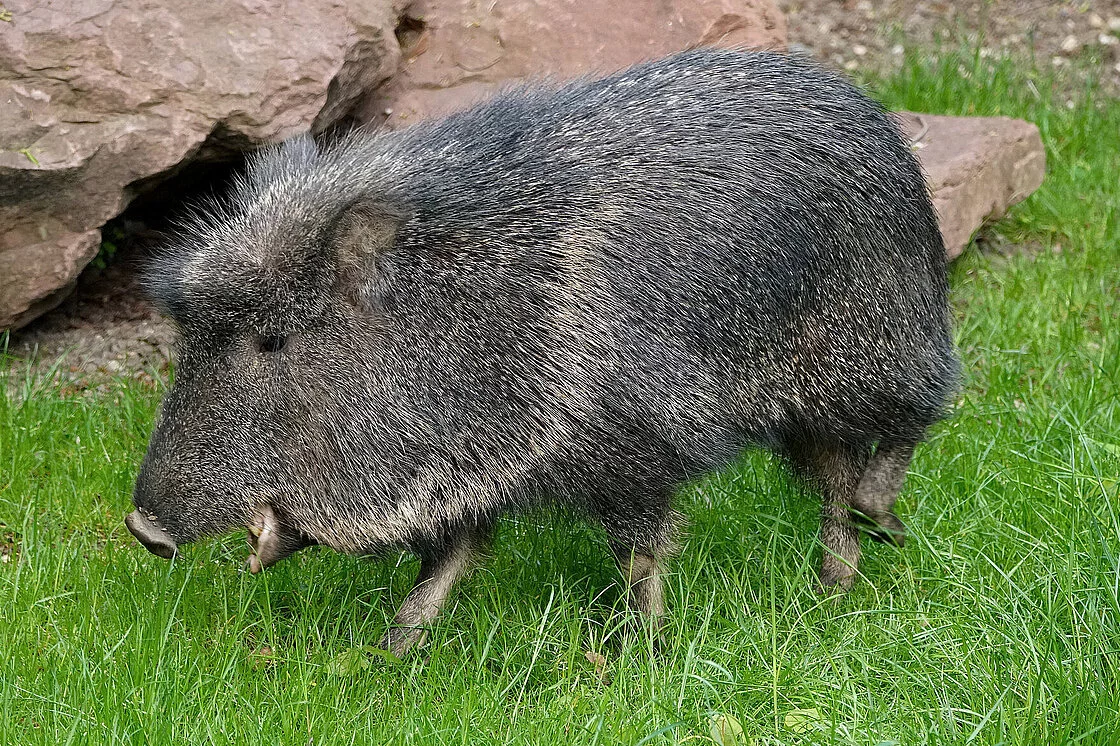
Description

The Chacoan peccary, also known as the tagua, is the last extant species of the genus Catagonus. It is a medium-sized mammal with a compact, robust body, standing out for its unique appearance and behavior. This species is known for its social nature, often forming herds and displaying complex communication behaviors.
Appearance
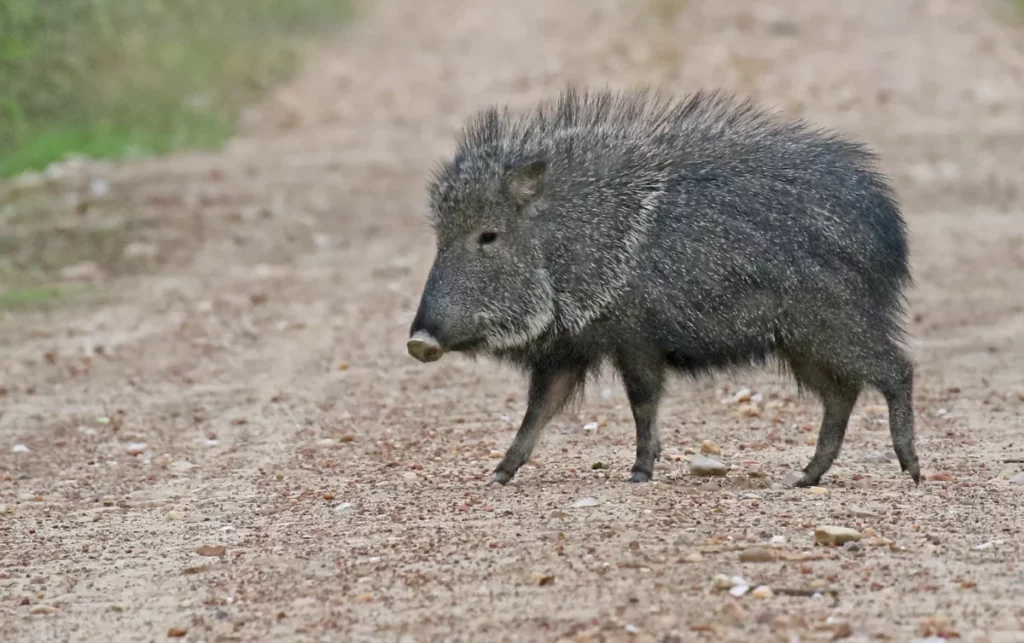
The Chacoan Peccary is easily distinguished by its distinct physical features, including a stocky build, a bristly coat, and a pig-like snout. Its dark, bristly fur provides protection from the harsh, arid environments it inhabits. The species also exhibits a white collar-like band of fur around its neck, setting it apart from other peccary species.
Distribution
The Chacoan Peccary is primarily found in the Gran Chaco region, spanning across Paraguay, Bolivia, and Argentina. This species has a fragmented range within these countries, with population estimates indicating that approximately 3,000 individuals remain in the wild. Due to habitat loss and hunting pressures, the Chacoan Peccary faces conservation challenges, making it a species of concern for wildlife conservation efforts.
Habitat Preferences
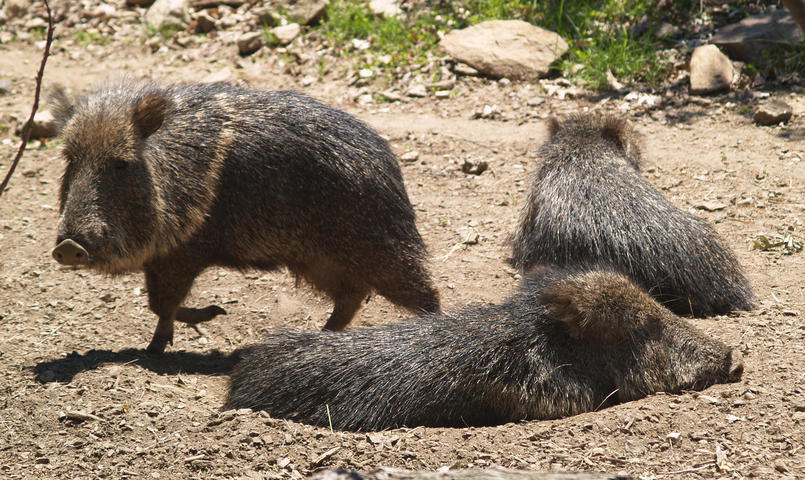
The Chacoan Peccary thrives in hot, semi-arid thorn forests, savannah plains, and marshes within the Gran Chaco region. This habitat consists of open woodlands and areas dominated by low-lying succulent plants and thorny bushes. The species has adapted to survive in these challenging environments, relying on its ability to forage for a variety of plant materials and navigate the rugged terrain.
By shedding light on the unique characteristics, distribution, and habitat preferences of the Chacoan Peccary, it is crucial to raise awareness about the conservation needs of this remarkable species. Efforts to protect its natural habitat and mitigate human-wildlife conflicts are essential to ensure the long-term survival of the Chacoan Peccary and contribute to the broader conservation of biodiversity in the Gran Chaco region.
Facts About Chacoan Peccary
- The Chacoan peccary, also known as Catagonus wagneri, is the last surviving species of its genus.
- It is a medium-sized ungulate, weighing between 29.5-40 kg.
- The species is native to the Gran Chaco region of western Paraguay, southeastern Bolivia, and northern Argentina.
- Chacoan peccaries primarily inhabit hot, semi-arid plains with low-lying vegetation.
- Their bristle-like fur is generally brown to almost gray in color.
- The population of Chacoan peccaries is difficult to estimate due to their cryptic nature.
- They are diurnal in nature, meaning they are active during the day.
- Chacoan peccaries live in social groups, typically consisting of 10-15 individuals.
- The species is listed as Endangered on the IUCN Red List.
- Chacoan peccaries play a vital role in their ecosystem by dispersing seeds and influencing plant regeneration.


