
Description

The Central American agouti, scientifically known as Dasyprocta punctata, is a charming species of agouti from the family Dasyproctidae. These medium-sized rodents are characterized by their slender bodies, long legs, and short, coarse fur. They typically measure between 40 to 60 centimeters in length, with a tail length of 20 to 35 centimeters. Their fur is predominantly brown with a distinctive speckled appearance, and they have a white or cream-colored underbelly.
Appearance
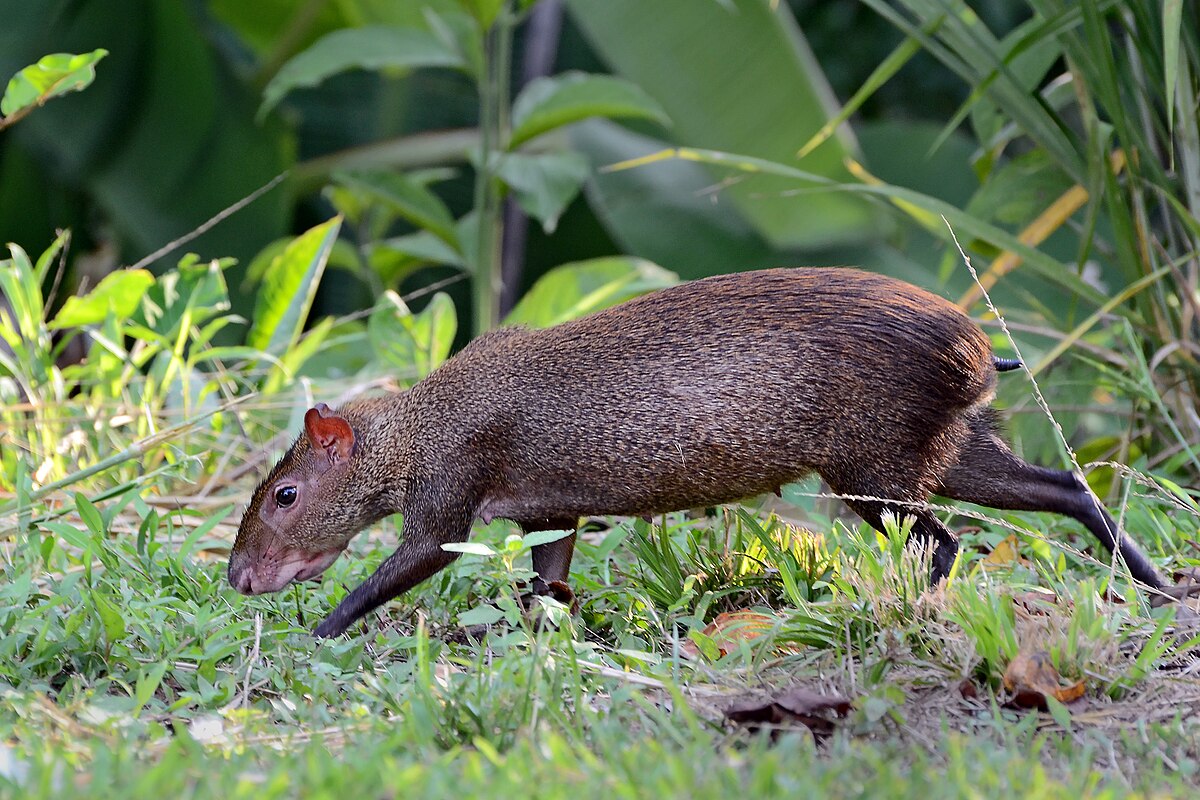
One of the key distinguishing features of the Central American agouti is its unique coloration and fur pattern. The speckled appearance of their fur sets them apart from other agouti species and aids in camouflage within their natural habitats. Their slender build and long legs enable them to navigate through the dense undergrowth of rainforests and savannas with agility and grace.
Distribution
The main portion of the Central American agouti’s range extends from Chiapas and the Yucatan Peninsula in southern Mexico, through Central America, and into northwestern Ecuador. They are known to inhabit a variety of ecosystems, including forests, thick brush, savannas, and cultivated areas. Their adaptability has allowed them to thrive in diverse environments across multiple countries within their range.
Habitat Preferences
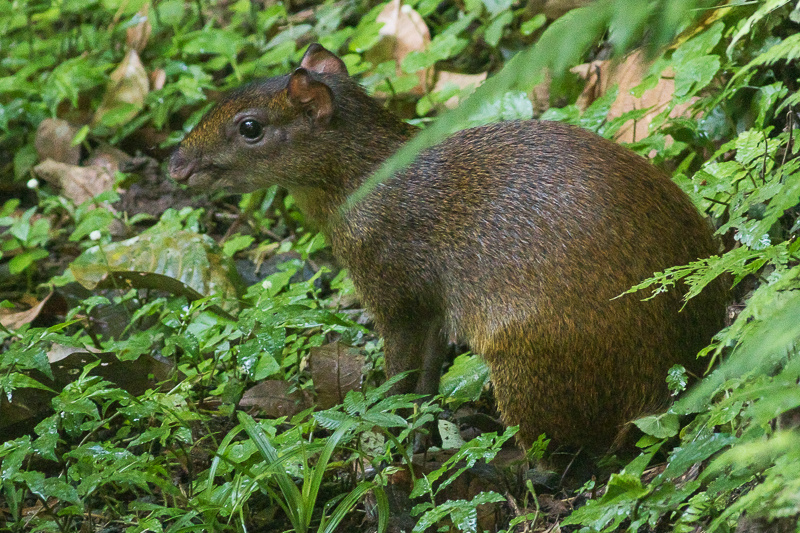
Central American agoutis are well-adapted to a range of habitats, including rainforests, savannas, and cultivated areas. They are particularly prevalent in the undergrowth of rainforests and savannas, where they forage for fruits, seeds, and vegetation. These environments provide ample cover and food sources, contributing to the agouti’s survival and well-being.
This comprehensive species profile aims to provide a detailed understanding of the Central American agouti, shedding light on its unique characteristics, distribution, and habitat preferences.
Facts About Central American Agouti
- The Central American agouti (Dasyprocta punctata) is a species of agouti from the family Dasyproctidae.
- The main portion of its range is from Chiapas and the Yucatán Peninsula in Mexico, through Central America, to northwestern Ecuador and western Colombia.
- The Central American agouti is a large rodent, weighing between 3-4.6 kg (6.6-10.1 lbs) and has a lifespan of up to 10 years.
- This species is listed in CITES Appendix III, a treaty to protect endangered plants and animals.
- Central American agoutis are important seed dispersers for various plants, such as Dipteryx panamensis and Persea spp.
- They are primarily found in tropical forests of South America, Central America, and far southern Mexico.
- Central American agoutis have a varied diet, including fruits, nuts, seeds, and vegetation.
- They are known for their agility and speed, often darting through the forest underbrush.
- These rodents play a vital role in the ecosystem by helping to disperse seeds and influence plant regeneration.
- The behavioral ecology of the Central American agouti has been studied in various research reports, providing insights into their natural history and ecological significance.


