

Description

The Cape hare, scientifically known as Lepus capensis, is a remarkable mammal native to Africa, Arabia, and extending into India. Also referred to as the desert hare, this species is characterized by its agile and swift nature, making it a fascinating subject of study for wildlife enthusiasts and conservationists alike. The Cape hare is a member of the Leporidae family, which includes hares and rabbits, and exhibits distinct behavioral and ecological traits that contribute to its ecological significance.
Appearance
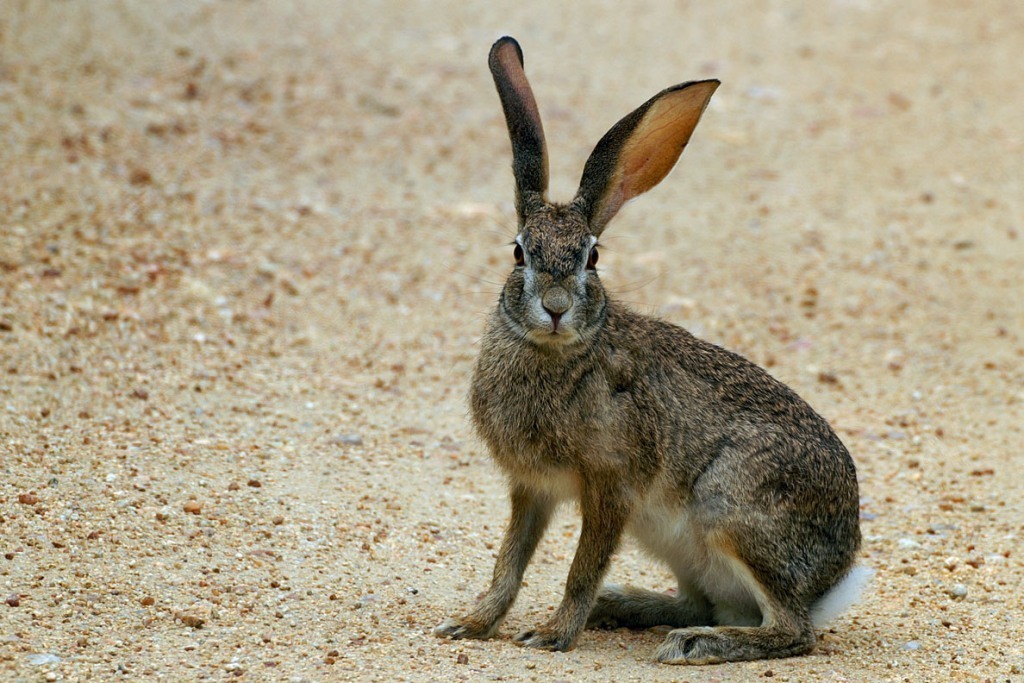
The Cape hare possesses a sleek and slender body, with long, powerful hind legs adapted for swift running and evasive maneuvers. Its fur varies in color from sandy brown to gray, providing effective camouflage in its arid and semi-arid habitats. Notably, the Cape hare can be distinguished by its large ears, which aid in dissipating excess body heat and enhancing auditory acuity, crucial for detecting potential predators in its environment.
Distribution
The Cape hare is predominantly found in Africa, with a range extending from North Africa through the Sahel region and into East Africa. It also inhabits parts of Arabia and has been documented in regions of India. This distribution pattern reflects the species’ adaptability to diverse ecosystems and its ability to thrive in arid and semi-arid environments across multiple continents. However, the population density of Cape hares may exhibit variations based on factors such as habitat suitability and human-induced pressures.
Habitat Preferences

Cape hares display a preference for open landscapes, including grasslands, shrublands, and semi-desert areas. These habitats provide the necessary cover for foraging and shelter, while also allowing the hares to utilize their exceptional running abilities for evading predators. The species’ ability to thrive in these environments is a testament to its resilience and capacity to adapt to challenging ecological conditions, making it a significant component of the ecosystems it inhabits.
Overall, the Cape hare, with its distinctive characteristics and ecological adaptability, represents a compelling subject for conservation efforts and serves as a valuable indicator of the health and sustainability of arid and semi-arid ecosystems.
Facts About Cape Hare
- The Cape Hare (Lepus capensis) is native to non-forested areas of Africa, including the Sahel and Sahara regions.
- It is also found in Arabia and extends into India.
- The Cape Hare is a solitary, diurnal herbivore.
- This species exhibits a geographical variation in body size due to genetic and ecological factors.
- Cape Hares are medium-sized mammals.
- They have a lifespan of around 5 to 6 years in the wild.
- Cape Hares are known for their distinctive long ears and powerful hind legs.
- Their diet primarily consists of grasses, herbs, and twigs.
- They are well-adapted to arid and desert environments.
- The evolutionary history of the Cape Hare spans from southern Africa to Asia.


